Is It Legal to Sleep in a Campervan in Germany?
Germany is one of Europe’s easiest countries to explore by campervan, thanks to its extensive network of campsites and Stellplätze. But there is an important distinction to understand before you stop for the night: legally parking a vehicle is not always the same as using it as a campsite.
The short answer is that sleeping in a campervan in Germany can be legal when you are parked lawfully and the stop is genuinely needed to restore your ability to drive. That exception is not a general right to turn any legal parking space into a free overnight campsite. Local signs, traffic rules, protected-area rules and the landowner’s permission still matter.
This guide explains the practical difference so you can plan a German road trip without relying on oversimplified “wild camping is allowed” advice.
This article is general travel information, not legal advice. Rules and signs can change, and local authorities may impose additional restrictions. Check the sign at the place where you park and use official overnight options when in doubt.
The quick answer
In Germany:
- You may normally sleep in a lawfully parked campervan for a limited stop when the purpose is to recover your fitness to drive.
- That safety-related stop does not give you permission to camp outside the vehicle.
- Staying for several nights, choosing a place mainly as holiday accommodation, or setting up chairs, tables, an awning or a barbecue can turn “parking” into “camping”.
- A sign can prohibit motorhomes, impose a time limit, require payment or reserve bays for certain vehicles.
- Private land requires the owner’s permission unless it is clearly operated as an authorised overnight site.
- Nature reserves, national parks, forests, dunes, lakesides and similar sensitive areas may have separate restrictions. Do not assume that an unmarked track is an acceptable overnight stop.
For the lowest-risk option, use a campsite, an official motorhome area or a signed Stellplatz.
Why “parking” and “camping” are different
Germany’s road traffic rules regulate where and how vehicles may stop or park. A campervan does not lose its status as a vehicle simply because someone sleeps inside it. The key questions are whether the vehicle is parked legally and whether the stay still looks like an ordinary, temporary use of a parked vehicle.
German travel and motoring guidance commonly describes a one-off overnight rest used to restore driving fitness as permissible where parking itself is allowed. This is a safety exception, not a tourism loophole. There is no single nationwide number of hours written into the parking rule for every situation, so avoid treating “ten hours” or “one night” as an automatic entitlement. Stay only as long as reasonably necessary to rest, then move on.
The legal position becomes much weaker when the behaviour looks like camping. Typical warning signs include:
- putting chairs or a table outside;
- extending an awning;
- using levelling equipment beyond what is needed to park safely;
- cooking or barbecuing outdoors;
- taking up more space than the marked bay;
- disposing of water or waste;
- remaining for repeated nights.
Even quiet behaviour inside the van does not override a “no motorhomes”, “no overnight stays” or time-limited parking sign.
What is a Stellplatz?
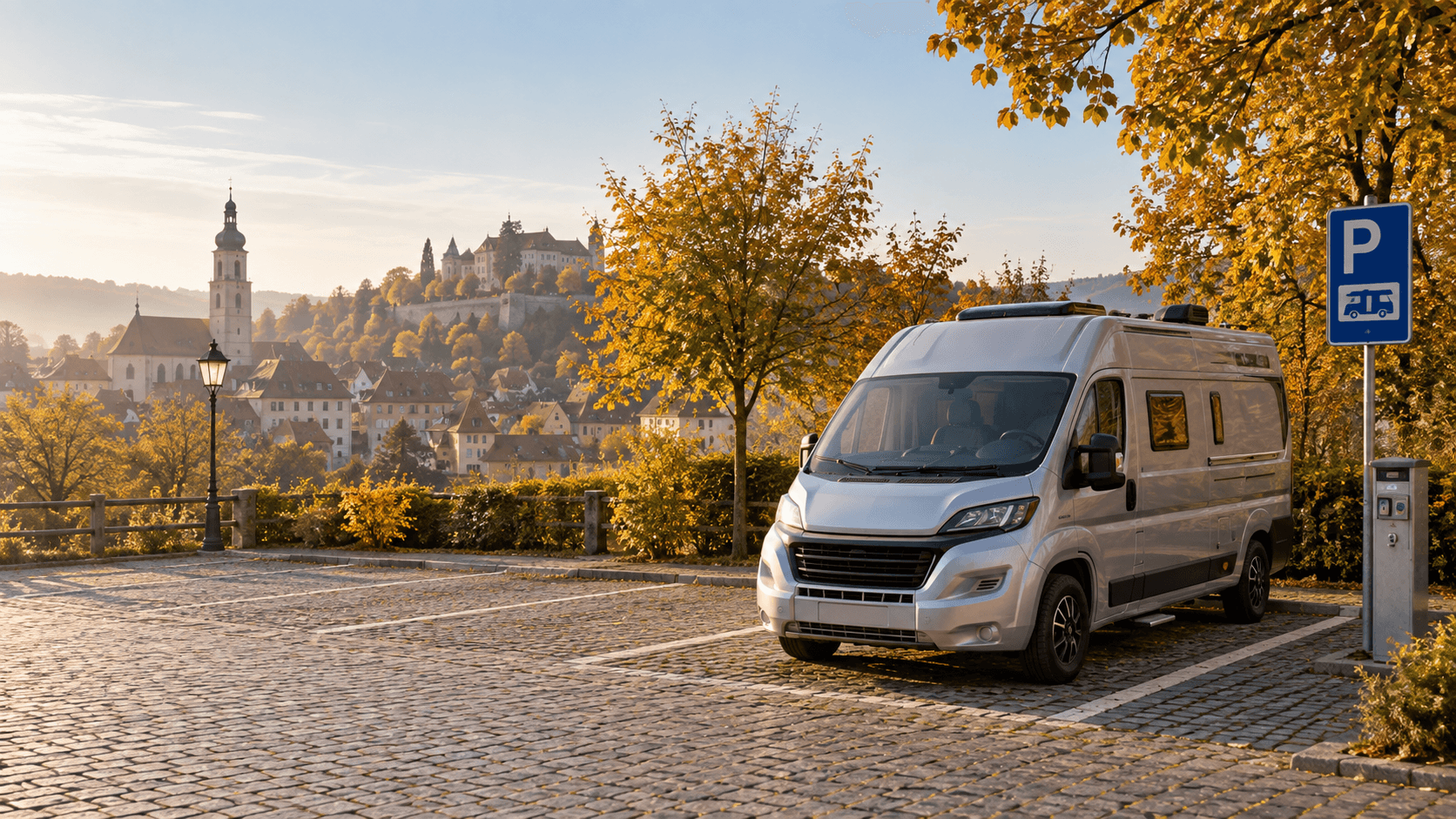
A Wohnmobilstellplatz, usually shortened to Stellplatz, is a designated motorhome stop. It may be a simple marked overnight area or a serviced site with electricity, fresh water and waste-disposal facilities. Some are municipal, while others are operated by farms, restaurants, marinas or private businesses.
Stellplätze are usually intended for short stays and are often simpler than campsites. Their own rules decide who may use them, how long you can stay, what you must pay and whether facilities are seasonal. Check the entrance board or payment machine rather than assuming every Stellplatz works the same way.
If you are new to European stop types, Campernight’s guide to aires, campsites and wild camping explains the practical differences.
Can you sleep in a normal public car park?
Sometimes, but only when all the relevant conditions line up.
First, the vehicle must be parked legally under the German Road Traffic Regulations and any local signs. Check bay size, weight or height limits, parking discs, payment rules and time restrictions. Do not obstruct entrances, traffic or other marked spaces.
Second, the overnight stop should be a genuine rest needed to continue driving safely, not a planned substitute for accommodation. Keep all activity inside the vehicle and leave once you are fit to continue.
Third, the location must not be covered by another restriction. A car park near a beach, forest, lake or protected landscape can be subject to environmental rules or municipal bylaws even when the road sign alone appears to allow parking.
If the purpose of your stop is simply to spend the night in a destination, book or choose an authorised overnight place instead of relying on the recovery-to-drive exception.
What about motorway service areas?
If fatigue makes it unsafe to continue, stopping to rest is the responsible choice. German motorway rest areas and service areas are designed for breaks, but their signs and parking rules still apply. Use a bay suitable for your vehicle, respect any time or payment limits and do not create a campsite around the van.
A motorway rest stop is best treated as an emergency or transit sleep, not as a leisure overnight with outdoor equipment. For a planned night, a nearby Stellplatz or campsite is normally quieter and clearer.
Is wild camping legal in Germany?
Not as a broad right for motor vehicles. “Wild camping” can mean different things, but driving a campervan onto forest land, a field, a lakeshore or an unmarked natural area and spending the night there is not something you should assume is legal.
Access, conservation and camping rules vary between Germany’s federal states and local areas. Protected areas can be especially strict, and barriers or absence of a prohibition sign do not create permission. On private land, ask the owner first. Permission from a landowner also does not cancel public conservation or access restrictions.
For cross-border planning, read the broader Campernight guide to wild camping laws in Europe, then verify the current rules for the exact German region you plan to visit.
Where sleeping overnight is usually clearest
1. Official Stellplätze
These are usually the best match for a one- or two-night stop. The signs tell you whether motorhomes are accepted, how to pay and how long you may stay.
2. Campsites
Choose a campsite when you want showers, toilets, electricity, more space or a longer stay. Campsites also make the camping-versus-parking distinction much simpler because outdoor living is part of the permitted use.
3. Private host stays
Farms, vineyards, restaurants and other hosts may offer authorised overnight parking. Confirm the conditions in advance and follow the host’s instructions.
4. A lawful safety rest
When you unexpectedly become too tired to drive, a short rest inside a lawfully parked vehicle may be appropriate. Keep it minimal and do not treat it as a pre-planned free campsite.
A practical checklist before you sleep
- Read every sign at the entrance and beside your bay.
- Confirm that your vehicle fits any height, length and weight restrictions.
- Check whether the place is private, municipal or inside a protected area.
- Look for a stated time limit, fee, parking-disc requirement or seasonal closure.
- Keep chairs, tables, awnings and cooking equipment inside unless the site rules explicitly allow them.
- Never discharge grey water, toilet waste or rubbish outside proper facilities.
- Avoid noise and unnecessary engine idling.
- If anything is unclear, choose an official Stellplatz or campsite instead.
Plan legal overnight stops with Campernight
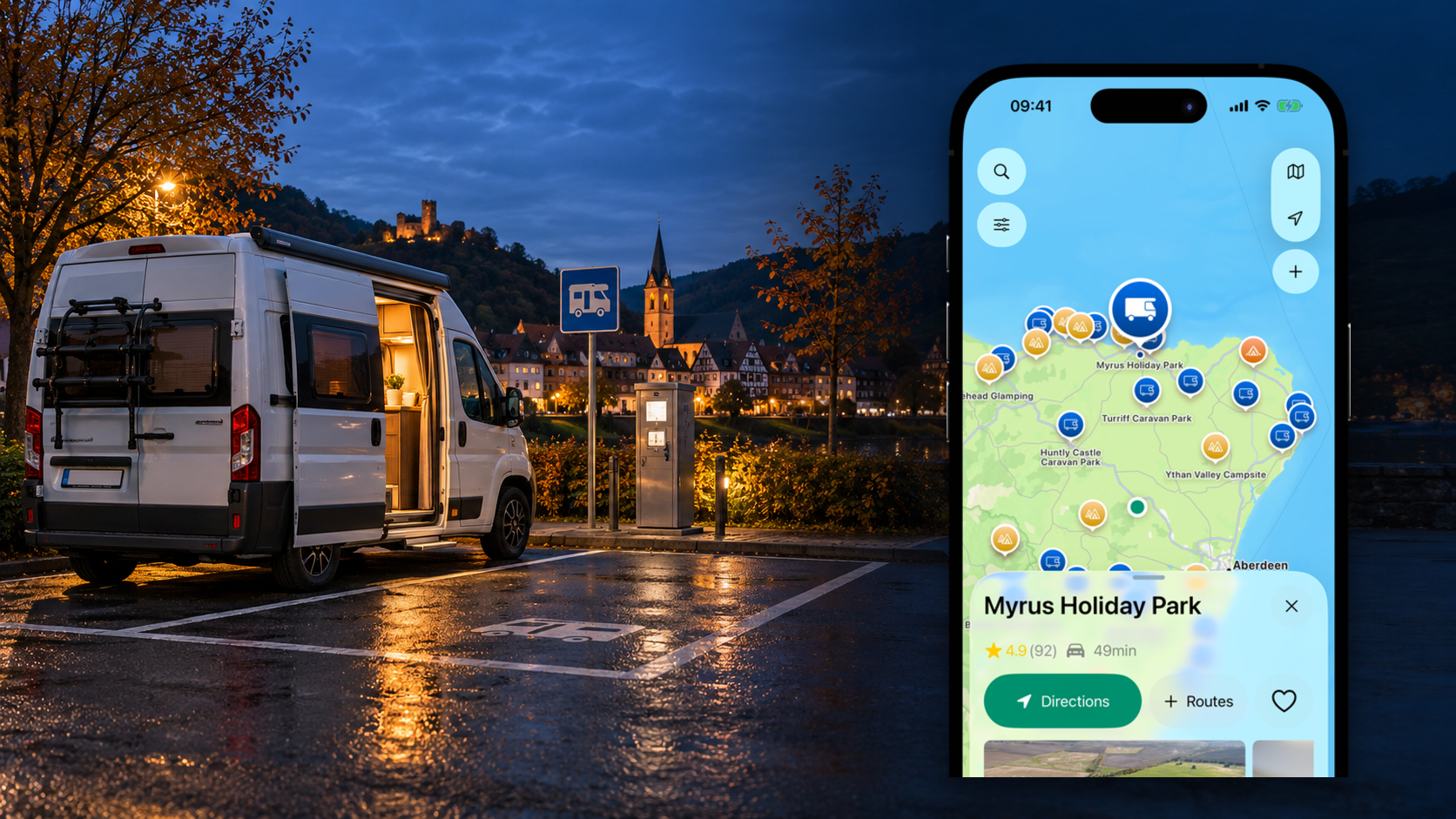
The easiest way to avoid last-minute uncertainty is to identify suitable overnight options before sunset and keep a backup nearby. You can browse campervan spots across Germany and compare the place type, available services and recent traveller information in Campernight.
The listing helps you discover options; it does not replace the sign or rule on site. Recheck the current conditions when you arrive, especially in busy towns, tourist areas and protected landscapes. Campernight’s overnight-parking search guide also shows how to filter and compare potential stops.
Frequently asked questions
Can I sleep in my campervan anywhere parking is allowed in Germany?
No. Lawful parking is the starting point, but sleeping overnight is safest when it is a limited rest needed to restore driving fitness. Signs, local rules, private-property rights and conservation restrictions can still prohibit the stop.
How long can I stay when resting to drive safely?
There is no universal nationwide time allowance that turns every legal parking bay into overnight accommodation. Keep the stop limited to the time genuinely needed to rest. Repeated nights or a planned holiday stay should use a Stellplatz, campsite or authorised private site.
Can I put chairs outside if I am only staying one night?
Not when you are relying on ordinary parking or the driving-fitness rest principle. Outdoor furniture, awnings and similar equipment can make the stop look like camping. Use them only where the site’s rules allow camping behaviour.
Can I sleep overnight at an Autobahn rest area?
You may stop to rest when fatigue makes driving unsafe, subject to the signs and parking rules at that rest area. Keep the stop functional, use a suitable bay and do not set up camp.
Are German Stellplätze free?
Some are free, but many charge a nightly fee or separate fees for electricity, water and waste services. Conditions vary by operator, so read the information board or payment instructions.
Final takeaway
Germany is campervan-friendly, but “friendly” does not mean that every parking space is a campsite. A short sleep in a lawfully parked vehicle may be acceptable when it is genuinely needed for road safety. For a planned overnight stay, an official Stellplatz, campsite or authorised host is the clearer choice.
Check the signs, keep parking separate from camping behaviour, protect natural areas and plan a backup. With those habits—and Campernight ready to help you compare nearby options—you can travel through Germany with much less uncertainty.