Best Wine, Mountain and Nature Routes for Autumn by Campervan
Autumn is one of the easiest seasons for combining vineyards, mountain scenery and slower nature stops in a single campervan trip. The light softens, the busiest summer traffic often eases and many landscapes shift from green to gold, copper and red. But this is also a transition season: harvest dates vary, daylight shortens, campsites may reduce their opening days and the first cold front can change a mountain plan overnight.
The best autumn route is therefore not the one with the longest list of famous places. It is the one that gives you a strong lowland plan, a flexible mountain extension and more than one suitable overnight option. The five routes below are starting points rather than fixed promises. Check current weather, road conditions, opening information and local signs as you travel.
How to choose the right autumn route
Before choosing a region, decide which part of the trip matters most:
- Wine villages and food: choose Alsace or La Rioja for short drives between towns, vineyards and foothills.
- High mountain scenery: choose South Tyrol and the Dolomites, but keep a lower-elevation backup.
- River landscapes and terraced hills: choose the Douro Valley and slow the itinerary down.
- Forests, walks and spa towns: choose the Black Forest and Baden wine country.
In every case, leave room for change. A clear morning may suit a mountain walk, while a wet afternoon may be better spent in a village, cellar or museum. Use Campernight to compare recent photos, reviews and services, save a primary overnight stop and keep a realistic fallback within a comfortable driving distance.
1. Alsace Wine Route and the Vosges, France
The official Alsace Wine Route runs for about 170 kilometres from Marlenheim to Thann, passing colourful villages and well-known wine towns. For a campervan trip, the useful idea is not to drive the whole route in one day. Choose two or three bases, then explore clusters such as Obernai, Ribeauvillé, Riquewihr, Kaysersberg and Eguisheim at a slower pace.
The Vosges offer an easy nature extension west of the vineyards. When the forecast is settled, add a forest walk or a higher viewpoint. When cloud, rain or strong wind arrives, stay lower and spend more time in the villages. Browse campervan spots across France before the trip and save alternatives at different points along your planned route.
Camper park in Eguisheim is a useful Campernight example for this route. Its current listing places it in the Alsace wine village and shows a motorhome-area setup with water, electricity, waste disposal, rubbish and Wi-Fi. Treat those details as a planning lead, not a guarantee: check recent information and confirm any essential service before arrival.
A practical 3–5-day outline
- Start around Obernai or the northern wine villages.
- Move south through Ribeauvillé, Riquewihr or Kaysersberg.
- Base near Colmar or Eguisheim for a slower village day.
- Add a Vosges walk only if the weather and daylight suit your group.
2. La Rioja vineyards and mountain country, Spain
La Rioja works well when you want vineyards, compact historic towns and a choice between valley and mountain landscapes. Haro, Briones and San Vicente de la Sonsierra can form the wine-focused spine of the trip. From there, a second base can take you towards the Sierra de la Demanda or the quieter valleys and forests farther south.
Do not build the itinerary around an assumed harvest date or guaranteed cellar visit. Timing varies between areas and producers, and many wineries require advance booking. Plan the route first, then add confirmed visits around it. For overnight research, use Campernight spots in Spain and compare the most recent listing details rather than relying on an old route article.
For a nature-oriented extension, Parking Autocaravanas Municipal Arnedillo is one strong current example in the wider region. The listing describes a mountain setting near the Cidacos valley and shows water, electricity, showers, toilets, waste disposal and rubbish facilities. It also has several positive Campernight reviews and a useful set of approved photos. It is not on the classic Rioja Alta wine spine, so use it as a separate eastern or nature-focused stage rather than pretending it is a quick detour from every winery.
A practical 4–6-day outline
- Spend the first two days around Haro, Briones and San Vicente de la Sonsierra.
- Keep one flexible day for a booked winery, village walk or wet-weather stop.
- Move towards a lower mountain base for forest walks and quieter roads.
- Add Arnedillo only when it fits the direction of the wider route.
3. South Tyrol Wine Road and the Dolomites, Italy
South Tyrol offers a strong contrast between vineyard country around Bolzano and the dramatic mountain landscapes farther east. Start low, using the wine-road area and villages as the dependable part of the trip. Then treat the Dolomites as a weather-dependent extension rather than the only reason for travelling.
Autumn conditions change quickly with elevation. A valley can feel mild while a higher road or trail is cold, wet or affected by early snow. Check the local forecast and road information on the day, carry suitable layers and turn back before conditions become uncomfortable. Explore campervan places in Italy and save a lower-elevation fallback before heading into the mountains.
Camping Vidor Family and Wellness Resort in Val di Fassa is a practical Campernight example of the service-rich base to look for when the mountain part of the route is open and suitable. Its current listing shows a campsite with water, electricity, showers, toilets, waste disposal, rubbish and pet-friendly facilities, plus approved images and positive reviews. Opening periods and services can change, so verify the current details directly before relying on it as a key stop.
A practical 5–7-day outline
- Begin with two nights in the Bolzano and wine-road area.
- Use a settled forecast window for the move towards the Dolomites.
- Stay at a serviced base instead of changing pitch every night.
- Keep the final day flexible for weather, a shorter walk or an early descent.
4. Douro Valley, Portugal
The Douro combines steep terraced slopes, river viewpoints and historic wine towns. It rewards patience: roads can be winding, distances can take longer than they look and the best days are often the ones with only one or two planned stops. Peso da Régua and Pinhão are useful anchors, while smaller viewpoints and villages can fill the route between them.
Build this trip around daylight and safe stopping places rather than a chain of scenic pins. Avoid committing to a late arrival on an unfamiliar narrow road. If rain is heavy, reduce the distance and keep to the main valley route. Browse campervan spots in Portugal before departure and save a serviced option as well as a simpler backup.
A practical 3–5-day outline
- Enter the region with an easy first night rather than a long final drive.
- Use Régua and Pinhão as anchors for short day loops.
- Choose one confirmed winery or food experience instead of overbooking.
- Leave the last day open for weather, river views or a slower return.
5. Baden wine country and the Black Forest, Germany
Southwest Germany lets you combine vineyard landscapes on the warmer western edge of the Black Forest with wooded hills, walking routes and spa towns farther inland. The route works best as a series of short cross-sections: a wine village or market town one day, then a forest base the next.
Autumn foliage and weather do not follow a fixed calendar. Some days will be bright and dry; others may be foggy, wet or much colder at elevation. Use Campernight spots in Germany to compare recent conditions and services, and avoid designing the trip around a single remote overnight place.
A practical 4–6-day outline
- Start on the western edge near vineyard country.
- Cross into the forest for one or two walking days.
- Add a spa town or museum as a wet-weather option.
- Return towards the lowlands before the final overnight stop.
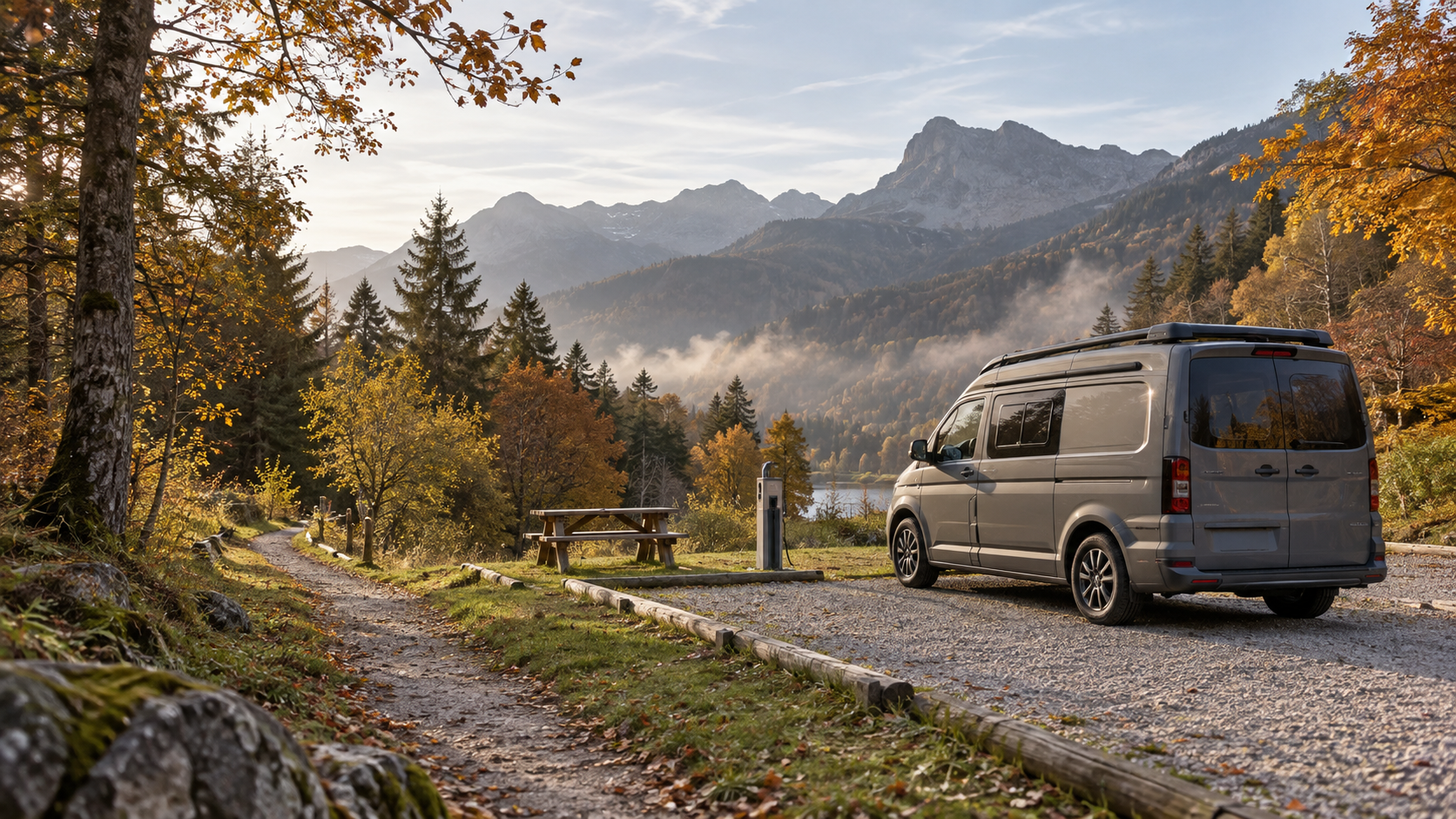
Plan overnight stops around the route, not the postcard
An autumn road trip becomes much easier when each overnight stop solves the next day's practical needs. A scenic parking place is not automatically suitable for sleeping, and a summer recommendation may be closed or less useful later in the year.
Compare different stop types in the Campernight app:
- Motorhome areas can provide a practical base near towns and service points.
- Campsites are useful when you need showers, electricity, laundry or a longer reset.
- Simpler permitted stops can work between serviced nights when current rules and conditions allow.
Check the latest reviews and photos, but confirm critical details with the operator or official source. Opening dates, reception hours, water access and electricity arrangements can change during shoulder season.
Autumn campervan safety and etiquette
Wine and mountain routes require a little more discipline than a simple summer coast trip:
- Separate driving from tasting. If anyone plans to drink, park for the day or use a local driver, taxi, public transport or organised visit.
- Respect local signs and rules. A beautiful viewpoint or vineyard track is not permission to stay overnight.
- Protect working landscapes. Do not block farm entrances, harvest vehicles, forestry access or residents' driveways.
- Watch elevation and daylight. Start walks early enough to return before dark and carry warmer layers than the valley forecast suggests.
- Keep a weather backup. Strong wind, intense rain, fog or early snow can make a mountain stage unsuitable.
- Leave no trace. Use proper waste and water-disposal points, keep noise low and avoid putting outdoor furniture out where camping behaviour is not allowed.
Rules can vary by municipality, protected area and stop type. Use official local information for legal decisions and treat app listings as discovery tools, not permission to ignore signs on arrival.
A simple seven-day autumn route formula
You can apply this pattern to any of the regions above:
- Day 1: short arrival and an easy serviced overnight stop.
- Day 2: wine village, market town or lowland walk.
- Day 3: second village cluster or a confirmed producer visit.
- Day 4: move to the mountain or forest base while the weather is stable.
- Day 5: full nature day, with a shorter bad-weather alternative.
- Day 6: flexible buffer for weather, laundry, supplies or a slower drive.
- Day 7: return towards a well-connected lowland overnight stop.
This structure is deliberately simple. It prevents the trip from depending on perfect foliage, a particular harvest date or one high-altitude road staying open.
Build the route in Campernight
Start by saving three kinds of place: a comfortable first night, a service-rich base near the middle of the route and a fallback at lower elevation. Then compare recent reviews, photos and listed facilities before each move.
The best wine, mountain and nature route for autumn is the one that still works when the forecast changes. Use Campernight to keep the overnight plan flexible, choose suitable places for your vehicle and spend more of the trip enjoying the landscape instead of searching for somewhere to stop after dark.