Is Wild Camping Legal in Belgium?
Belgium is easy to cross by campervan, but its compact size does not make overnight rules simple. The country has no general right to park a campervan in a forest, beside a lake or on a rural track and use it as a campsite.
The safest short answer is: do not assume wild camping is legal in Belgium. Rules can come from road traffic law, regional nature regulations, municipal bylaws, signs and the landowner. A place where parking is allowed is not automatically a place where camping behaviour or an overnight stay is allowed.
That does not mean every night must be spent at a full-service holiday campsite. Belgium has official motorhome areas, campsites, authorised stays with private hosts and some designated tent bivouac zones. The key is to match the place to your vehicle and read the local conditions before settling in.
This article is general travel information, not legal advice. Rules, signs and local bylaws can change. Check the conditions at the exact location and use an authorised overnight option when anything is unclear.
The quick answer
For a campervan trip in Belgium:
- There is no blanket permission to camp overnight on public land, in forests or in nature reserves.
- Legal parking does not automatically authorise camping. Chairs, tables, awnings, cooking outside, levelling across several bays or discharging water can make the stop look like campsite use.
- Road signs, parking limits and municipal rules can restrict motorhomes or overnight stays even where another vehicle could park.
- Private-land permission may allow a stay, but it does not override traffic, planning, fire or nature-protection rules.
- Designated bivouac zones are generally intended for hikers or cyclists with small tents, not campervans. Their booking and access rules matter.
- Official motorhome areas, campsites and authorised private stops are the clearest choices for a planned night.
If you are choosing between stop types, Campernight’s guide to aires, campsites and wild camping explains what each one is designed for.
Why Belgium does not have one simple wild-camping rule
Belgium is a federal country with three regions: Flanders, Wallonia and the Brussels-Capital Region. Nature access, tourism and land-use rules can differ between them. Municipalities can also regulate parking and overnight use in particular streets, coastal areas, tourist zones or car parks.
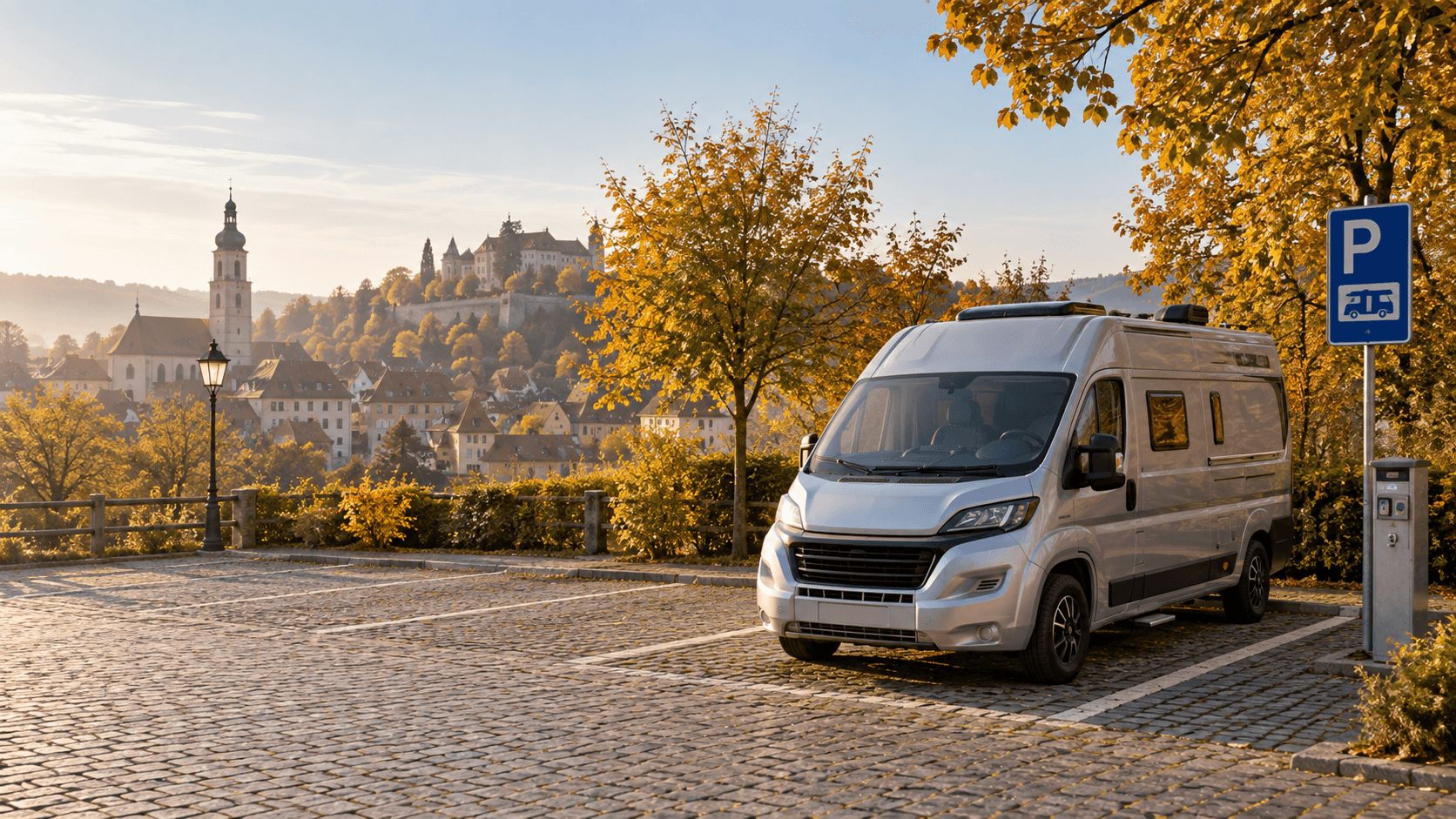
Belgian road traffic rules govern where a vehicle may stop or park on public roads. The current code includes parking signs and a dedicated symbol for spaces reserved for motorhomes. But road traffic law alone does not create a nationwide right to sleep anywhere that a campervan can be parked.
In other words, you need to ask more than “Can I park here?” The better checklist is:
- Is the vehicle legally parked?
- Does a sign or local bylaw restrict motorhomes or overnight stays?
- Is the land protected, private or subject to access rules?
- Does your behaviour remain within the rules for that place?
If any answer is uncertain, move to an authorised overnight stop.
Parking is not the same as camping
A campervan remains a vehicle when it is parked, but using the surrounding space can change the character of the stop. A quiet break inside the vehicle is not the same as setting up an outdoor living area.
Behaviour commonly associated with camping includes:
- opening an awning;
- placing chairs, tables or cooking equipment outside;
- using several parking spaces;
- setting out steps, mats or other equipment beyond the vehicle;
- making a fire or barbecuing;
- staying repeatedly or for an extended period;
- emptying grey water, toilet waste or rubbish.
Keeping everything inside does not cancel a prohibition. If a sign excludes motorhomes, limits parking hours, prohibits overnight stays or closes the car park at night, follow it.
Can you sleep in a campervan in a public car park?
There is no reliable Belgium-wide “yes” for every public car park. The answer depends on the signs, the municipality, the type of land and how the vehicle is being used.
Before relying on a car park, check:
- entrance signs and signs beside the bay;
- payment, parking-disc and maximum-stay rules;
- height, length or weight limits;
- whether spaces are reserved for cars, coaches or motorhomes;
- night closures or explicit overnight restrictions;
- nature-reserve, coastal or forest access notices.
Never block traffic, gates or emergency access. If you are too tired to drive safely, stop in a lawful place and deal with the immediate safety risk. For a planned holiday night, however, an official overnight area or campsite gives you a much clearer basis for staying.
What about forests, nature reserves and rural tracks?
An empty-looking track is not an invitation to camp. Forests and nature areas can have access regulations that prohibit leaving authorised routes, entering with motor vehicles or spending the night outside designated places.
Flanders’ official Nature and Forest Agency states that you may not simply pitch a tent in nature. It provides designated bivouac zones instead, with advance reservations, one-night limits and access on foot or by bicycle. The agency also says that its bivouac zones cannot be reached by car. Those zones are therefore not substitutes for campervan parking.
Take the same cautious approach in Wallonia and Brussels: check the managing authority’s rules for the exact forest, reserve or park. Do not infer permission from the absence of a barrier or from other vehicles being present.
Protected land may carry stricter rules, and owner permission alone may not remove them.
Are bivouac zones suitable for campervans?
Usually not. In Belgium, a bivouac zone generally means a small, low-impact overnight area for walkers or cyclists carrying a tent. It is not the same as a motorhome aire.
For example, the official Flemish bivouac zones operated by the Nature and Forest Agency require a reservation, allow only one night, restrict tent numbers and are intended for people arriving on foot or by bicycle. Vehicles cannot be driven to the zone.
Always read the individual bivouac rules before travelling. A listing for a legal tent pitch does not imply that a campervan may park nearby overnight.
Does the landowner’s permission make wild camping legal?
Permission is essential on private land, but it may not be the only requirement. A landowner cannot waive public road rules, nature restrictions, fire bans, planning controls or municipal bylaws.
If a farm, restaurant or private host offers an overnight place, confirm:
- that campervans are accepted;
- where the vehicle must be parked;
- whether a booking or purchase is required;
- arrival and departure times;
- whether outdoor equipment is allowed;
- how waste and wastewater must be handled.
Clear host instructions are far safer than assuming that a quiet field edge is available.
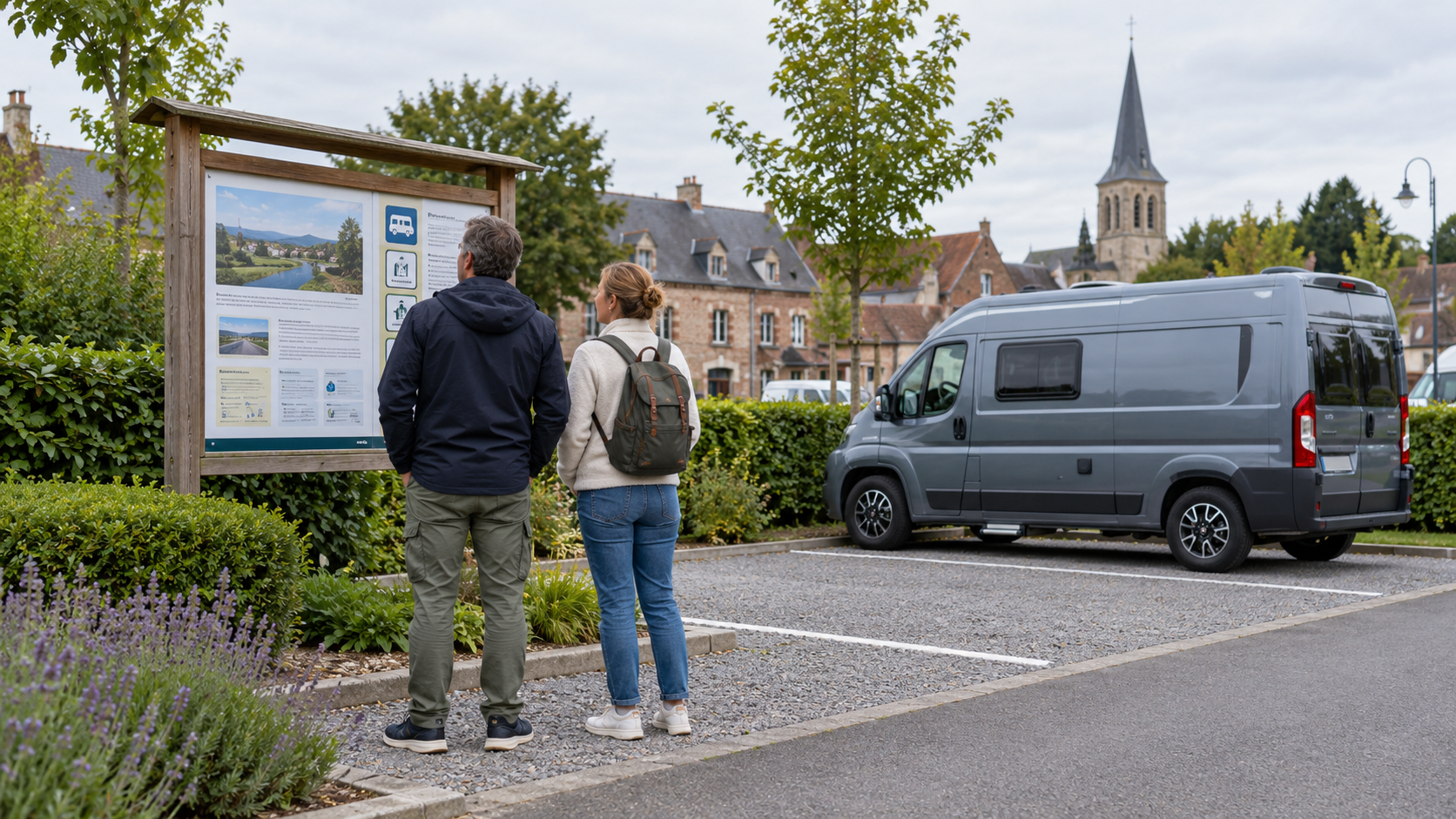
What are the best legal alternatives?
1. Motorhome areas
Dedicated motorhome stopovers are often the best match for a one-night transit stop or a short city visit. Some are simple parking areas; others have electricity, water or waste services. Browse motorhome areas in Europe and then verify the current rules displayed on site.
2. Campsites
Choose a campsite when you want to put out furniture, use an awning, stay longer or have reliable facilities. Campernight’s campsite listings help you compare this type of stay before opening the full app for details and recent traveller information.
3. Authorised private stops
Farms, restaurants and other hosts may accept campervans by arrangement. Book or ask first, then follow the conditions set by the host and the local authority.
4. Nature-style stops only after checking the rules
Campernight also groups wild-camping and nature stops for discovery. A listing is not legal permission: confirm access, signs and current local rules before driving there or staying overnight.
A low-risk checklist for an overnight stop
- Plan at least one authorised option and one backup before late evening.
- Read every sign at the entrance and around the parking area.
- Check the municipality or site operator if the overnight rule is unclear.
- Confirm that the bay fits your vehicle and is not reserved for another category.
- Keep chairs, tables, awnings and cooking equipment inside unless the site explicitly permits them.
- Never light a fire unless the place provides a legal facility and current fire conditions allow it.
- Use approved points for rubbish, grey water and toilet waste.
- Leave immediately if asked by the landowner, site manager or an authorised officer.
Plan your Belgium stops with Campernight
Use the Campernight app to compare nearby motorhome areas, campsites and authorised stopovers, check services and keep a backup for the night. The app helps you discover possibilities; the sign and current rule at the location remain decisive.
For a broader cross-border overview, read Wild Camping Laws in Europe and recheck the country and municipality you will actually visit.
Frequently asked questions
Is wild camping legal everywhere in Belgium?
No. Belgium does not offer a general right to camp on public land or in nature. Rules vary by region, municipality, land manager and exact location. Use designated or authorised places.
Can I sleep in my campervan if parking is allowed?
Do not treat legal parking as automatic permission for an overnight stay. Check signs, parking limits, municipal rules and land-use restrictions. Avoid camping behaviour in ordinary parking spaces.
Can I stay overnight in a Belgian forest car park?
Only if the signs and rules for that exact car park allow it. Forest and nature access rules may prohibit overnight use or vehicle access even when the area appears open.
Are Belgian bivouac zones open to motorhomes?
Many are designed for hikers and cyclists with tents, not vehicles. The Flemish Nature and Forest Agency explicitly says its bivouac zones are reached on foot or by bicycle and cannot be accessed by car.
Is one night always tolerated?
No national “one free night” rule makes every parking place legal for campervan accommodation. A time limit, prohibition sign, local bylaw or nature rule can still apply.
Can I camp on private land with permission?
Permission from the owner is necessary, but public rules still apply. Confirm that the proposed stay complies with local, nature, fire and access restrictions.
Final takeaway
Wild camping with a campervan is not something to assume legal in Belgium. Start with lawful parking, then check local overnight restrictions, land status and the rules for your behaviour. Do not use tent bivouac zones as vehicle stops unless they explicitly permit campervans.
For a planned night, choose an official motorhome area, campsite or authorised private host. That small amount of planning protects natural places, avoids late-night uncertainty and leaves more time to enjoy the trip.