Aires, Campsites and Wild Camping: What Is the Difference?
If you are new to campervan travel in Europe, the words can get confusing fast. One app says aire, another says campsite, someone in a forum talks about wild camping, and a sign at the car park says overnight parking is forbidden.
The simple version is this: an aire is usually a practical stopover for motorhomes or campervans, a campsite is a place designed for camping, and wild camping means staying outside designated places. The tricky part is that the legal difference often depends on your behaviour, not only where you park.
This guide explains the difference in plain English, so you can choose the right kind of overnight place, avoid awkward fines, and travel with less stress.
Quick definitions
An aire is a designated motorhome or campervan stopover. It may be free or paid, basic or well-equipped, and it is usually built around practical overnight parking rather than a full holiday setup.
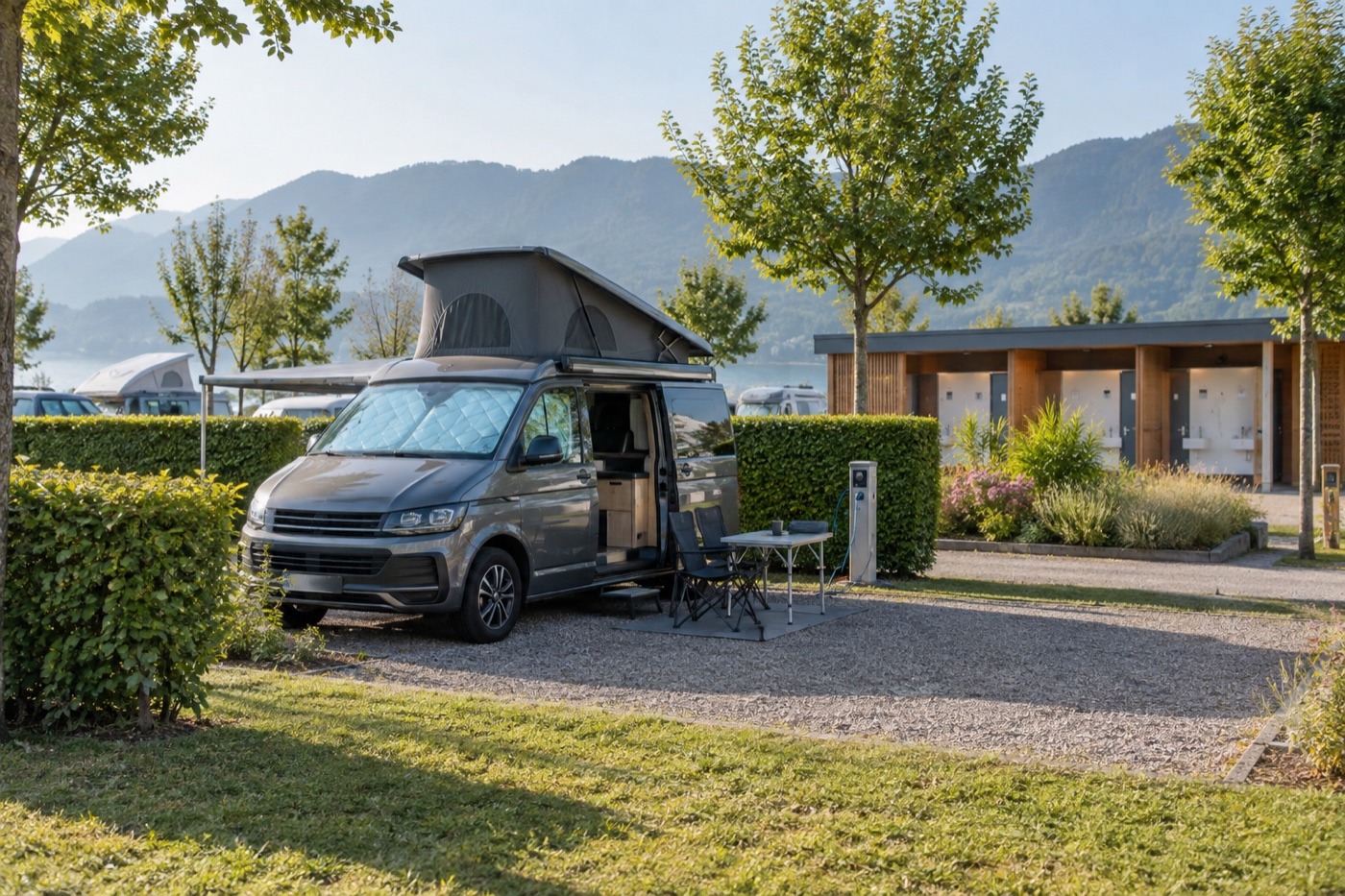
A campsite is a managed camping area with pitches and facilities. It is normally the best choice when you want showers, toilets, electricity, laundry, reception, a longer stay, or space to properly set up outside the van.
Wild camping is sleeping or camping outside designated overnight areas. In a campervan context, people often use the phrase loosely, but rules vary by country, municipality, protected area, season, and what you do outside the vehicle.
What is an aire?
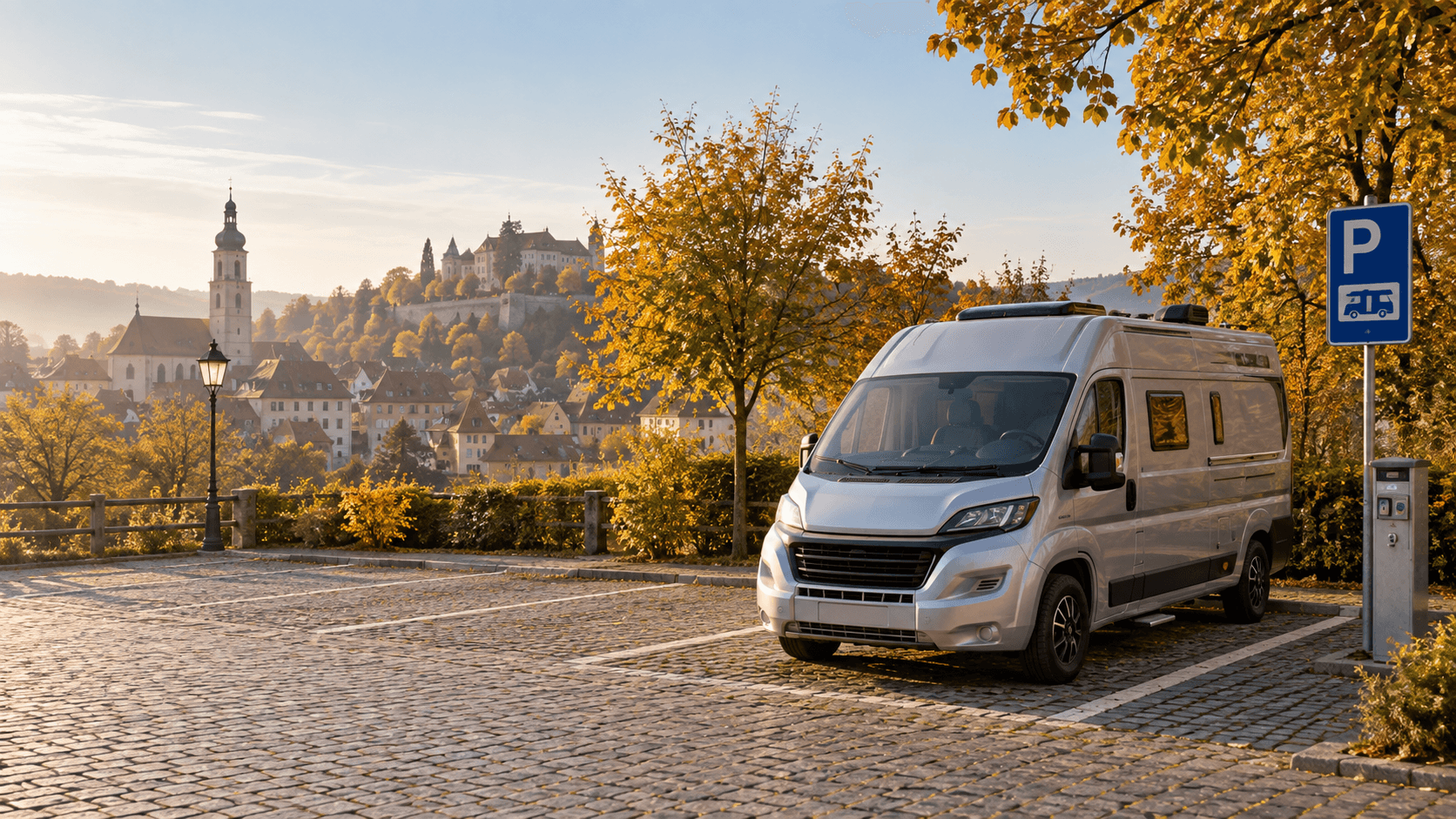
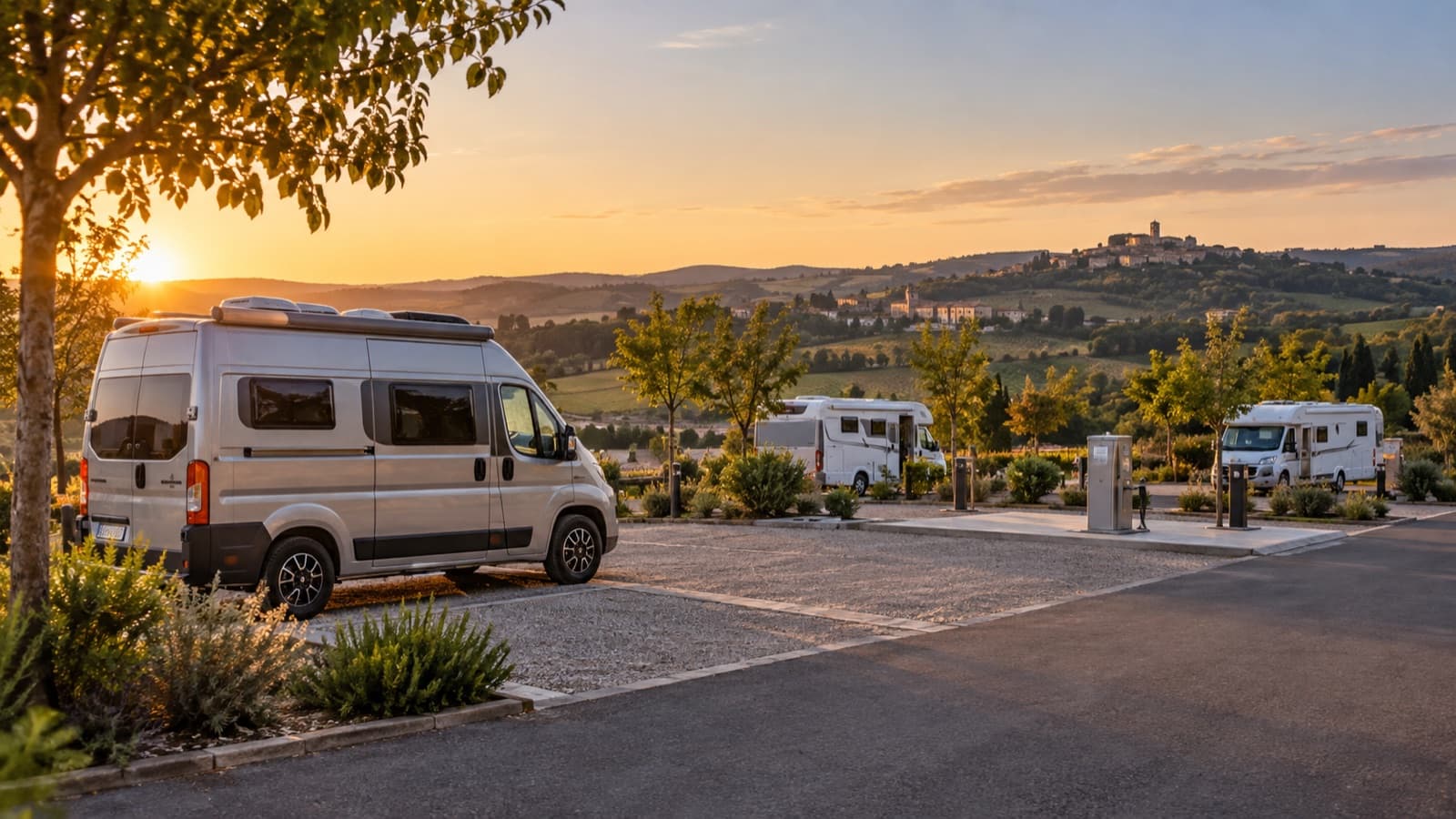
An aire is usually a legal or semi-formal place where motorhomes and campervans can stop overnight. You can browse motorhome areas to see this type of stop. The word is most common in France, but the same idea exists across Europe under different names: motorhome area, camper area, stellplatz, camperplaats, area camper, or stopover.
Typical aire facilities can include:
- marked parking bays
- fresh water
- grey water disposal
- black water disposal
- rubbish bins
- toilets or showers in better-equipped places
- payment machines or app-based payment
- short maximum stays, often one or two nights
The important point is that an aire is usually about parking and resting, not spreading out like you are on a campsite. In many places, you should keep chairs, tables, awnings, washing lines, and BBQs packed away unless the rules clearly allow them.
That is why aires are useful on travel days. They are practical, quick, and often closer to towns, roads, beaches, or route corridors than full campsites.
If you are planning your first route, it helps to combine aires with the basics from the first campervan trip guide: arrive before dark, keep a backup stop, and check recent reviews before committing.
What is a campsite?
A campsite is built for camping, not just overnight parking. Browse campsites when you want managed pitches and facilities. You normally book or check in, choose or receive a pitch, and use shared facilities such as toilets, showers, electricity, washing areas, bins, and sometimes restaurants, pools, playgrounds, or reception services.
Campsites are the right choice when you want comfort or certainty. They are especially useful when:
- you need showers, laundry, or electricity
- you are travelling with children
- you want to stay more than one night
- you want to put chairs, tables, or an awning outside
- the weather is bad and you need proper facilities
- local overnight parking rules are strict
- you are near a protected area, busy coast, or tourist town
The trade-off is cost and flexibility. Campsites can be more expensive, may require advance booking in high season, and are not always where you want to stop for one quick night. But when you need a reset, they are often worth it.
What is wild camping?
Wild camping means staying outside designated camping or overnight areas. You can browse wild camping spots as a starting point, but you must still check the local rules. With a tent, that might mean sleeping in a remote natural place. With a campervan, it usually means parking somewhere that is not a campsite, aire, stellplatz, or official motorhome area.
This is where travellers get into trouble, because online advice often compresses a messy legal topic into slogans. There is no single Europe-wide rule. Some regions tolerate discreet overnight parking. Others prohibit it clearly. Protected nature areas, beaches, forests, national parks, and private land usually have stricter rules.
There is also a difference between parking and camping. In many places, simply parking a self-contained vehicle overnight to rest is treated differently from setting up camp. Once you open an awning, put out chairs, cook outside, level the van with ramps, leave gear around the vehicle, or stay multiple nights, authorities may treat it as camping even if the van is in a parking space.
For country-by-country context, use the wild camping laws in Europe guide as a starting point, then still check local signs and current municipal rules before staying.
The practical difference: parking, staying, camping
The most useful way to think about the difference is not the label. It is what the place allows you to do.
Parking means the van is parked like a vehicle. You sleep inside, keep everything contained, do not take up extra space, and leave early if needed.
Staying overnight means the place allows sleeping in the vehicle. It may still restrict outdoor setup, length of stay, noise, waste disposal, or arrival time.
Camping means you are using the place as a living pitch. Chairs, tables, awnings, cooking outside, gear, and multi-night stays are normal only when the place permits camping.
This is why an aire can be perfect for one night but wrong for a holiday-style stay. A campsite can be overkill for a quick sleep but ideal when you need facilities. A wild-looking place can feel peaceful but still be illegal or inappropriate if signs, land ownership, or protected-area rules say no.
How to choose the right stop
Start with your real need for the night.
If you only need a safe overnight rest, search for an aire, motorhome area, stellplatz, or campervan stopover. Prioritise recent reviews, lighting, access, noise, and whether overnight stays are explicitly allowed.
If you need facilities, choose a campsite or a fully serviced camper area. A place like Camper Park Mikki is the kind of stop to compare when you want a motorhome-area feel with practical services such as showers, toilets, water, waste disposal, electricity, Wi-Fi, reviews, and photos.
If you want nature and quiet, be extra careful. Look for official nature campsites, farm stays, private land with permission, small campsites, or designated rural stopovers instead of assuming that an empty track is fine. A place like Kamp Koren is a useful example of choosing a recognised stop around nature rather than improvising a wild camp.
When you are unsure, choose the more official option. It is rarely worth risking a fine, a late-night knock on the window, or damage to local campervan access just to save a few euros.
Red flags before you stay
Do not stay just because another van is already there. They may be locals, day visitors, or simply taking the same risk.
Watch for these red flags:
- no overnight parking signs
- protected natural area signs
- height barriers or fresh restriction signs
- beach, dune, forest, or reservoir zones with sensitive access
- car parks attached to cemeteries, schools, sports facilities, or private businesses
- narrow residential streets where a van would disturb locals
- rubbish, toilet paper, campfire marks, or obvious overuse
- reviews mentioning police, fines, angry locals, or new restrictions
If a place feels borderline, keep moving. Campervan travel works best when travellers leave places calmer than they found them.
How Campernight helps
Campernight is useful because the label alone is not enough. You need to compare the type of place with the details: services, photos, reviews, location, access, and what other travellers say about actually staying there.
Use Campernight to shortlist a few options before you drive into the last hour of daylight. Save one official campsite or serviced stop as your backup, even if you hope to use a simpler aire. Then check local signs when you arrive.
The Campernight overnight parking guide walks through that workflow in more detail: search, filter, read reviews, save backups, and avoid relying on one perfect-looking pin.
Bottom line
Aires are practical stopovers. Campsites are managed places for camping and facilities. Wild camping is outside designated places and needs the most caution.
The safest habit is simple: match the place to the behaviour you need. Park like a vehicle at stopovers, camp only where camping is allowed, keep a backup, and check local rules before you settle in.
That approach keeps your trip easier and helps keep good campervan places open for everyone.