Best Lake and River Campervan Stops in Europe
Freshwater stops can be the best part of a late-summer campervan trip in Europe. After weeks of hot beaches, crowded coastal car parks and busy campsites, a lake swim or a quiet river valley can reset the whole route.
The trick is choosing freshwater places that actually work for campervans. A beautiful lake shore is not automatically a legal overnight stop. A river beach may be perfect for a daytime swim but restricted after sunset. And in popular mountain regions, the closer you get to the water, the more important local signs, protected-area rules and recent reviews become.
Use this guide as a practical shortlist for planning lake and river campervan stops in Europe: where to look, what to check, and how to build backup overnight options before the best places fill.
Why freshwater stops work so well in late summer
Lake and river stops solve a different problem from beach travel. They are often cooler at night, better sheltered from coastal wind, and easier to combine with hiking, cycling, kayaking, village visits or slow rest days. In late summer, they can also be a smart way to avoid the worst coastal pressure while still planning a trip around water.
They are not always quieter. Famous lakes and river gorges can be just as busy as beaches, especially in August and early September. Lake Bled, Lake Garda, the Gorges du Verdon, Annecy, the Dordogne and the Soca valley all attract travellers for good reasons. That popularity means you should plan the overnight part separately from the swim or view.
A good freshwater campervan plan usually has three layers:
- A scenic daytime stop for swimming, walking or lunch.
- A legal overnight option nearby.
- A boring backup if the first place is full, restricted or too exposed.
That is where Campernight helps. Instead of relying on one perfect pin beside the water, use it to compare nearby camper-friendly places, check facilities and save fallback stops before sunset.
The best types of lake and river campervan spots
The best freshwater stops are rarely just random spaces beside the water. They are places where access, rules and facilities match the kind of night you need.
| Spot type | Best for | What to check |
|---|---|---|
| Lakeside campsites | Longer stays, showers, swimming, families | Booking, quiet hours, pitch access, lake distance |
| River campsites | Canoeing, cycling, shaded rest days | Flood risk, access roads, seasonal opening |
| Motorhome areas near lakes | One-night stops, services, simple planning | Overnight permission, water/waste facilities, payment |
| Inland village stops near rivers | Calm backups near busy destinations | Recent reviews, signs, local shops, noise |
| Day parking by the water | Swimming or lunch stops | Whether overnight parking is banned |
Freshwater regions worth planning around
Europe has too many good freshwater routes for a single fixed ranking, so think in regions rather than isolated pins.
The Alpine lakes are the obvious starting point. Slovenia, northern Italy, Austria, Switzerland and eastern France combine lakes, mountain roads and cooler evenings. These areas are beautiful but sensitive, so expect restrictions near the most famous shores and keep official options in the plan.
River valleys are often easier to travel slowly. The Dordogne, Ardèche, Loire, Tarn, Moselle, Rhine, Douro and Soca all offer versions of the same appeal: water, villages, cycling or walking routes, and smaller places where you can break up the drive. Rules still vary, but you are not always fighting for the same beach car park as everyone else.
Northern Europe is strong for lake-heavy routes. Sweden, Norway and parts of Finland are built around forests, lakes and long summer light. The scenery can be incredible, but distances are larger and services can be more spread out, so do not treat every lakeside road as an easy overnight solution.
For a practical trip, choose one freshwater cluster and build two or three nights around it instead of chasing famous lakes across half the continent.
Campernight examples to look for
When a route needs real freshwater places, look for a clear match between the setting and the practical facilities.
Kamp Koren in Slovenia is a useful example for the Soca valley. In Campernight production data, it is listed as a motorhome-area style place with water, pet-friendly and trash services, year-round opening information and a photo set. Its description places it under Mount Krn in the Soca valley, which makes it a good example of a river-valley base rather than a random scenic pin.
Camping Beau-Rivage Lac du Pareloup in France is a good lake example. Campernight data lists it as a campsite on the shore of Lac de Pareloup, with water, toilets, showers, electricity, waste disposal, Wi-Fi, pet-friendly facilities and photos. That is the kind of place to shortlist when you want freshwater views without guessing whether a bare lakeside car park allows overnight stays.
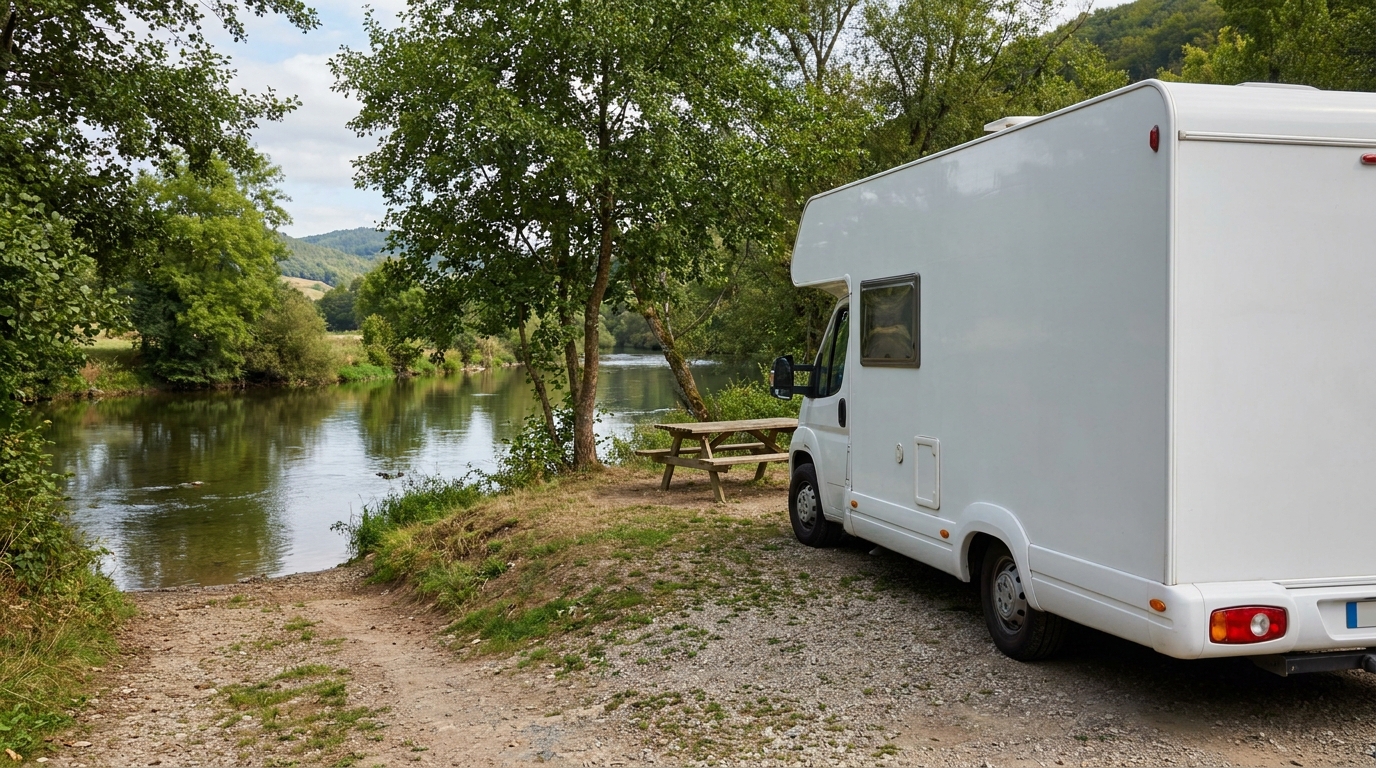
Treat examples like these as planning patterns, not universal recommendations. Check current opening dates, prices, access, recent reviews and signs before driving there.
What to check before staying near water
Freshwater places can be fragile. Lakeshores, riverbanks, wetlands and gorges often have protected habitats, fire-risk rules, flood zones, narrow access roads or local parking limits.
Before you settle in, check:
- Signs at the entrance, payment machine and waterfront access.
- Whether overnight parking is allowed, not just daytime parking.
- Whether camping behaviour is allowed, including chairs, awnings and cooking outside.
- Flood risk if you are close to a riverbed or low bank.
- Fire restrictions, especially in dry late-summer regions.
- Waste rules, because grey water and toilet disposal near water are non-negotiable.
- Recent reviews mentioning police checks, fines, closures, crowding or barriers.
- Whether large motorhomes can enter and leave without blocking narrow roads.
If the place is inside a national park, natural park, protected lakeshore, reservoir area or drinking-water zone, be stricter than usual. An empty spot near water can still be the wrong place to sleep.
How to build a better freshwater route
Start by deciding what the water is for. If the goal is swimming and relaxing, book or shortlist a place with toilets, showers and easy lake or river access. If the goal is a one-night route break, choose a legal overnight stop nearby and visit the water before dinner.
Arrive earlier than you would on an ordinary travel day. Freshwater spots are popular in late summer, and the best legal places can fill before evening. If you are aiming for a small aire or a riverside campsite, check whether it needs booking or has limited reception hours.
Keep at least one backup inland. The backup does not need to be beautiful. It needs to be legal, reachable, quiet enough and easy to leave in the morning. That one saved option is what prevents a relaxed lake day from becoming a stressful late-night search.
For broader overnight planning, pair this article with Campernight's guide on how to find overnight parking with Campernight. If your freshwater route crosses multiple countries, also read the wild camping laws in Europe guide before assuming the same rules apply everywhere.
A simple rule for lake and river stops
The best lake and river campervan stops in Europe are not always the ones closest to the water. They are the ones where the scenery, access, rules and overnight plan all line up.
Use lakes and rivers for the part of the trip they do best: cooler evenings, swims, shade, walking, villages and slower travel. Then choose the overnight stop with a clear head. Check signs, read recent reviews, keep camping behaviour where it is allowed, and save a backup before you need it.
That is how freshwater routes stay enjoyable for travellers and acceptable for the places that host them.