Last-Minute Overnight Campervan Spots in Europe: How to Find Somewhere Legal Tonight
It is 6 PM, the good campsite is full, the kids are hungry, or you simply drove further than planned. This is when campervan travel stops being romantic and becomes a small logistics problem: where can you sleep tonight without risking a fine, a late-night knock, or a miserable stop beside a noisy road?
The good news is that Europe has plenty of last-minute overnight options for campervans and motorhomes. The bad news is that the rules, signs, and local tolerance change by country, region, and even municipality. The safest approach is not to search for "somewhere hidden." It is to quickly sort legal stop types, check the local signs, read recent reviews, and keep a backup within reach. Campernight is useful here because you can look for camper-friendly spots near your actual route instead of guessing from a generic map.
Start with the right type of overnight spot
When you need a place tonight, start with the categories most likely to be designed for overnight camper use:
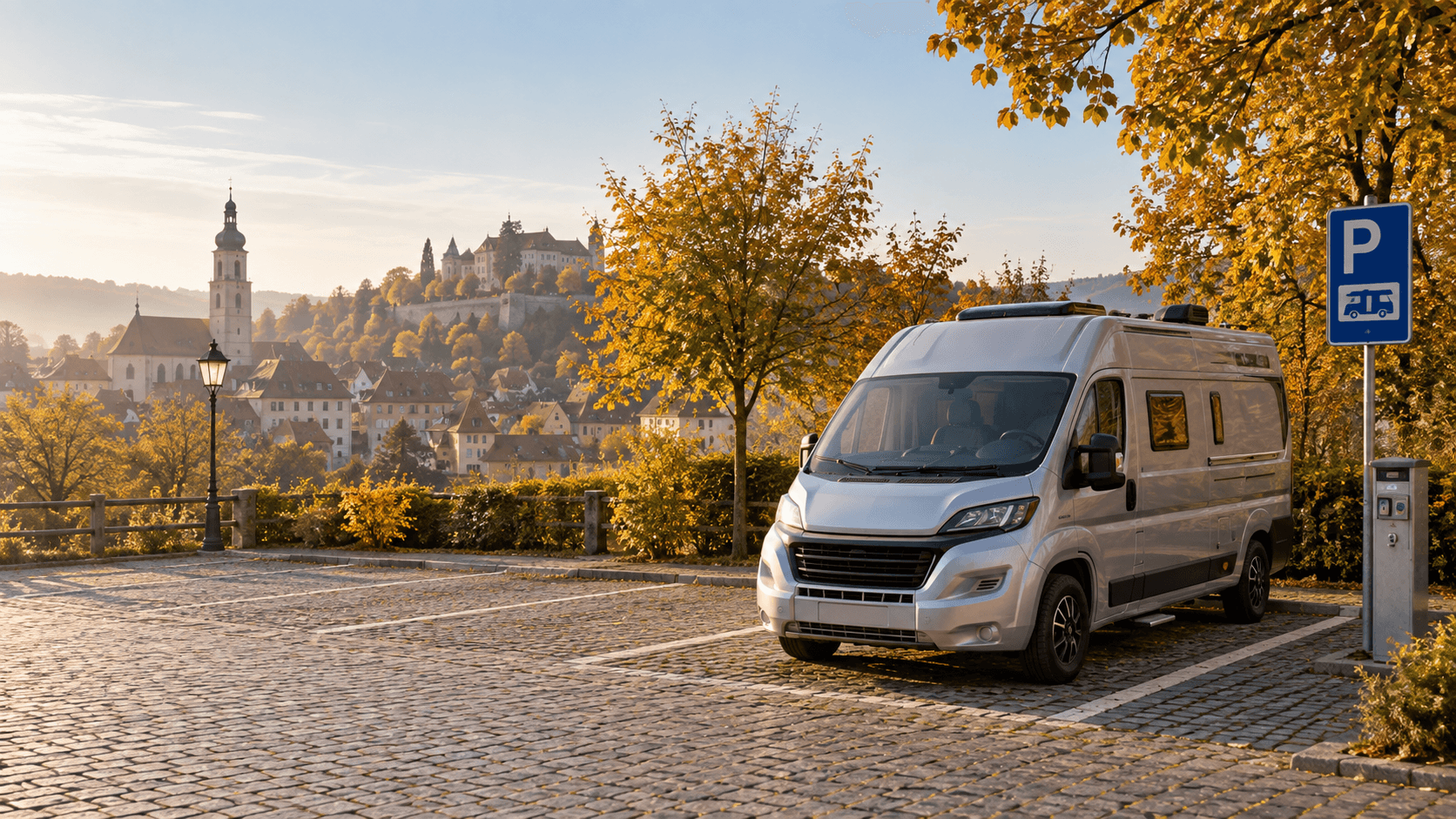
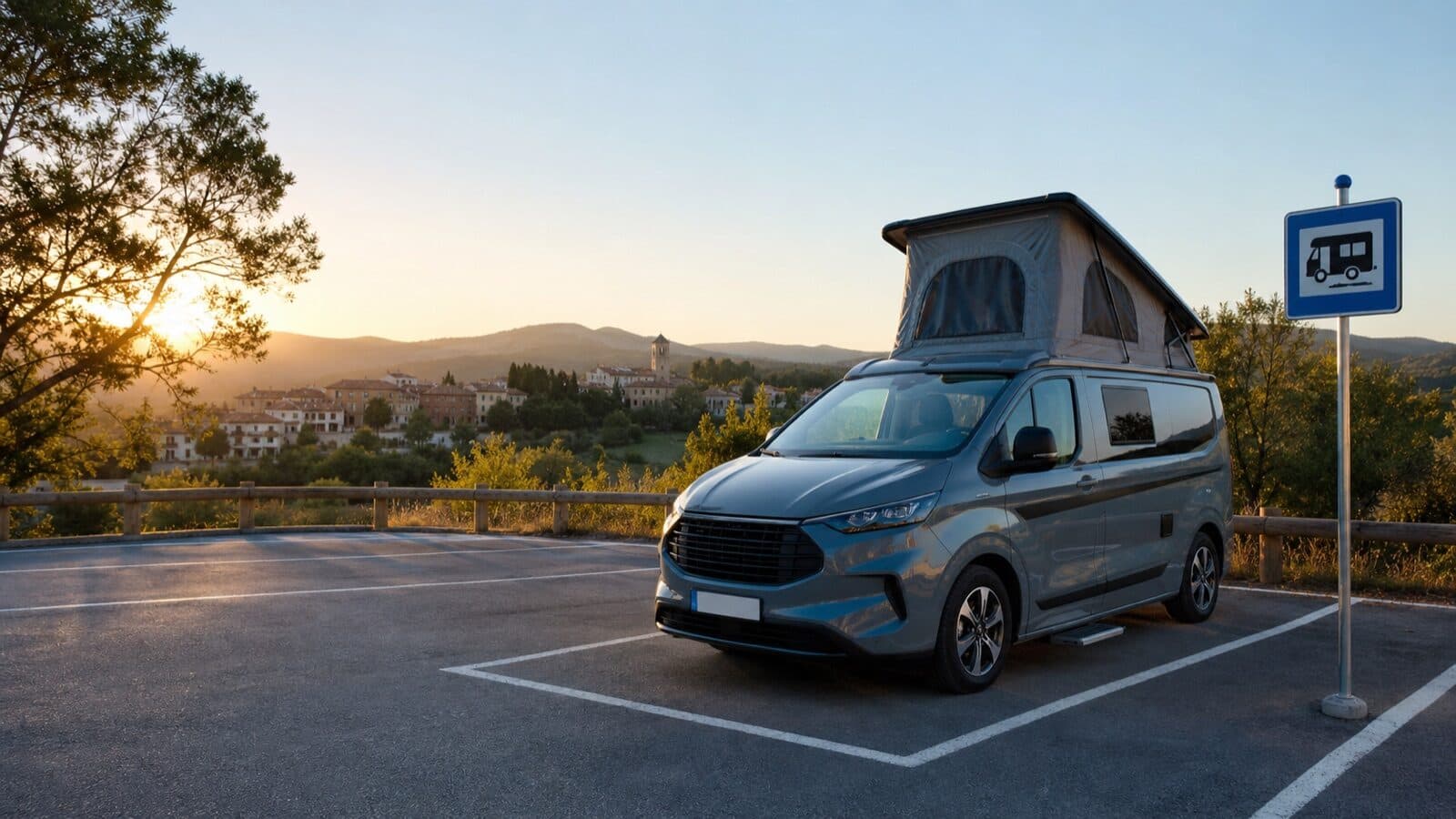
- Motorhome areas, aires, stellplatze, camperplaatsen, area sosta, and similar dedicated stopovers
- Campsites, especially small municipal or rural sites that may still have same-day availability
- Paid camper parking areas near towns, ferry ports, lakes, beaches, or tourist routes
- Farm stays, private stopovers, and official motorhome-friendly businesses where overnight stays are clearly allowed
- Official car parks only where signage, local rules, and recent camper reviews suggest overnight parking is tolerated
The last category needs the most caution. In many places, parking a campervan and sleeping in it are treated differently from camping behaviour. A van parked inside a marked bay may be tolerated where camping chairs, awnings, levelling ramps, cooking outside, and wastewater dumping are not. If the sign says no overnight parking, no motorhomes, no camping, or gives a time limit that rules out sleeping there, move on.
For a broader planning workflow, read Campernight's guide to finding overnight parking with Campernight. It is the better method when you still have time to build a route, but the same logic works when you are already on the road.
Use a 10-minute triage checklist
Last-minute searching works best when you avoid endless scrolling. Give each candidate spot a fast pass:
- Is overnight parking explicitly allowed, or at least not prohibited by visible rules?
- Is it appropriate for your vehicle height, length, and turning radius?
- Are there recent reviews from other campervan or motorhome travellers?
- Is the spot likely to be quieter after dark, or is it beside a nightclub, freight road, or busy beach access?
- Is there a clear exit route if it feels wrong when you arrive?
- Is there a second option within 20-30 minutes?
If a spot fails the legal/signage check, skip it. If it only fails comfort, noise, or facilities, it may still work as a short overnight backup. The goal tonight is not perfection. It is a legal, calm enough place to sleep and leave responsibly in the morning.
Know the red flags before you arrive
Some places look tempting on a map but are poor last-minute choices in peak season. Be extra careful with:
- Beachfront roads and car parks in July and August
- National parks, nature reserves, dunes, forests, and protected coastal zones
- Historic town centres with narrow streets and resident-only parking
- Scenic lay-bys that show repeated reviews mentioning police checks or fines
- Supermarket car parks unless overnight stays are explicitly permitted
- Any spot where recent reviews mention barriers, new signs, local complaints, or enforcement
This is where country-by-country rules matter. Wild camping and overnight parking are not one single European rule. Spain, France, Portugal, Germany, Italy, Croatia, the Nordics, and the UK all have different legal frameworks and local enforcement patterns. Even inside one country, a coastal resort in August can be much stricter than an inland village car park in October. For the bigger picture, see Campernight's wild camping laws in Europe guide.
Build a backup plan before you move
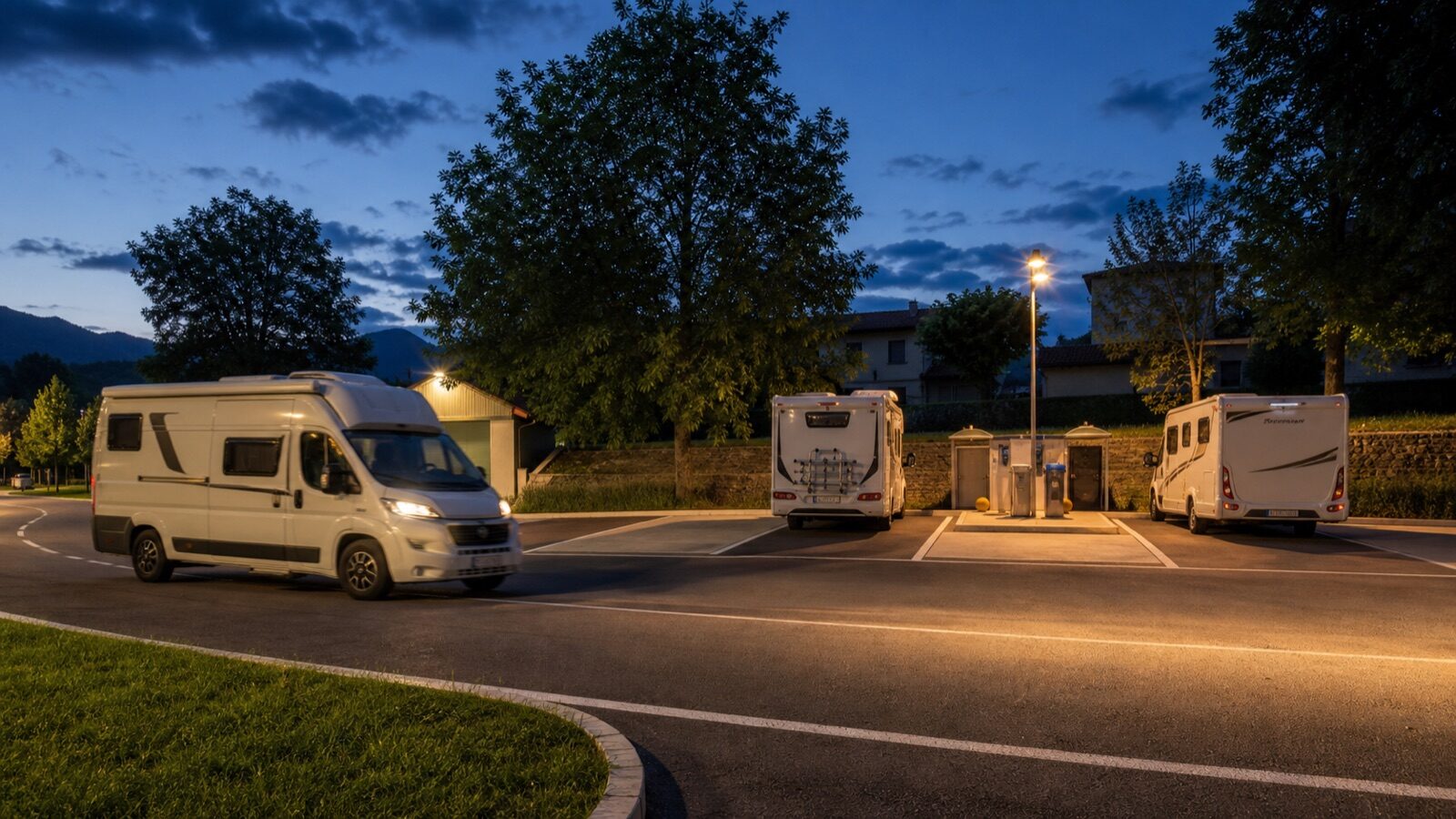
Once you find a promising place, do not drive there with only one option. Pick a primary stop, then save a backup and a final safe option.
Your three-level plan might look like this:
- Primary: the nicest legal-looking motorhome area close to your route
- Backup: a less scenic but better-reviewed official stopover 15 minutes away
- Final safe option: a campsite, paid aire, motorway service area with motorhome bays, or another clearly permitted facility
This matters because late arrival pressure makes bad decisions feel reasonable. If the first stop is full, blocked by a height barrier, or uncomfortable when you arrive, you should already know where you are going next. Campernight can help here because you can compare nearby camper-friendly places, read the practical notes, and keep moving without starting the search from zero.
How to behave when you find a last-minute place
Responsible overnight parking protects you and the next traveller. Keep the stop low-impact:
- Arrive quietly and park inside marked spaces
- Avoid putting chairs, tables, awnings, or washing lines outside unless the site allows camping behaviour
- Do not block views, access roads, gates, bins, or service points
- Keep noise low, especially near homes
- Never dump grey water, black water, or rubbish outside proper facilities
- Leave early if the place is sensitive, busy, or clearly intended as short-stay parking
If a resident, owner, or local authority asks you to move, do it politely. Arguing over the exact difference between parking and camping will not improve your night.
What to do when everything is full
Peak-season Europe can be brutal around beaches, ferry routes, mountain passes, and famous lakes. If every scenic option is full, widen the search before you get exhausted:
- Move inland by 10-30 km from the coast
- Search near smaller towns instead of tourist hotspots
- Look for municipal camper areas rather than campsites only
- Try service-area style stops for one practical night
- Call a campsite directly if online booking shows no availability
- Choose a legal boring stop over a beautiful risky one
The best last-minute spot is often not the prettiest one. It is the place that lets you sleep, reset, and continue the trip without stress.
Conclusion
Finding a last-minute overnight campervan spot in Europe is mostly about discipline: choose official stop types first, check local signs, trust recent reviews, avoid sensitive areas, and keep a backup before you drive. The more tired you are, the more conservative the decision should be.
Use Campernight when you need to find camper-friendly places near your real location, compare nearby options, and build a quick plan for tonight. Then treat the place well, stay low-impact, and leave it easier for the next van to be welcomed too.