Dog-Friendly Campervan Spots in Europe: How to Find Places That Actually Work
Travelling Europe by campervan with a dog can be brilliant, but it changes what a good overnight spot means. A quiet lake car park that looks perfect on a map may be useless if there is no shade, no safe walking space, and a "no dogs" sign at the entrance. A plain-looking motorhome area can be a better choice if it has grass nearby, water access, calm neighbours, and clear rules.
The best dog-friendly campervan spots in Europe are not just places where dogs are technically allowed. They are places where your dog can rest, cool down, move safely, and stay out of trouble with local rules. That means planning a little differently: less "where can I park?" and more "where will this be comfortable for the dog after a long drive?"
Campernight helps with that because you can compare stops, read reviews, save backups, and use filters to shortlist places that match the way you actually travel. In the services filters, you can specifically look for pet-friendly places, then combine that with photos, reviews, shade, water access and walking options. For dog owners, that backup list matters: pet rules, heat, crowds, livestock, beaches and protected areas can all turn a perfect-looking stop into a bad fit.
What makes a campervan spot genuinely dog-friendly?
A dog-friendly stop should pass a practical test before it passes a scenic one. Start with the basics:
- Dogs are allowed on site or at the overnight area.
- There is safe space for a short walk without stepping straight onto a fast road.
- There is shade, water, or at least a realistic plan for heat.
- The ground is comfortable enough for paws in warm weather.
- Local rules are clear, especially around beaches, nature reserves, livestock and protected areas.
- There is enough space between vans that your dog is not constantly reacting to people passing the door.
- Recent reviews do not mention repeated problems with dogs, noise, aggressive animals or strict pet limits.
That last point is easy to overlook. A place can be "pet-friendly" on paper and still feel stressful if every dog has to walk through one narrow, crowded entrance or if the only exercise space is beside a busy road.
When you use Campernight to find overnight parking, treat pet-friendliness as one filter, not the whole decision. Then check the photos, services, reviews and surrounding area before you commit.
The best types of dog-friendly campervan spots
1. Campsites with proper dog facilities
Campsites are often the easiest option when you are travelling with a dog, especially on longer trips. The better ones have shaded pitches, walking paths, waste bins, water points and clear pet rules. Some also have dog showers, off-lead areas, or direct access to trails.
They are not always the most adventurous option, but they are reliable. That matters if your dog is older, nervous, heat-sensitive, or still learning campervan travel. A campsite gives you structure: a legal pitch, facilities, staff to ask, and usually enough room to make the evening calm.
The trade-off is crowding. In high season, campsites can be full of children, bikes, other dogs and people walking past your van every few minutes. If your dog reacts to movement or noise, look for smaller sites, edge pitches, or places with more space between vehicles.
2. Motorhome areas near parks, rivers or walking routes
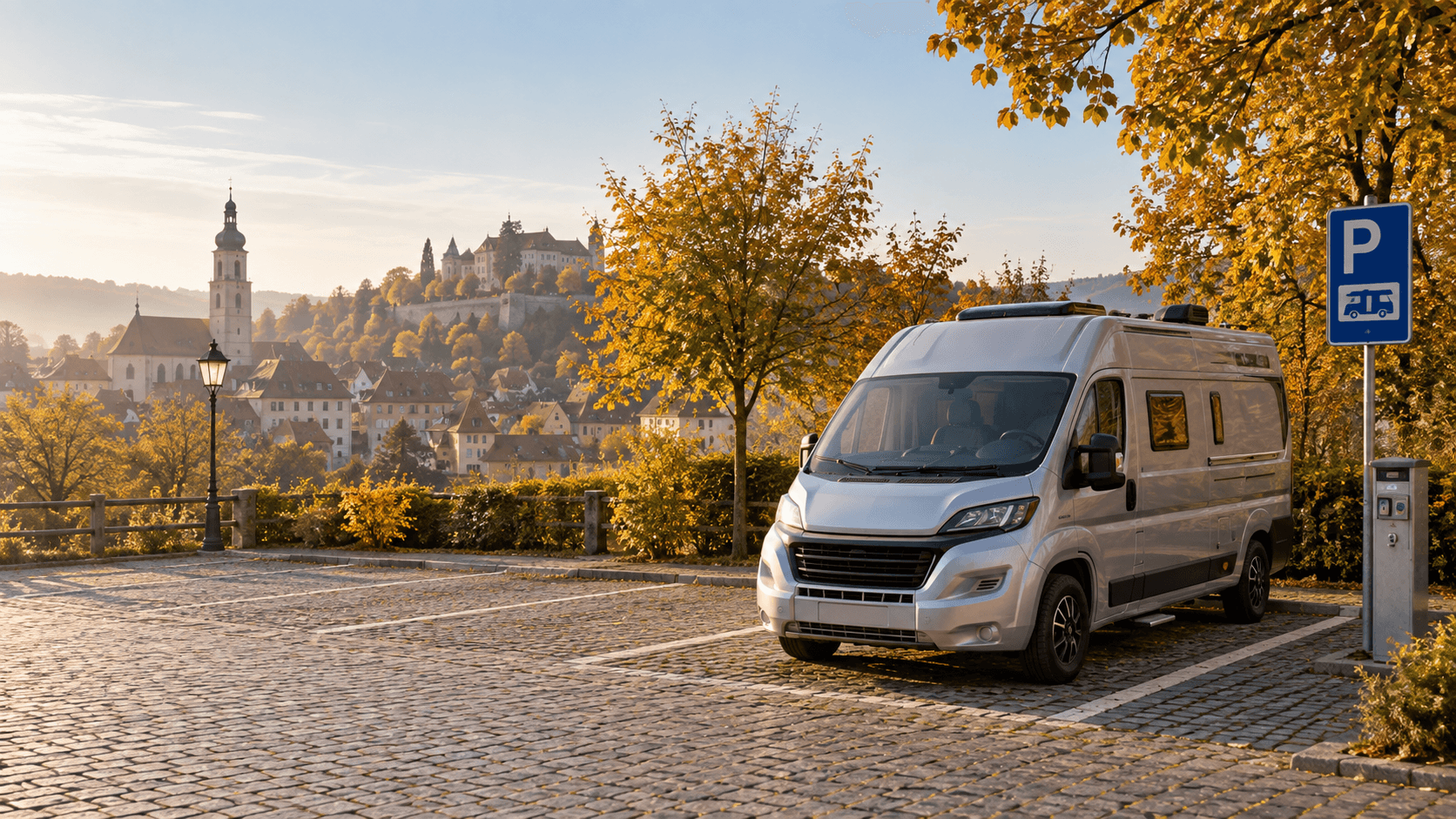
Motorhome areas can be excellent for dog owners when they are placed well. The sweet spot is an official aire or camper area near a park, river path, lakeside walk, forest edge, or quiet village loop. You get the practicality of a legal overnight stop, plus somewhere decent to walk before bed and early in the morning.
This is where the surrounding map matters more than the stop itself. A paved motorhome area beside a roundabout is rarely fun with a dog. A simple area with a path into trees or along a river can work beautifully.
A useful example you can check in Campernight is Aire de camping-cars d'Artouste in the French Pyrenees. It is marked with pet-friendly and electricity services, and it fits the kind of mountain-area stop where dog owners usually care about walking access and cooler air. It is not the right answer for every trip, but it shows the pattern to look for.
3. Rural campsites and farm-style stays
Rural stays can be great with dogs because they often give you space, quieter evenings and easier walks. They are especially good outside peak summer or when you want a slower route.
The caution is livestock. If there are sheep, goats, horses, or cattle nearby, keep your dog under control and assume leads are required unless the host clearly says otherwise. A dog that is perfectly calm in town can behave very differently around animals, wildlife, or open fields.
4. Forest-edge and mountain stops
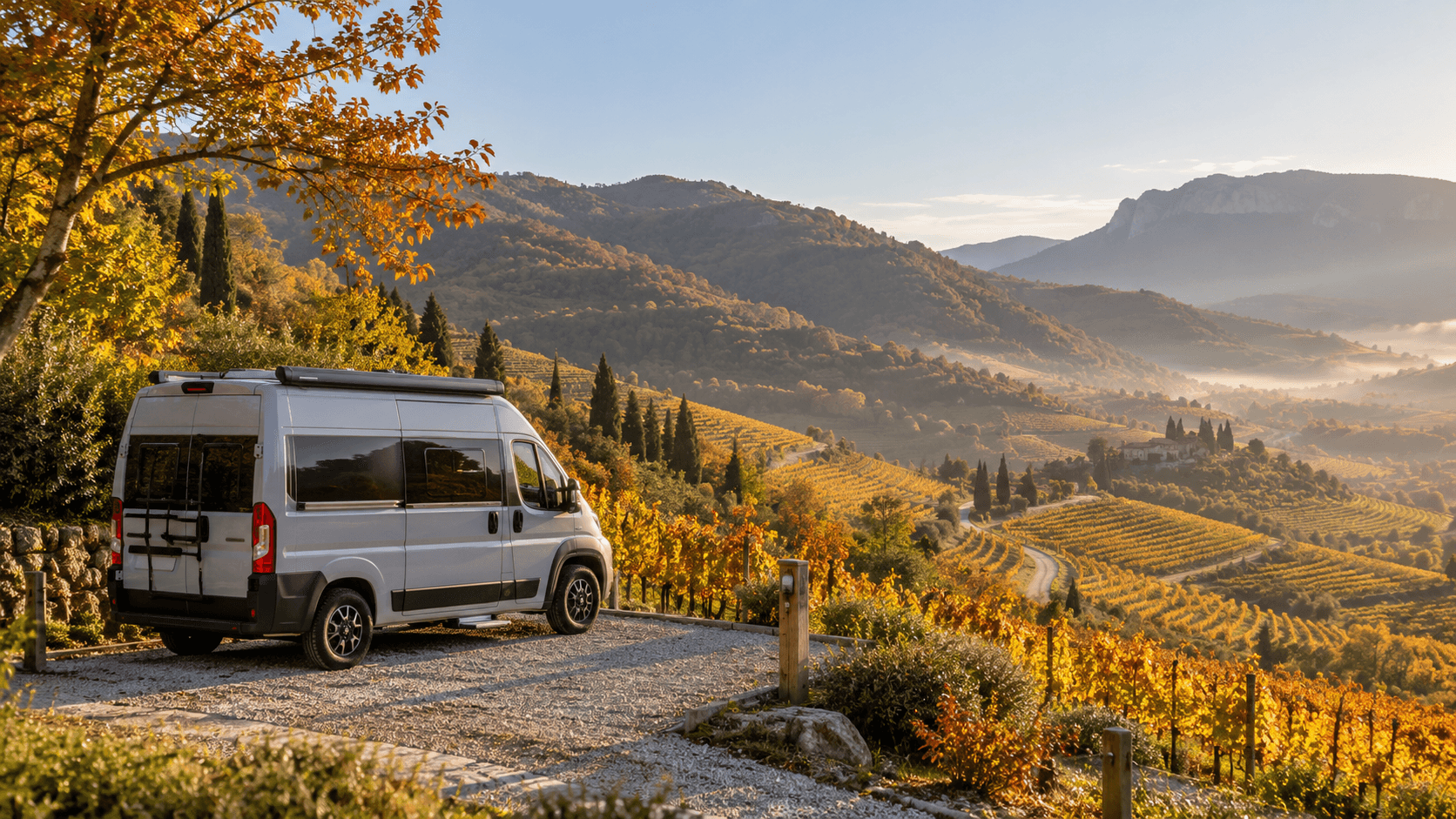
Forest and mountain areas can be the most comfortable option for dogs in warm weather. Shade, cooler nights and softer walking routes make a real difference, especially in late summer.
But do not treat nature as rule-free. Many European forests, national parks, natural parks and protected areas have leash rules, seasonal restrictions, fire rules, or overnight parking limits. Some places also restrict dogs during wildlife breeding seasons or around grazing areas.
5. Coastal areas outside the strict beach zone
Dogs and beaches are complicated in Europe. Some beaches allow dogs all year, some only outside bathing season, some have dog-specific zones, and some ban dogs entirely during summer days. Rules can change by municipality, season and even time of day.
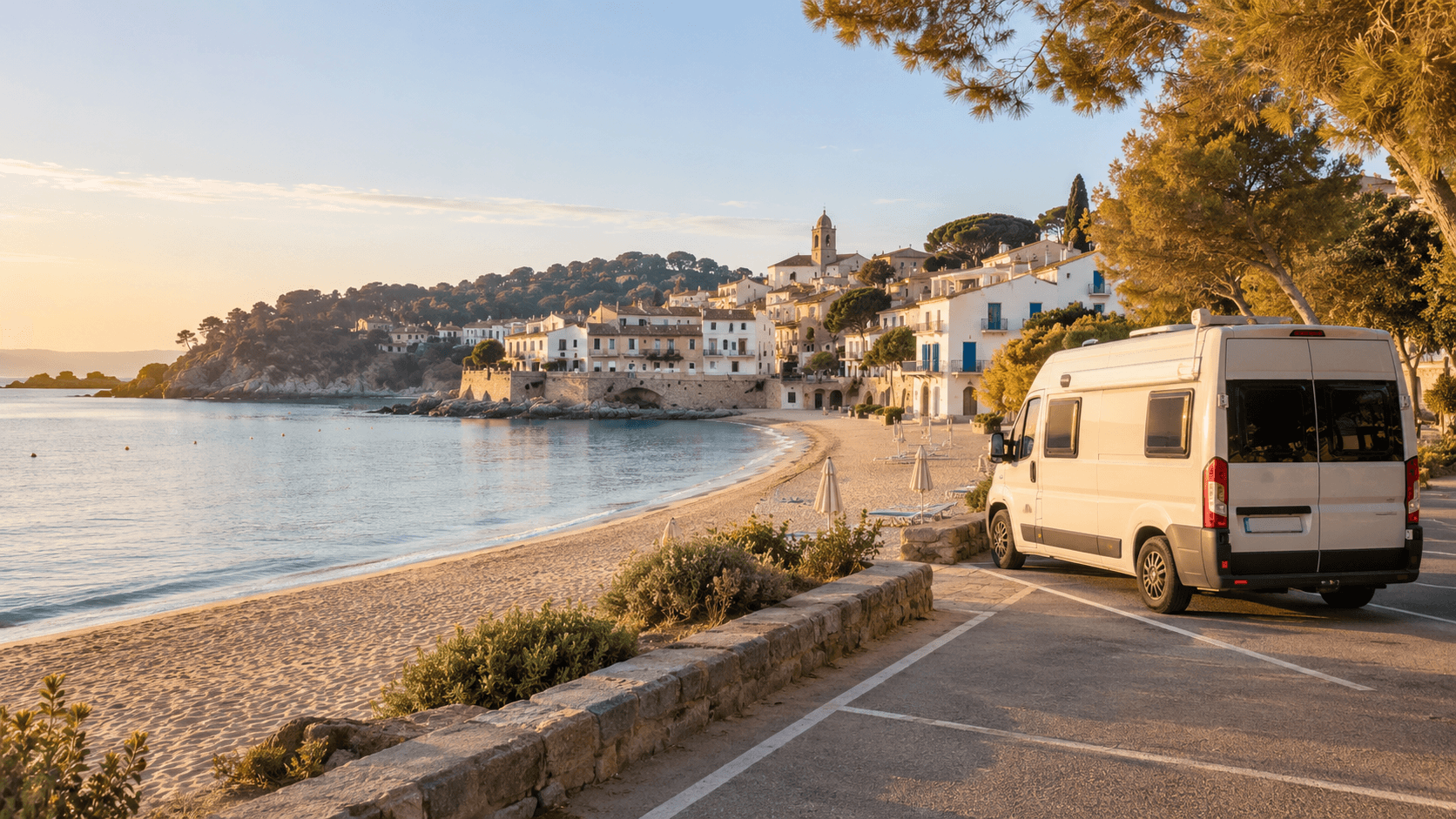
For campervan travel, the best dog-friendly coastal strategy is often to stay a little back from the beach. Look for legal camper areas near coastal paths, shaded picnic areas, river mouths, or villages where you can walk to the sea without sleeping directly beside the sand.
What to check before you choose a spot
Pet rules
Look for explicit pet information, not just a vague assumption that dogs are fine. Campsites may limit breeds, the number of dogs, dog size, or where dogs can go on site. Some require proof of vaccinations. Some charge extra pet fees.
For cross-border travel, keep the official pet travel basics current. Within the EU, dogs generally need identification such as a microchip, rabies vaccination and the correct pet travel document. Great Britain has its own entry rules, including approved routes, microchip and rabies requirements, and tapeworm treatment timing for dogs in many cases. Rules depend on where you are coming from and where you are going, so check official guidance before travel.
Heat and shade
Heat is the big one. A campervan can become uncomfortable fast, and shade moves during the day. If the only shade is at 9 a.m., it may not help at 3 p.m.
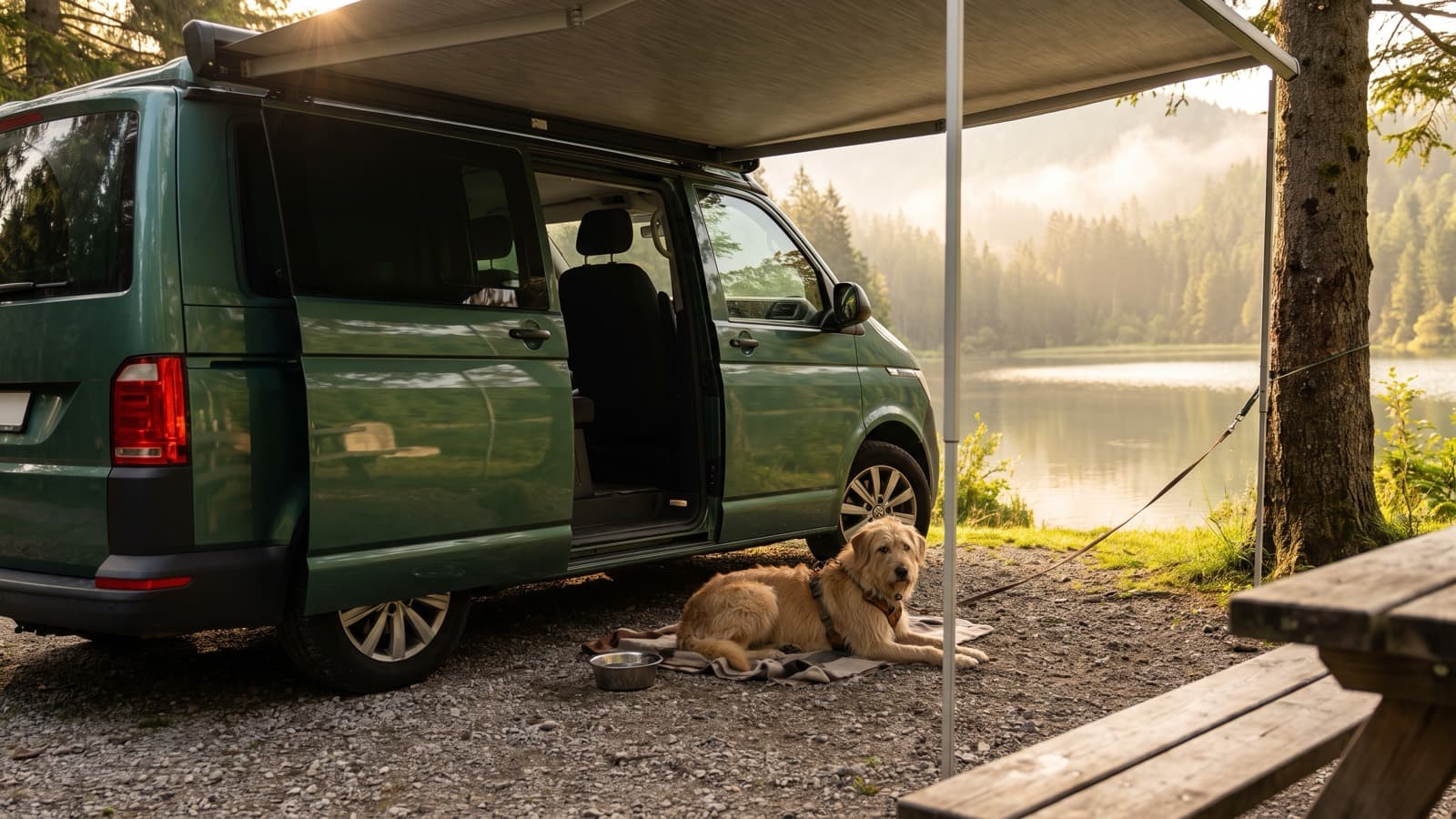
For late summer trips, prioritise stops with natural shade, water nearby, cooler elevation, or easy access to a plan B. Never rely on leaving a dog inside the van while you go into town unless you have a genuinely safe setup and active monitoring. Even then, be conservative.
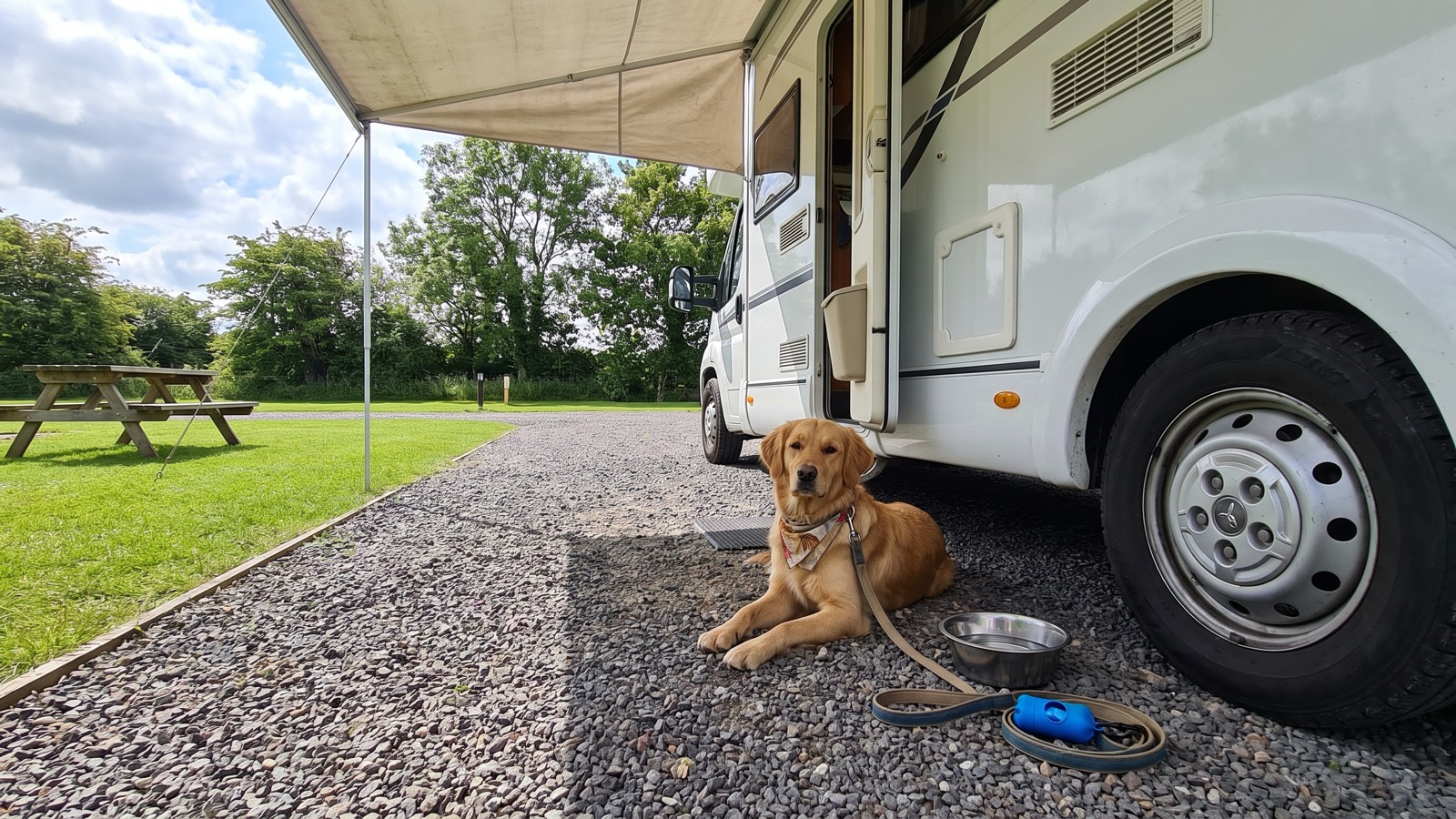
Walking space
A dog-friendly stop needs at least one simple walking option. It does not have to be spectacular. A quiet path, grassy verge, riverside route, or village loop is enough.
What you want to avoid is the "trapped in the car park" feeling: nowhere to walk except between vans, bins and traffic. That gets old quickly, especially over multiple nights.
Other dogs and crowding
Pet-friendly places attract pets. That can be good if the site is spacious and well managed, but stressful if it is crowded or every pitch is tight.
Read recent reviews for clues. Mentions of barking, loose dogs, campsite noise, narrow pitches, or strict management are useful signals. Your dog may be easy; other dogs may not be.
Local etiquette
The rules of responsible vanlife matter more when travelling with a dog. Keep dogs controlled, pick up waste, avoid letting leads block paths, and respect quiet hours. If a place feels sensitive, crowded, or clearly not set up for pets, move on.
This protects access. Campervan travellers lose good spots when locals see repeated bad behaviour, and dog waste is one of the fastest ways to annoy a community. Campernight's guide to responsible vanlife rules is worth treating as part of the pet-travel checklist, not separate advice.
A simple dog-friendly stop checklist
Use this quick checklist before saving a place:
- Is the stop legal for overnight stays?
- Are dogs explicitly allowed?
- Is there shade or a heat-safe plan?
- Is there safe walking space within a few minutes?
- Are there water, bins, or nearby services?
- Do recent reviews mention pets, noise, crowding, or access problems?
- Is the area sensitive because of wildlife, livestock, beaches, or protected land?
- Do you have a backup spot within reasonable driving distance?
Dog travel works better when you do not force one stop to be perfect. Save two or three options in Campernight around the area you want to visit, then choose based on the actual conditions when you arrive.
Another example from Campernight is Camping & Resort Sanguli Salou in Spain. It is marked pet-friendly and fits the kind of established campsite profile that can be easier than improvising around a busy coastal area.
How to build a dog-friendly campervan route
A good route with a dog should balance driving, walking and recovery time. Long drive days are harder with pets because they need proper breaks, not just fuel stops.
A practical rhythm looks like this:
- Start with the region, not the exact stop.
- Save several legal overnight options in Campernight.
- Turn on the services filter for pet-friendly places, then compare the shortlisted stops.
- Check which ones mention pets, shade, water, quiet, or walking access.
- Add one campsite or official area as a reliable backup.
- Avoid arriving after dark if you still need to assess signs and surroundings.
- Keep one low-effort walking option for the morning.
This keeps the trip flexible. If the beach is closed to dogs, the campsite is full, or the area is too hot, you already have another option saved.