Where Can You Park Overnight in Croatia with a Campervan?
Croatia is one of Europe's best summer campervan countries, but it is not a place where you should arrive late, pull into any quiet beach parking area, and assume sleeping in the van will be fine. The short version is simple: for an overnight stay, plan on using registered campsites, camper stops, motorhome areas, or places where overnight campervan use is clearly permitted.
That may sound strict if you are used to looser rules elsewhere, but it also gives you a clear way to plan. Instead of spending the trip guessing where not to sleep, use Campernight before you arrive to filter for official campsites, camper stops, and motorhome areas around your route. Croatia is much easier when the overnight stop is chosen first and the scenic daytime parking stays separate.
If you are comparing Croatia with other countries, start with our broader guide to wild camping laws in Europe first. Croatia sits on the stricter end of that spectrum, especially along the coast and in protected areas.
Is It Legal to Sleep in a Campervan in Croatia?
In practice, sleeping overnight in a campervan outside approved places is risky in Croatia. Wild camping is widely treated as prohibited, and that does not only mean pitching a tent. If the vehicle is being used as accommodation overnight, a public car park, beach pull-off, viewpoint, roadside lay-by, or town parking space can become a problem even if you keep everything inside the van.
The safest working rule is this: parking is not the same as overnighting. You may be allowed to park during the day, visit a beach, walk into town, or stop for a break. Sleeping there overnight is a different use. Unless the place explicitly allows campervans or overnight stays, do not treat a normal parking sign as permission to sleep.
This is especially important in July and August. Coastal towns, islands, national parks, and popular beaches see heavy pressure in peak season, so enforcement and local complaints are more likely where vans gather after dark.
Where You Should Stay Overnight Instead
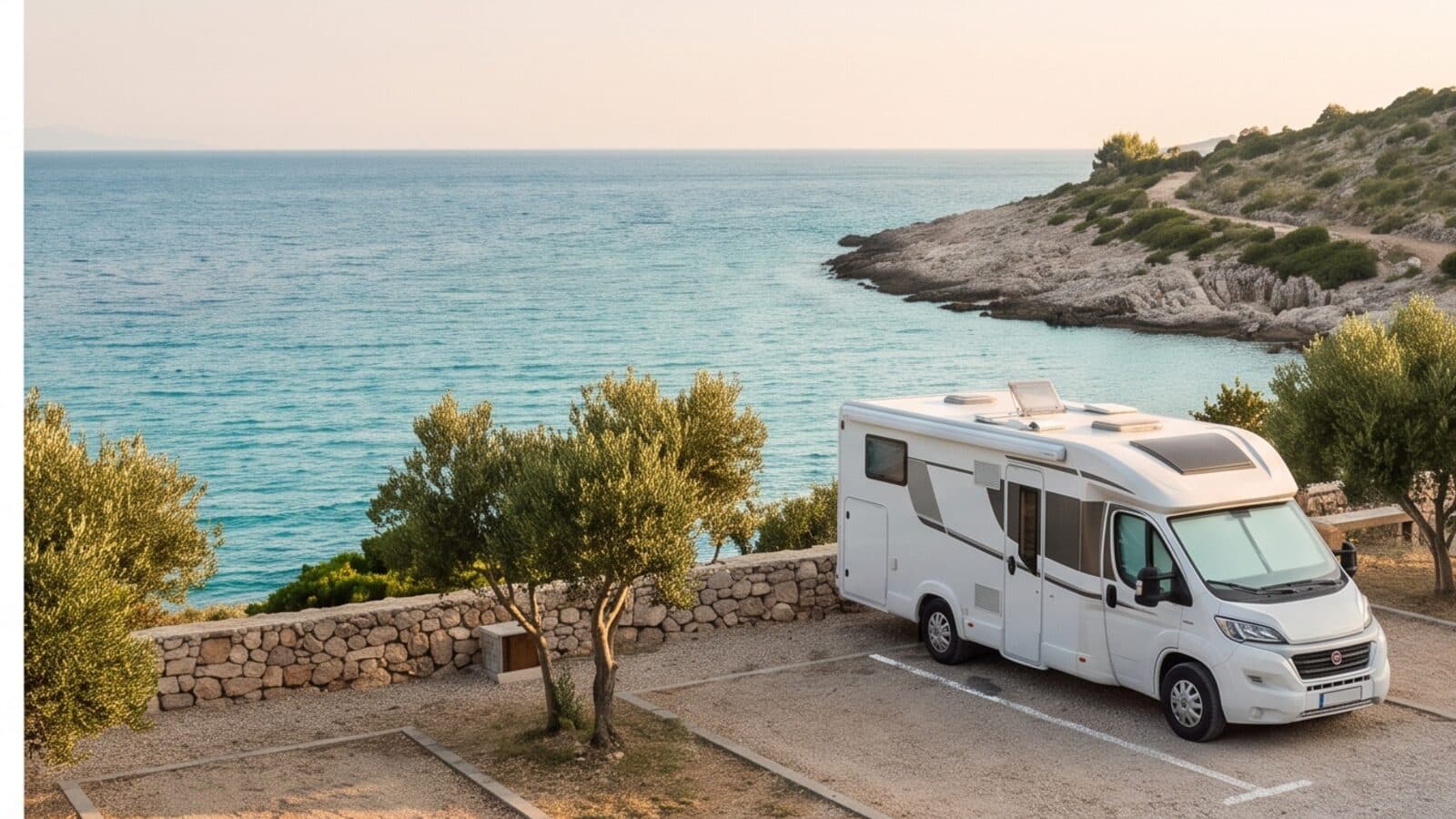
For most Croatia campervan trips, the best overnight options are official campsites, smaller private camps, camper stop areas, and paid motorhome areas with services. These are common along the Adriatic and around popular regions such as Istria, Kvarner, Dalmatia, and the routes toward Plitvice and inland nature areas.
A full campsite is usually the easiest choice if you want showers, toilets, electricity, shade, beach access, or a slower two-night stay. A camper stop or motorhome area is better when you mainly need a legal place to sleep, refill water, empty waste, and continue the next morning. In both cases, book earlier than you think in peak summer, especially near Dubrovnik, Split, Zadar, Istria, Pag, Krk, Hvar ferry access points, or famous national parks.
This is where Campernight should be part of the planning, not an emergency tool at midnight. Use Campernight to find overnight parking, switch the map toward official overnight options, and compare campsites, camper stops, and motorhome areas before you commit to a region. Then save at least one backup place near your route. The backup spot is not optional in Croatia; it is what stops a beautiful travel day becoming a stressful legal problem at 22:30.
How Campernight Helps in Croatia
Campernight is useful in Croatia because it lets you plan around legal overnight categories instead of vague "maybe we can sleep there" parking spots. Before driving into a coastal town or toward a national park, open the area in the app and filter for places that fit the night you actually need: official campsites for facilities and longer stays, camper stops for simpler overnight stops, and motorhome areas when you want services without a full campsite setup.
Check the practical details before choosing a place: recent reviews, whether overnight stays are clearly supported, service availability, access roads, height limits, waste disposal, water refill, electricity, shade, and how far the stop is from the next morning's route. In Croatia, those details matter more than finding the prettiest pin on the coast.
The best workflow is simple: save a primary official stop, save a backup 20 to 40 minutes away, and keep one inland fallback for busy summer nights. That way, if the first option is full or the rules on arrival feel unclear, you still have a legal plan instead of improvising in a beach car park.
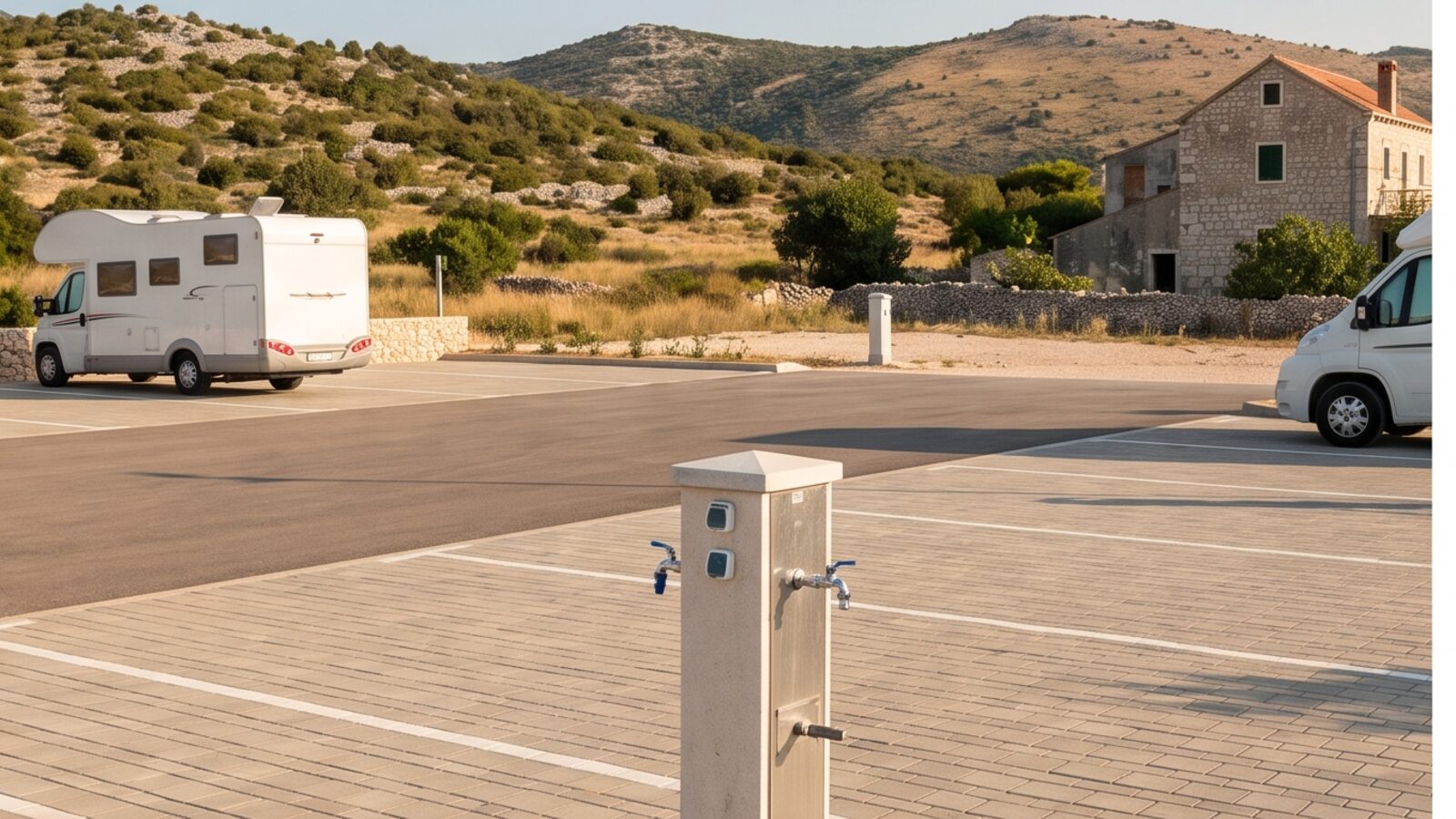
Places to Avoid for Overnight Parking
Avoid sleeping overnight in beach car parks, scenic pull-offs, forest tracks, unsigned town car parks, harbour parking, ferry waiting areas unless explicitly allowed, and national park parking areas. Also avoid treating private land as a workaround unless you have clear permission from the owner and it does not conflict with local rules.
The key warning sign is not always a literal no-camping sign. Sometimes the issue is the location itself: protected coast, municipal land, private access roads, fire-risk areas, or places where local residents already deal with too many vans. If several campers are tucked into the same unofficial spot, that does not make it legal. It may just make it more visible.
What About One Night in a Paid Car Park?
A paid car park is not automatically an overnight camper area. Paying for parking usually means you paid to park a vehicle, not to use it as accommodation. Some car parks may tolerate overnight vehicles, some may ban sleeping, and some may be controlled by local rules that are not obvious to visitors.
If you are considering a paid lot, look for explicit campervan or motorhome overnight permission, opening hours, height barriers, payment rules that cover overnight stays, and signs about camping, sleeping, or habitation. When in doubt, ask the operator before you settle in. If nobody can confirm it, choose a proper camper stop instead.
National Parks and Protected Areas
Do not test the rules in Croatia's national parks or protected natural areas. Places such as Plitvice Lakes, Krka, Paklenica, Mljet, and sensitive coastal or island zones are exactly where informal overnighting can create environmental pressure, fire risk, and enforcement problems. Stay outside the protected area in an official campsite or permitted camper area, then visit during the day.
The same logic applies near beaches and dry coastal vegetation in summer. Even if you never light a fire, authorities are cautious because one bad setup can damage fragile areas or encourage many more vehicles to copy it.
How to Plan a Croatia Campervan Route Without Stress
Plan overnight stops first, then shape the route around them. For a Croatia summer trip, I would rather have three realistic official options per evening than a perfect scenic plan with nowhere legal to sleep. Start by choosing the region in Campernight, filter for campsites, camper stops, and motorhome areas, then save a primary place, a backup within 20 to 40 minutes, and a fallback further inland where prices and availability may be better.
Arrive earlier than you would in quieter countries. Late arrivals make every rule feel more annoying because you are tired, hungry, and tempted to improvise. Croatia rewards the opposite approach: reserve the popular coastal nights, keep flexible inland options, and use camper stops for transit days.
Also check facilities before you commit. In hot weather, shade, water refill, waste disposal, and safe access can matter more than being closest to the beach. A legal place with basic services beats a dramatic viewpoint where you spend the evening worrying about a knock on the door.
Quick Checklist Before You Sleep Anywhere
Before calling any Croatian parking spot your overnight stop, ask yourself: is overnight campervan use explicitly allowed here? Is this a registered campsite, camper stop, or designated motorhome area? Are there signs banning camping or sleeping? Is the place inside or next to a national park, protected coast, beach, harbour, or residential area? Can you leave without unpacking outdoor gear? Do you have a backup if the answer changes when you arrive?
If those answers are unclear, move. The goal is not to find a loophole; it is to enjoy Croatia without fines, arguments, or stress.
Bottom Line
Croatia is brilliant for campervan travel when you plan it properly. Treat overnight sleeping as something that belongs in campsites, camper stops, and clearly permitted areas. Use normal parking for daytime visits only unless overnight use is explicitly allowed. Avoid beaches, pull-offs, national parks, and vague paid car parks for sleeping.
Do that, and Croatia becomes much easier: coastal days, legal nights, better facilities, and a route that still feels free without gambling on the rules. Before you go, use Campernight to filter for official campsites, camper stops, and motorhome areas around each stage of the trip so your overnight plan is already sorted before sunset.