Best Places to Sleep in a Campervan This Summer
Summer is the easiest season to fall in love with campervan travel, and also the easiest season to get the overnight stop wrong. Popular beaches fill up before sunset. Mountain car parks can have overnight bans. Campsites may be booked out weeks ahead. A quiet-looking place can turn stressful if you arrive late, tired, and without a backup.
The best places to sleep in a campervan this summer are not always the most dramatic spots on social media. They are the places where you can arrive calmly, understand the rules, sleep without disturbing anyone, and leave the next morning without drama. Use this guide as a practical filter for choosing overnight stops across Europe, then check local signs and current rules before you settle in.
What makes a good summer overnight stop?
A good campervan overnight stop solves three problems at once: legality, comfort, and timing.
In summer, timing matters more than people expect. A stop that feels perfect at 16:00 can be full by 20:00. A place that looks quiet in photos may be noisy during high season. A mountain road that feels adventurous in daylight can be miserable when you are trying to reverse a van after dark.
Before you choose where to sleep, ask:
- Is overnight parking clearly allowed, or at least not prohibited by local signs?
- Are you parking like a vehicle, without chairs, awnings, tables, levelling blocks, or outdoor cooking?
- Is there enough room to arrive and leave without blocking locals, emergency access, or other travellers?
- Can you manage heat, noise, light, water, toilets, and waste responsibly?
- Do you have a second option within a realistic driving distance?
If the answer is unclear, treat the spot as a short rest stop, not a sleep plan. For the broader legal context, Campernight's guide to wild camping laws in Europe is worth reading before a cross-border summer trip.
1. Official camper areas and motorhome service areas
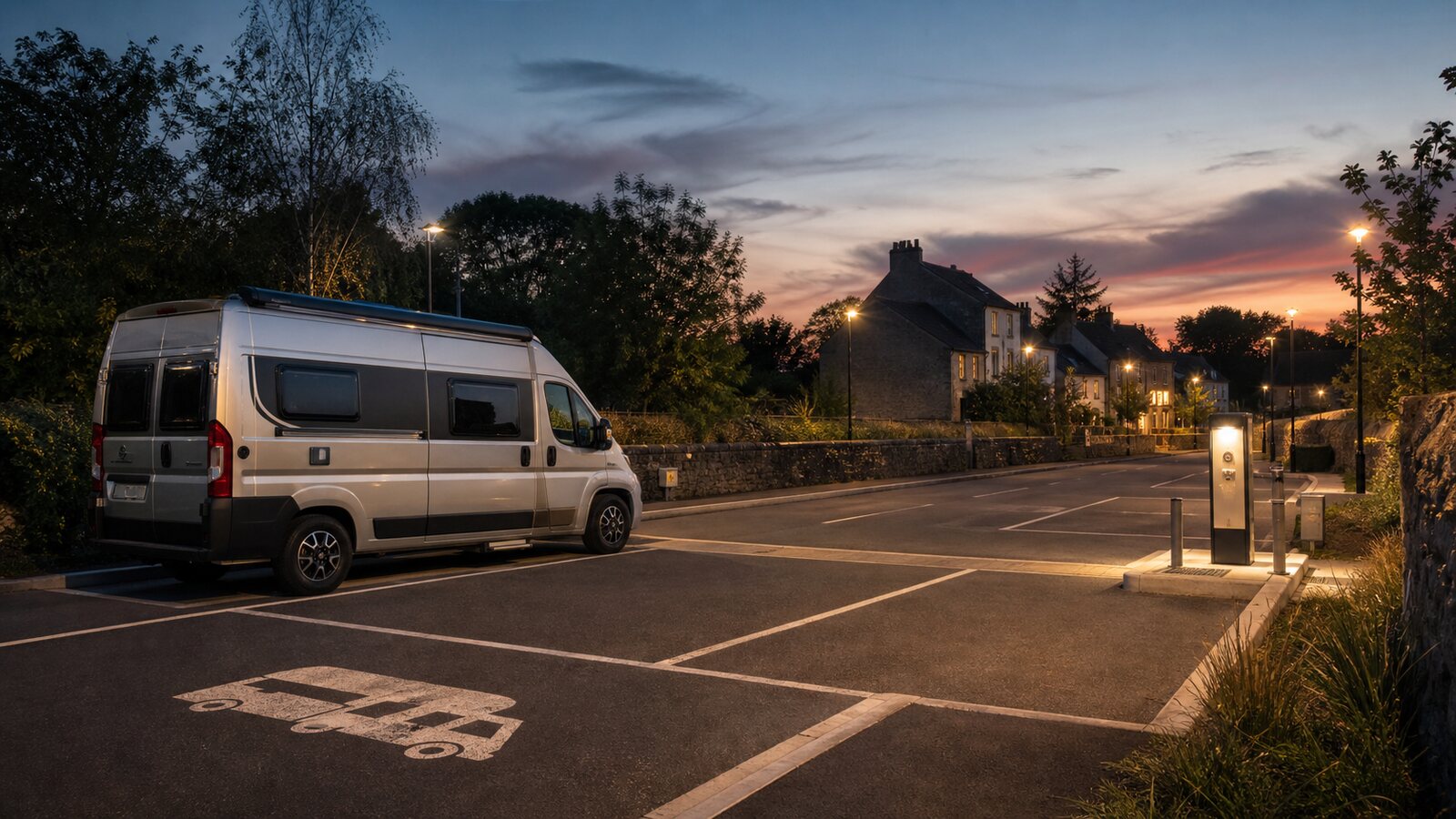
For most summer trips, official motorhome areas, aires, Stellplatze, area sosta camper, and municipal motorhome stops are the strongest first choice. They are built for exactly the problem you are trying to solve: arriving in a campervan, parking overnight, and often handling water or waste without improvising.
They are not always glamorous, but they are reliable. Some are simple marked bays near a town. Others have electricity, grey-water disposal, fresh water, toilets, or a short walk to the beach or old centre. In peak season, that reliability matters more than a postcard view.
Why they work well in summer:
- Clearer overnight expectations than random car parks
- Easier late arrivals than remote tracks or tiny villages
- Better access to services when water, bins, or toilets are limited
- Less risk of bothering residents when the stop is designed for vans
- Useful backup options when campsites are full
The trade-off is popularity. Well-known coastal or lakeside camper areas can fill quickly, so check recent reviews and arrive earlier than you think you need to. If you use Campernight to find overnight parking, save two or three nearby alternatives before you drive into the busiest area.
2. Campsites when the destination matters more than the drive
Campsites are still the best answer when you want facilities, shade, showers, family space, laundry, electricity, or a proper base for several nights. They are especially useful in heatwaves, on family trips, and near beaches where informal overnight parking is heavily controlled.
The mistake is treating campsites as a last resort. In July and August, they often need to be part of the plan from the beginning. If you are aiming for a national park, island ferry route, famous lake, or beach town, booking a campsite for the busiest night can make the rest of the trip more flexible.
Use campsites when:
- You need shade, showers, toilets, laundry, or electricity
- You are travelling with children or pets in hot weather
- Local overnight parking rules are strict or confusing
- You want to stay more than one night
- You need a reset day after several nights of simple stops
The best summer rhythm is often mixed: campsite for comfort, official camper area for convenience, and only very cautious parking stops where signs and local practice make sense.
3. Rural private stops, farms, and vineyards
Private rural stops can be brilliant in summer because they move you away from the most crowded coastal strips. Depending on the country, you might find farm stays, vineyards, rural camper areas, restaurant stopovers, or private land where overnight stays are explicitly welcomed.
These stops work best when you treat them as hospitality, not free parking. Check whether you need to book, whether there is an expected purchase, what time you can arrive, and whether services are available. A quiet farm stop with a clear welcome is much better than guessing in a random field entrance.
They are especially good for:
- Slower food-and-wine routes
- Families who want calmer evenings
- Travellers avoiding August beach crowds
- Hot-weather trips where inland shade and space matter
- One-night pauses between bigger destinations
The risk is assuming every rural area is relaxed. It is not. Protected areas, agricultural access tracks, fire-risk zones, and private roads can be sensitive in summer. If the stop is not clearly offered for campervans, keep moving.
4. Small-town camper stops near services
Small towns are underrated for summer campervan nights. A municipal camper area or simple marked parking zone on the edge of town can give you what a remote viewpoint cannot: food, bins, water, public toilets, a pharmacy, shade, a morning bakery, and a safer feeling when you arrive late.
This is not the romantic answer, but it is often the smart one. A small-town stop can turn a stressful travel day into an easy evening. You can park, walk into town, eat something normal, refill supplies, and leave early for the scenic place before the crowds arrive.
Look for:
- Marked motorhome bays or local camper signage
- A short walk into town without needing to move the van
- Lighting that feels safe without being too bright
- Clear waste and water facilities, if offered
- Recent reviews mentioning summer availability
Avoid using normal residential streets as a sleep plan. Even if no sign forbids overnight parking, a cluster of campervans outside homes is how good places get restricted. Stay discreet, arrive respectfully, and never turn a parking space into a campsite.
5. Nature-adjacent stops that are clearly allowed
The dream summer stop is usually near nature: a lake, forest edge, river valley, beach approach, mountain pass, or viewpoint. These can be beautiful, but they need the strictest judgement.
Across Europe, the difference between parking, overnight parking, camping, and wild camping changes by country, region, municipality, and protected area. In many places, sleeping inside a legally parked vehicle may be treated differently from setting up camp outside. In others, overnight stays are restricted in specific car parks, natural parks, coastlines, or tourist zones.
That means the safest nature-adjacent stops are the ones with clear permission: a designated camper bay, an official overnight sign, a paid parking option that allows motorhomes overnight, or a reviewed stop where recent travellers report the same conditions you see on arrival.
Use extra caution near:
- Beaches and dunes
- National and regional parks
- Lakeshores and riverbanks
- Fire-risk forest areas
- Scenic viewpoints with small car parks
- Places with no-bin, no-camping, or height-barrier signs
If you are unsure, do not settle in. Take the sunset photo, enjoy the break, then sleep somewhere designed for vans.
A simple summer decision table
| Situation | Best overnight choice | Why it works |
|---|---|---|
| Busy beach area | Campsite or official camper area | Coastal parking is often restricted in peak season |
| Late arrival | Town-edge camper stop or service area | Easier access, clearer parking, less remote stress |
| Heatwave | Campsite or shaded rural stop | Better access to water, showers, shade, and recovery time |
| One-night transit | Aire, Stellplatz, or municipal camper stop | Fast, practical, and designed for short stays |
| Scenic nature stay | Only a clearly permitted nature-adjacent stop | Reduces rule, access, and protected-area risk |
| Family trip | Campsite, farm stop, or serviced camper area | More predictable facilities and safer evening rhythm |
Build a backup plan before sunset
The best summer campervan travellers are not lucky. They are boringly prepared.
Before the last hour of driving, choose your preferred stop and at least two backups. Put them in order: best option, practical option, emergency option. Check recent reviews, arrival access, height barriers, service availability, and whether the place looks suitable for the size of your van. If you are still shaping the route itself, the ideas in Campernight's spring campervan routes in Europe article can also help you think in terms of regions, driving rhythm, and stop density rather than one isolated overnight pin.
Campernight is useful here because you can search around the area you are actually approaching, compare camper-friendly stops, and avoid relying on one perfect-looking pin. The goal is not to find the most dramatic place every night. The goal is to make the evening easy enough that you still enjoy the trip tomorrow.
If the first place is full, noisy, banned, or uncomfortable, leave early and calmly. Summer is much easier when Plan B is already chosen.
Responsible overnight habits that protect good places
Good overnight places disappear when travellers treat them badly. In summer, that happens faster because there are more vans, more pressure on local communities, and more enforcement in tourist areas.
Keep the basics tight:
- Park inside the space and do not block access
- Do not put out chairs, tables, awnings, barbecues, or washing unless camping is allowed
- Use proper waste and grey-water disposal points
- Keep noise down, especially near homes and small villages
- Leave early if the place feels inappropriate
- Spend money locally when a town is hosting travellers well
- Follow signs even if old reviews say something different
This is not just etiquette. It is how campervan travel stays welcome.
Final thoughts
The best place to sleep in a campervan this summer is the place that fits the night you are actually having. Sometimes that is a lakeside campsite. Sometimes it is a municipal aire outside a small town. Sometimes it is a farm stop, a mountain camper area, or a simple serviced parking bay that lets you rest without overthinking everything.
Be flexible, but not vague. Check the rules, respect local signs, avoid turning parking into camping, and build your backup plan before sunset. If you want a calmer way to plan the evening, open Campernight before the day gets messy and shortlist a few camper-friendly stops near your route.
Summer rewards travellers who plan lightly, arrive respectfully, and know when to move on.