Best Campervan Spots with Shade in Europe
In a European heatwave, the best campervan spot is not always the one with the sea view. Sometimes it is the boring-looking place with trees, airflow, water nearby, and a backup option ten minutes away.
Shade matters because a van heats up fast when it sits in direct sun. It helps you sleep better, keeps pets and kids safer, makes cooking less miserable, and gives you a calmer place to reset after a long driving day. But shade alone is not a safety plan. In extreme heat, you still need water, ventilation, timing, and the sense to move somewhere cooler when the conditions are wrong.
This guide is for finding better shaded overnight stops in Europe during summer: where to look, what to check before you commit, and how to avoid turning a nice shady corner into a legal or practical problem.
What makes a good shaded campervan spot?
A good shaded stop does more than block the sun at one moment of the day. The best places combine shade, airflow, legal clarity, space, and services.
Look for these signals:
- Trees that shade the vehicle during the hottest hours, not only early morning.
- Enough open space for air to move around the van.
- A surface that stays stable in heat or after summer storms.
- Clear signs that overnight parking or camper use is allowed.
- Recent reviews mentioning shade, noise, access, barriers, and crowding.
- Water, toilets, waste disposal, or a campsite nearby if you need a reset.
- A second option close enough that you can leave before sunset if the spot is full.
The legal part matters. Across Europe, the difference between parking, overnight parking, and camping changes by country, region, municipality, protected area, and local signs. Treat this as practical planning advice, not legal advice. If signs say no overnight stays or no camping, move on.
1. Forest-edge camper areas
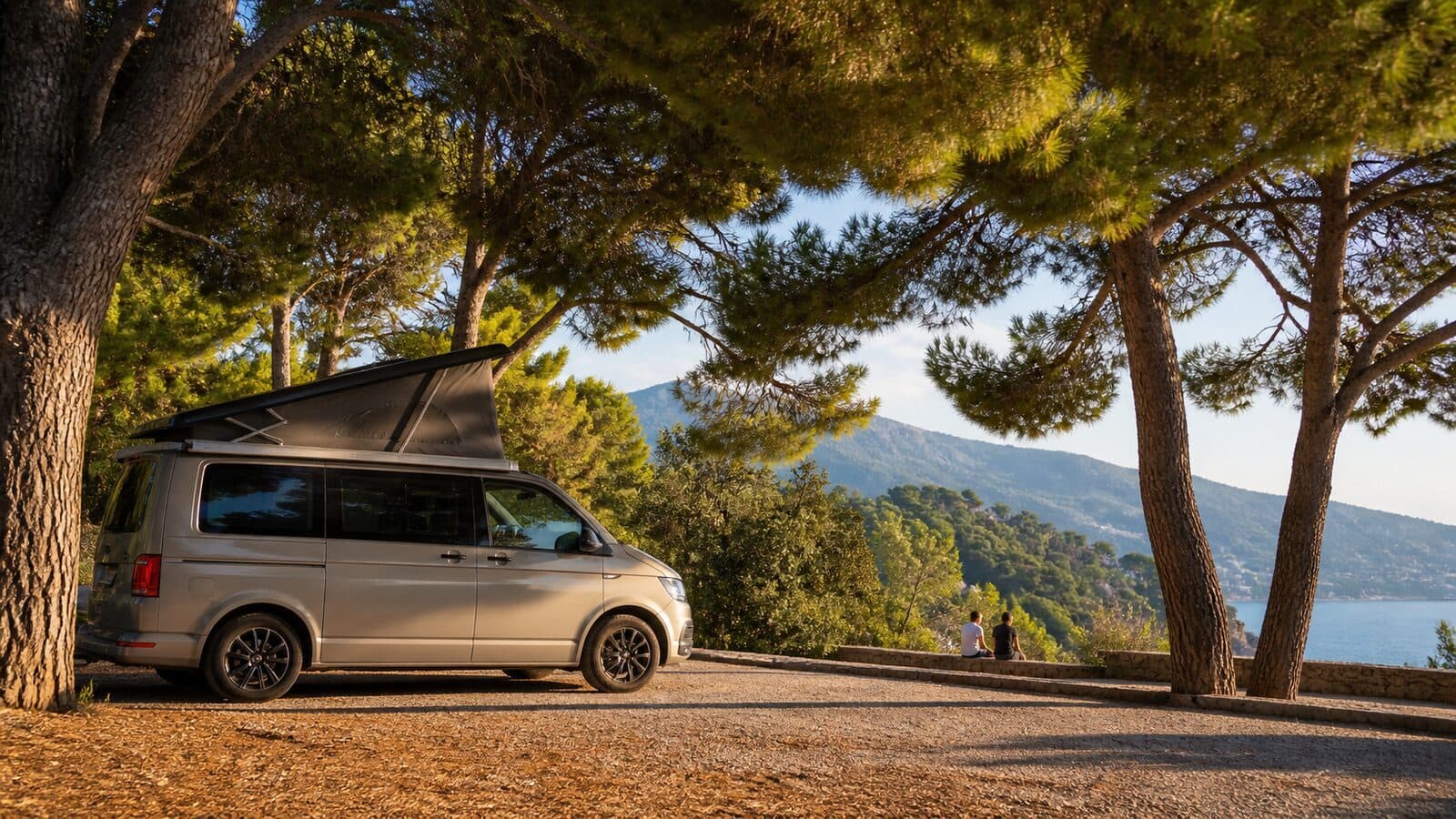
Forest-edge camper areas are often the most obvious shaded choice. You get tree cover, calmer temperatures, and usually less reflected heat than in a paved city car park.
The best version is not a random track in the woods. It is an official camper area, rural aire, Stellplatz, campsite edge, or clearly permitted parking zone near forest access. These places are easier to use respectfully because they are designed for travellers or at least tolerate them.
Check the access road before committing. A narrow forest lane, low branches, soft ground, or steep exit can turn a beautiful spot into a stressful one. Also check fire restrictions during summer. In dry regions, open flames, barbecues, and even some cooking setups may be restricted.
Good for: hot inland days, hiking areas, families, dogs, and slow travel.
Be careful with: protected natural areas, fire risk, insects, weak mobile signal, and unclear overnight rules.
2. Rural campsites with mature trees
When the weather is genuinely hot, a simple campsite with old trees can beat a famous free spot. Shade, showers, water refill, laundry, waste disposal, and electricity are not glamorous, but they make summer travel easier.
The trick is to use campsites strategically. Book or call ahead during holiday weeks, heatwaves, and weekends near popular coastlines. A shaded pitch is often worth paying for when the alternative is a crowded asphalt lot with no services.
Look beyond big resort campsites. Smaller rural campsites, municipal campgrounds, and farm-style sites often have more natural shade and a calmer feel. They can also put you close to villages where you can buy groceries, have dinner, and avoid driving again in the hottest part of the day.
Good for: reset nights, showers, laundry, families, pets, and extreme heat.
Be careful with: pitches that are shaded in photos but exposed at your exact arrival time, fully booked peak-season weekends, and sites with little airflow.
3. Mountain valleys and higher-altitude stops
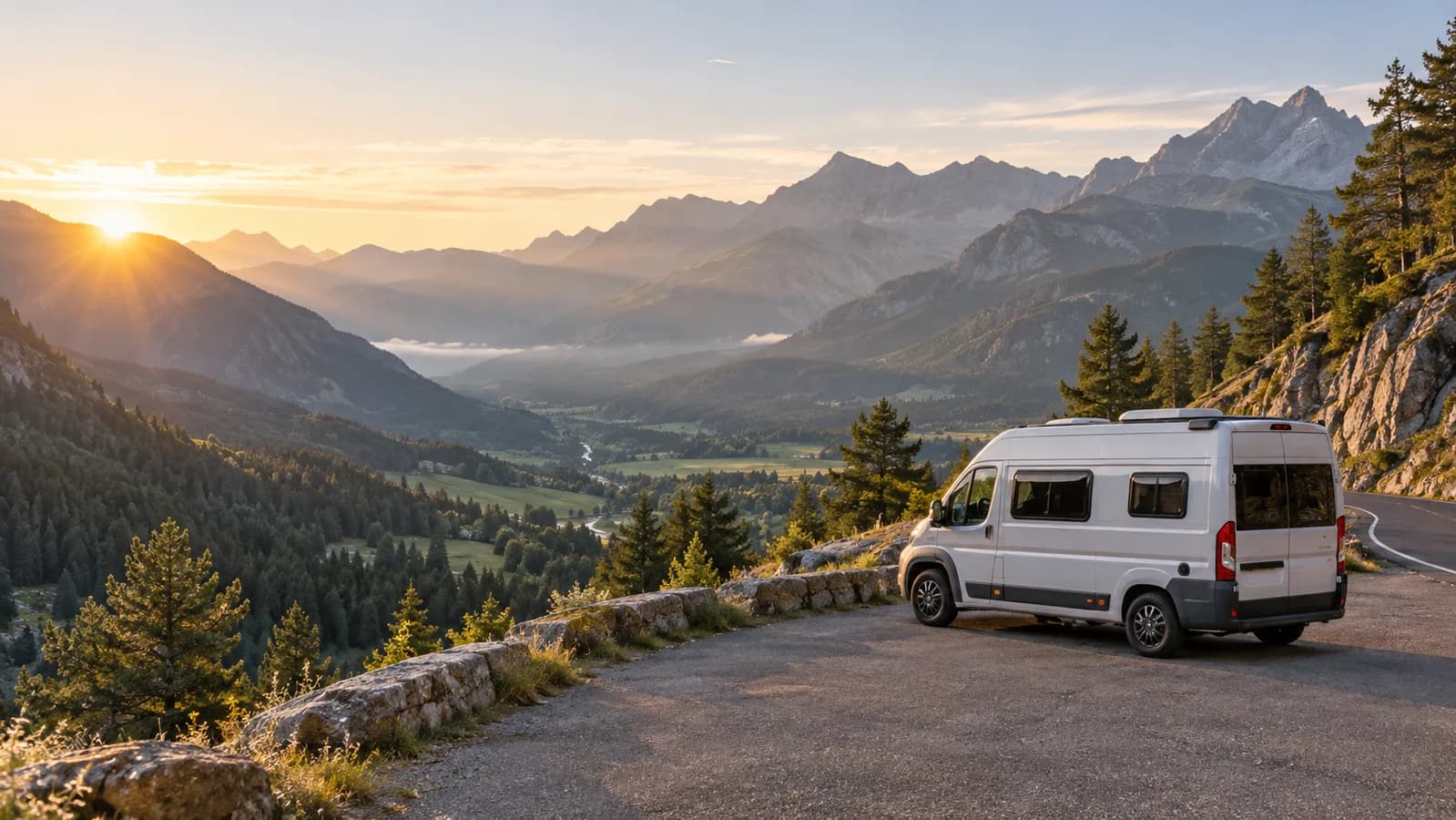
When lowland Europe is baking, altitude helps. Mountain valleys, alpine villages, forested passes, and lake areas can be much more comfortable than coastal parking in direct sun.
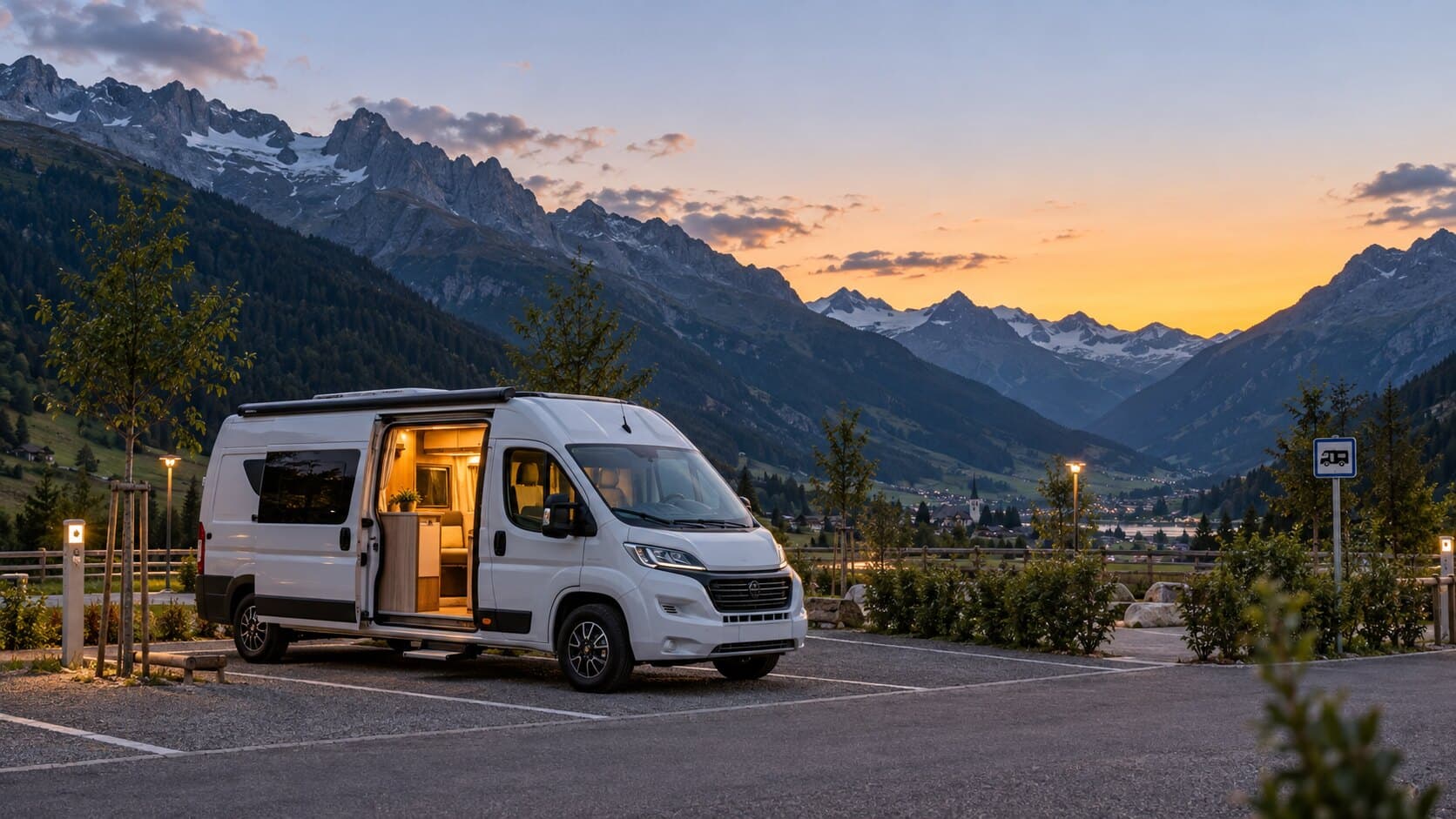
This does not mean chasing remote places blindly. Use official camper areas, campsites, and permitted overnight stops around mountain towns. Arrive early enough to read signs and avoid blocking narrow roads or village spaces. In popular alpine regions, rules can be strict and parking pressure can be high.
The best shaded mountain stops usually combine tree cover with cooler evening air. A spot beside a forested trailhead might feel perfect at 19:00, but only use it if overnight parking is clearly allowed. If it is just a day-use car park, treat it as a day stop and sleep somewhere official nearby.
Good for: heat escape, hiking, late-summer routes, and quieter nights.
Be careful with: protected areas, sudden storms, steep access, local restrictions, and limited services.
4. Inland village camper areas
Beachfront stops fill fast in summer, and many of them have almost no shade. A smarter pattern is to enjoy the coast during the day, then sleep slightly inland under trees in a village camper area or municipal stop.
Inland village areas can be practical: less traffic, more shade, bakeries in the morning, easier water access, and a lower chance of fighting for the last parking space beside the beach. They also spread campervan pressure away from overloaded coastal towns.
Before staying, check recent reviews and local signs. Some municipal areas are clearly designed for motorhomes; others are ordinary car parks where overnight stays may not be welcome. Keep the setup discreet unless camping behavior is explicitly allowed.
Good for: beach trips, food stops, quieter nights, and avoiding overcrowded coastal parking.
Be careful with: residential noise, market-day restrictions, trees too low for taller vehicles, and limited spaces.
5. Lakeside and riverside areas with tree cover
Water can make a shaded stop feel cooler, especially when there is airflow. Lakeside campsites, riverside camper areas, and shaded official parking near swimming spots can be excellent in summer.
Do not assume that being near water means overnight stays are allowed. Many lakes and rivers sit inside protected areas, municipal recreation zones, or private land. In some places, day parking is fine but overnight parking is not.
The best approach is to separate the swim from the sleep when needed. Use the lakeside spot during the day, then move to a nearby official camper area for the night. That keeps the trip enjoyable without gambling on unclear rules.
Good for: hot afternoons, families, swimming stops, and relaxed route breaks.
Be careful with: mosquitoes, protected areas, flood-prone riverbanks, soft ground, and day-only parking.
6. Farm, vineyard, and rural welcome stops
Farm and vineyard stays can offer natural shade, open air, and a quieter alternative to crowded summer campsites. In several European countries, membership networks and local hosts let campervans stay on rural properties, often with simple facilities and the expectation that you support the host by buying something or booking properly.
These stops are not always shaded, so check photos and descriptions before you go. A vineyard can be beautiful but exposed. A farm courtyard can be cooler if it has trees, buildings that cast afternoon shade, or a grassy area away from reflected heat.
Good for: quieter overnight stays, local food, rural routes, and avoiding packed tourist areas.
Be careful with: limited facilities, arrival-time rules, dogs or livestock, and the need to book or call ahead.
How to check shade before you choose a spot
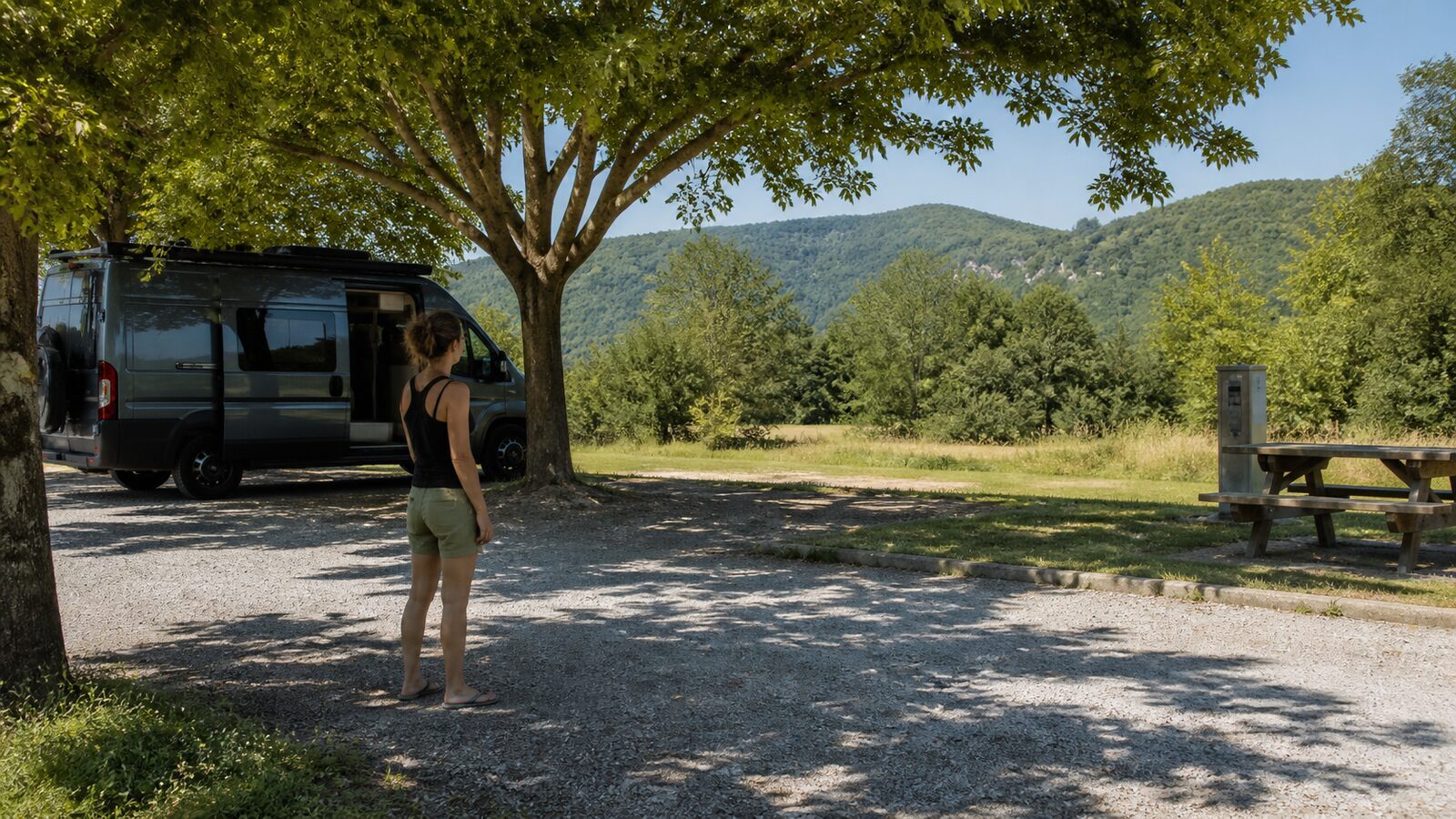
Shade changes through the day, so do not judge a place only from one photo. A spot that looks perfect at 9:00 may be fully exposed at 15:00.
Use this quick shade check:
- Read recent reviews for words like shade, trees, exposed, hot, dusty, noisy, or crowded.
- Look at photos to see whether the trees are tall enough and close enough to shade a van.
- Check whether the ground is gravel, grass, dirt, or asphalt. Asphalt and concrete hold heat.
- Think about the sun path: western exposure can be brutal in the late afternoon.
- Check whether there is airflow or whether the spot sits in a still, enclosed corner.
- Save a backup with services in case the shaded option is full.
This is where planning in Campernight helps. Before the day gets hot, shortlist two or three shaded or cooler options, compare recent photos and reviews, and save a fallback. The Campernight guide to finding overnight parking is the natural workflow to pair with this: search, filter, check the details, and keep another option ready before sunset.
What to avoid in hot weather
Some spots look convenient but make heat worse. Avoid large exposed asphalt car parks, beach lots without trees, motorway service areas unless you only need a short rest, and crowded viewpoints where everyone arrives at sunset.
Also avoid spots that require you to break the local rules just to stay cool. If you need to put out chairs, open an awning, cook outside, or spread into the shade to make the stop bearable, make sure camping behavior is allowed. In many places, parking a vehicle is treated differently from camping outside it.
For pets and children, be stricter. Never rely on “just a few minutes” in a parked van during summer heat. If the van is not comfortable and supervised, change the plan.
A simple summer shade strategy
A good summer overnight plan has three layers:
- The cooler route: choose forests, mountains, lakes, or inland villages when the coast is too hot and crowded.
- The shaded stop: pick a place with real tree cover, airflow, and recent positive information.
- The practical fallback: save a campsite, official camper area, or service stop that solves the night if the first choice fails.
Peak summer rewards boring preparation. Start looking before lunch, arrive while there is daylight, read the signs, and leave yourself enough energy to move if the spot is wrong.
Shade will not fix every heatwave, but it can change the whole rhythm of a trip. Build it into your route, not as a lucky bonus at the end of the day. Campernight can help you compare shaded stops, read recent reviews, and keep a backup plan ready before the easy options fill up.