What to Pack for a Campervan Trip
Packing for a campervan trip is a balancing act. Bring too little and a simple overnight stop can become inconvenient. Bring too much and every cupboard, seat and worktop turns into storage. The most useful campervan packing list is not the longest one: it covers safety, sleep, cooking and basic self-sufficiency while leaving enough space to move comfortably inside the vehicle.
This checklist works for hired and privately owned campervans across Europe. Adjust it for the vehicle, season, route and people travelling with you. Before departure, confirm what the rental company or owner already provides, check the vehicle payload and follow the rules for every country on your itinerary.
Start with the vehicle, not the shopping list
Two campervans can have completely different equipment. One may include bedding, pans, levelling ramps and a filled gas bottle; another may provide almost none of them. Ask for an inventory before packing and check these basics:
- How many belted travel seats and sleeping places are there?
- Are bedding, towels and kitchen utensils included?
- Does the vehicle use shore power, leisure batteries, gas or a combination?
- Which electrical sockets work when the van is not connected to mains power?
- What fresh-water and waste-water equipment is supplied?
- Is there a toilet, and what consumables does it require?
- What is the vehicle's maximum authorised mass and remaining payload?
Payload matters because passengers, water, fuel, luggage, bicycles and accessories all add weight. The figure on a brochure is not a personal packing allowance. Use the vehicle documentation and, when necessary, a weighbridge to confirm the real loaded weight.
Essential documents and travel information
Keep original documents secure and make offline copies that are easy to reach if your phone has no signal.
- Driving licence valid for the vehicle and destination
- Passport or national identity card, where accepted
- Vehicle registration documents
- Insurance details and roadside-assistance contact
- Rental agreement and emergency number for a hired campervan
- Health cover documents appropriate to the trip
- Booking confirmations and any low-emission-zone registration
- Bank card plus a small backup payment method
- Emergency contacts stored offline
Driving and vehicle-equipment rules vary across Europe and can change. Check official government, road-authority or motoring information for each country shortly before departure. Do not assume that a warning vest, warning triangle, winter equipment or toll arrangement accepted in one country is enough everywhere else.
Safety and roadside kit
The vehicle should already have required safety equipment, but verify it rather than assuming.
- High-visibility vests stored where occupants can reach them
- Warning triangle or other legally required warning device
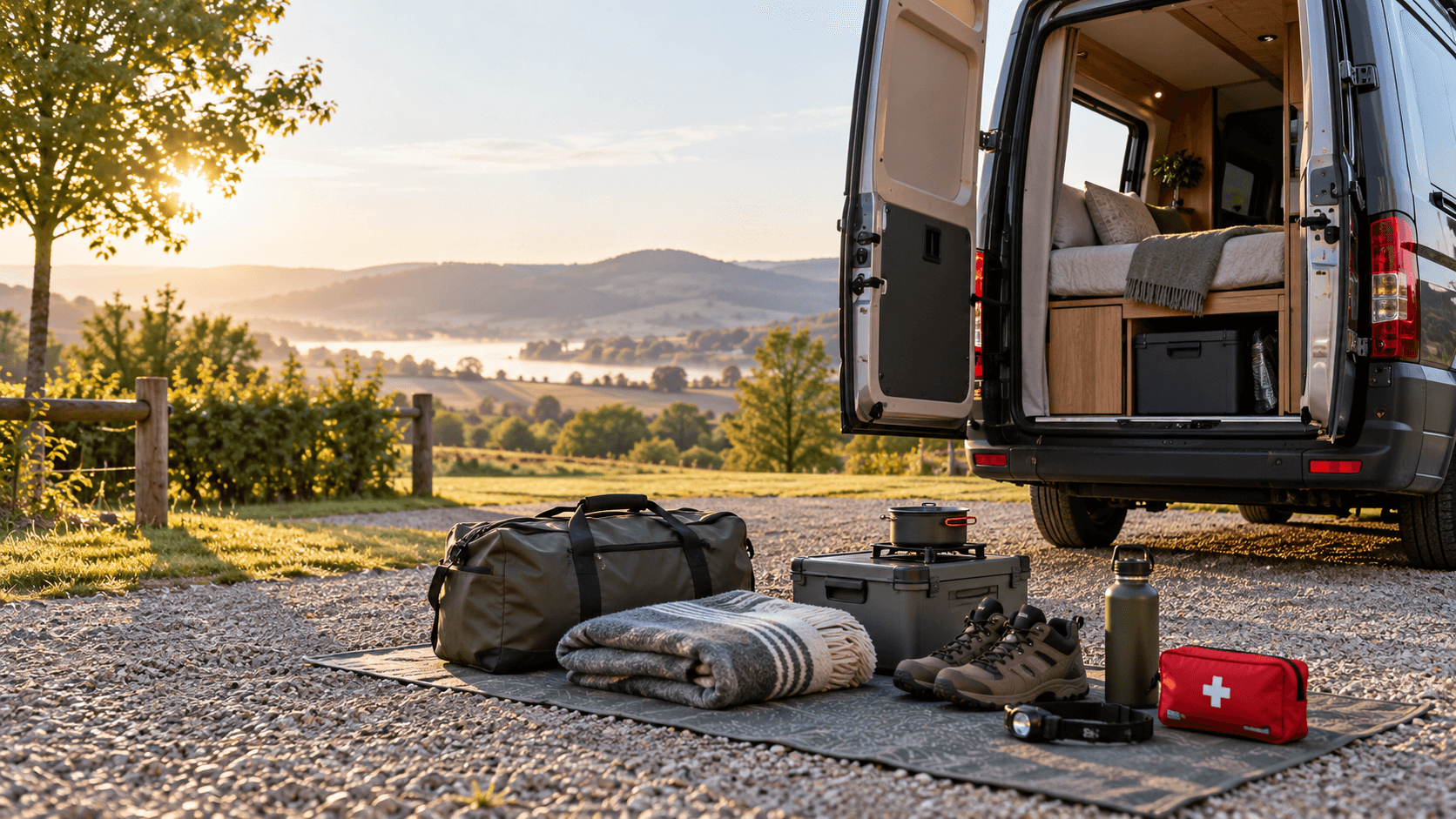
- First-aid kit with in-date contents
- Fire extinguisher or fire blanket suitable for the vehicle setup
- Torch or headlamp with spare batteries
- Phone charging cable and power bank
- Tyre-pressure gauge and the vehicle's puncture solution or spare-wheel tools
- Basic tool roll, work gloves and duct tape for minor temporary fixes
- Spare fuses and bulbs only when compatible and useful for the vehicle
- Reflective warning light, whistle and emergency blanket for remote areas
Safety equipment requirements differ by country, vehicle and situation. Use this as a starting point, then check the official rules for the complete route. Never attempt a roadside repair in an unsafe location; call the vehicle provider or roadside assistance when needed.
Sleeping and comfort
A good night's sleep depends more on warmth, ventilation and a level bed than on decorative extras.
- Fitted sheets or sleeping-bag liners
- Season-appropriate duvet or sleeping bag
- One pillow per person
- Light blanket for cool evenings
- Sleepwear and warm socks
- Eye mask and earplugs
- Window blinds or approved thermal screens
- Small fan for warm weather, if the electrical system supports it
- Hot-water bottle for cold nights
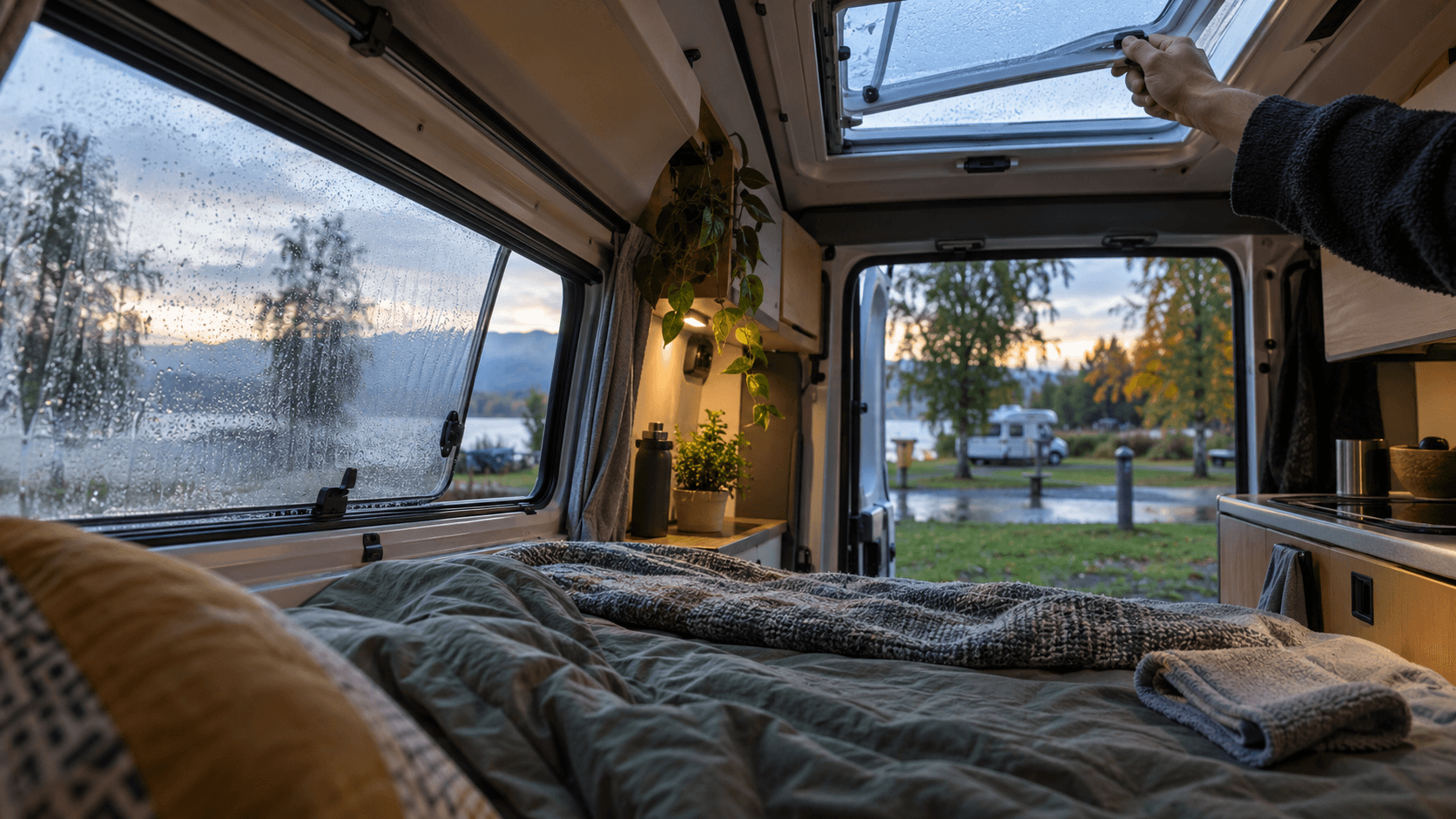
Avoid blocking permanent ventilation grilles, even in cold weather. Condensation is easier to manage when damp clothes are separated, cooking steam is vented and some airflow is maintained. If the van has a heater, use only the installed appliance according to its instructions; never improvise with a stove, barbecue or unvented flame indoors.
Clothes: pack in layers
Campervan travel often combines driving, walking, cooking and outdoor evenings in one day. Layers are more useful than several bulky outfits.
- Breathable base layers
- Warm mid-layer such as a fleece
- Waterproof and windproof outer layer
- Comfortable trousers or shorts
- Underwear and socks for the planned laundry interval
- Sleepwear kept dry
- Walking shoes with suitable grip
- Easy slip-on shoes for campsite facilities
- Sun hat and warm hat
- Swimsuit when relevant
- Small laundry bag for wet or dirty clothes
For a summer campervan packing list, add sun protection, refillable water bottles and light clothing, but keep one warm layer and a rain shell. Mountain, Atlantic and northern routes can turn cool even when the lowland forecast looks hot.
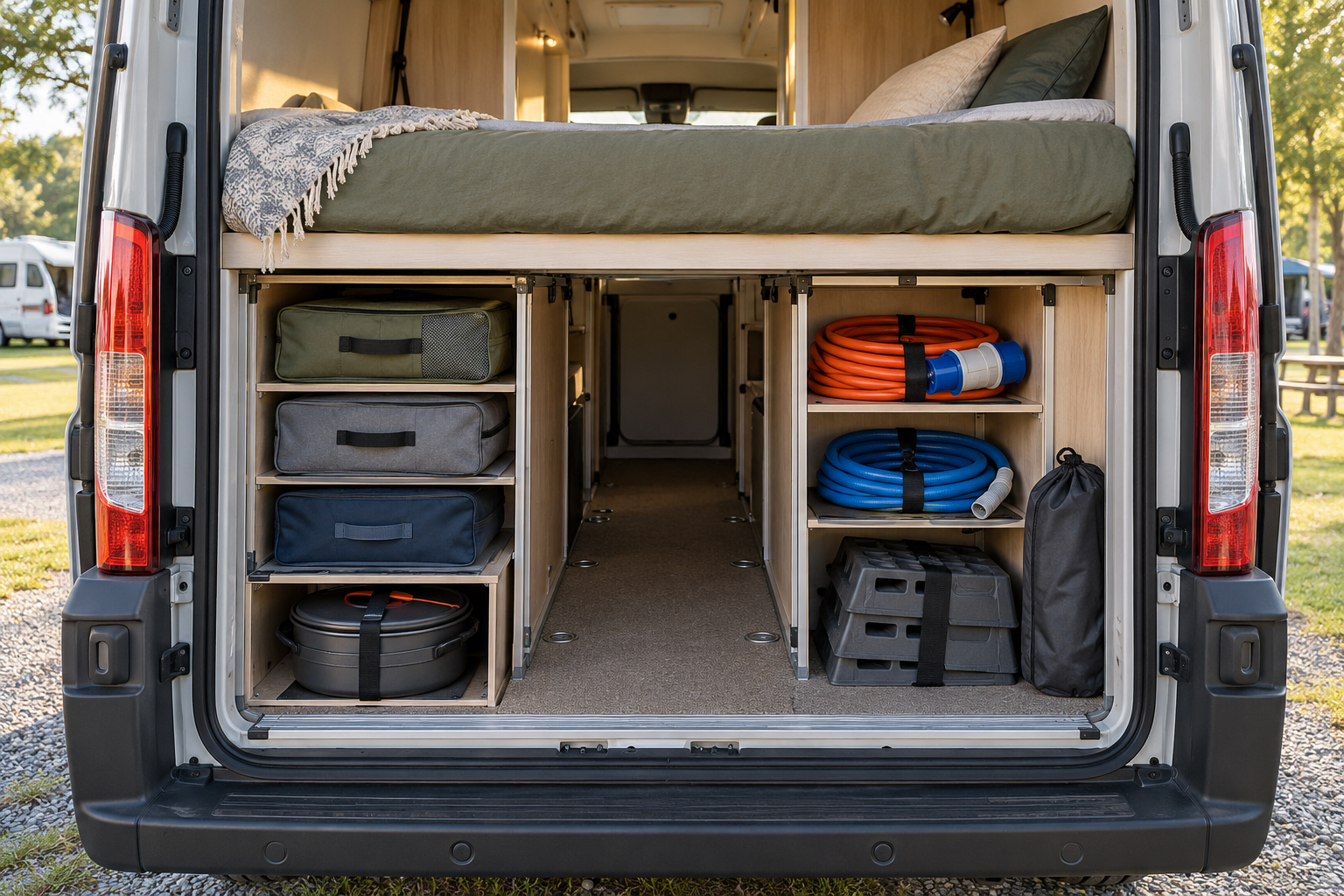
Campervan kitchen checklist
Plan simple meals and choose items that fit the actual cooking setup.
- One small pan and one frying pan, if not supplied
- Heat-safe utensils and a compact chopping board
- One plate, bowl, mug and cutlery set per person
- Sharp knife with a secure cover
- Reusable food containers
- Washing-up liquid, sponge and tea towel
- Bin bags and separate bags for recycling
- Matches or lighter only if the fitted appliance requires them
- Coffee or tea equipment that suits the available power
- Refillable drinking-water bottles
- Shelf-stable first-night meal and breakfast
- Basic oil, salt and a few frequently used seasonings
Secure every item before driving. Heavy cookware and glass containers should not be able to become projectiles. Use the vehicle's fitted fridge and gas appliances exactly as instructed, and confirm any ferry, tunnel or operator rules that apply to gas cylinders before travel.
Food that is easy to store
Do not buy a week's worth of bulky groceries before seeing the storage. Start with versatile ingredients and refill locally.
- Oats, bread or another simple breakfast base
- Pasta, rice or couscous
- Tinned beans, tomatoes or fish
- Long-life milk or a preferred alternative
- Fruit and robust vegetables
- Cheese, eggs or another compact protein where storage permits
- Snacks for driving days
- One emergency meal that needs little water and no refrigeration
Keep raw and cooked food separate, respect refrigeration requirements and discard food that has not stayed safely chilled. If crossing borders, check current official rules on carrying meat, dairy, plants and other restricted products; the rules depend on the countries involved and can change during animal- or plant-health controls.
Water, toilet and cleaning supplies
Water is heavy, so fill according to the route rather than automatically travelling with every tank full. One litre of water weighs about one kilogram before the container itself.
- Drinking water in clean, food-safe containers
- Fresh-water hose reserved only for potable water
- Hose connectors compatible with the planned service points
- Waste-water hose or container if the vehicle needs one
- Toilet chemical or consumable specified by the manufacturer
- Toilet paper approved for the system
- Hand soap and hand sanitiser
- Biodegradable cleaning products used at proper disposal points
- Microfibre cloths and a small brush
- Quick-dry towels
Empty toilet cassettes and grey water only at authorised facilities. A place to sleep is not automatically a service point. When planning the route, mix simpler overnight stops with campsites or motorhome areas where you can confirm the services you need.
Power and technology
Bring fewer devices and understand how each one will be charged.
- Phone and charging cable
- 12-volt or USB adapter compatible with the vehicle
- Power bank
- Country-appropriate plug adapter
- Shore-power cable and adapters only when specified for the vehicle
- Offline maps and downloaded booking details
- Headphones
- Camera or e-reader if you will genuinely use it
Domestic high-wattage appliances such as kettles, hairdryers and heaters may exceed an inverter, battery or campsite connection. Check the vehicle manual and the campsite supply before plugging them in. Never create improvised electrical connections outdoors.
Use Campernight to save overnight options before departure, then check recent reviews, photos and listed services on the road. Download the details you cannot afford to lose when travelling through areas with weak mobile coverage.
Outdoor items worth bringing
Outdoor gear should earn its storage space.
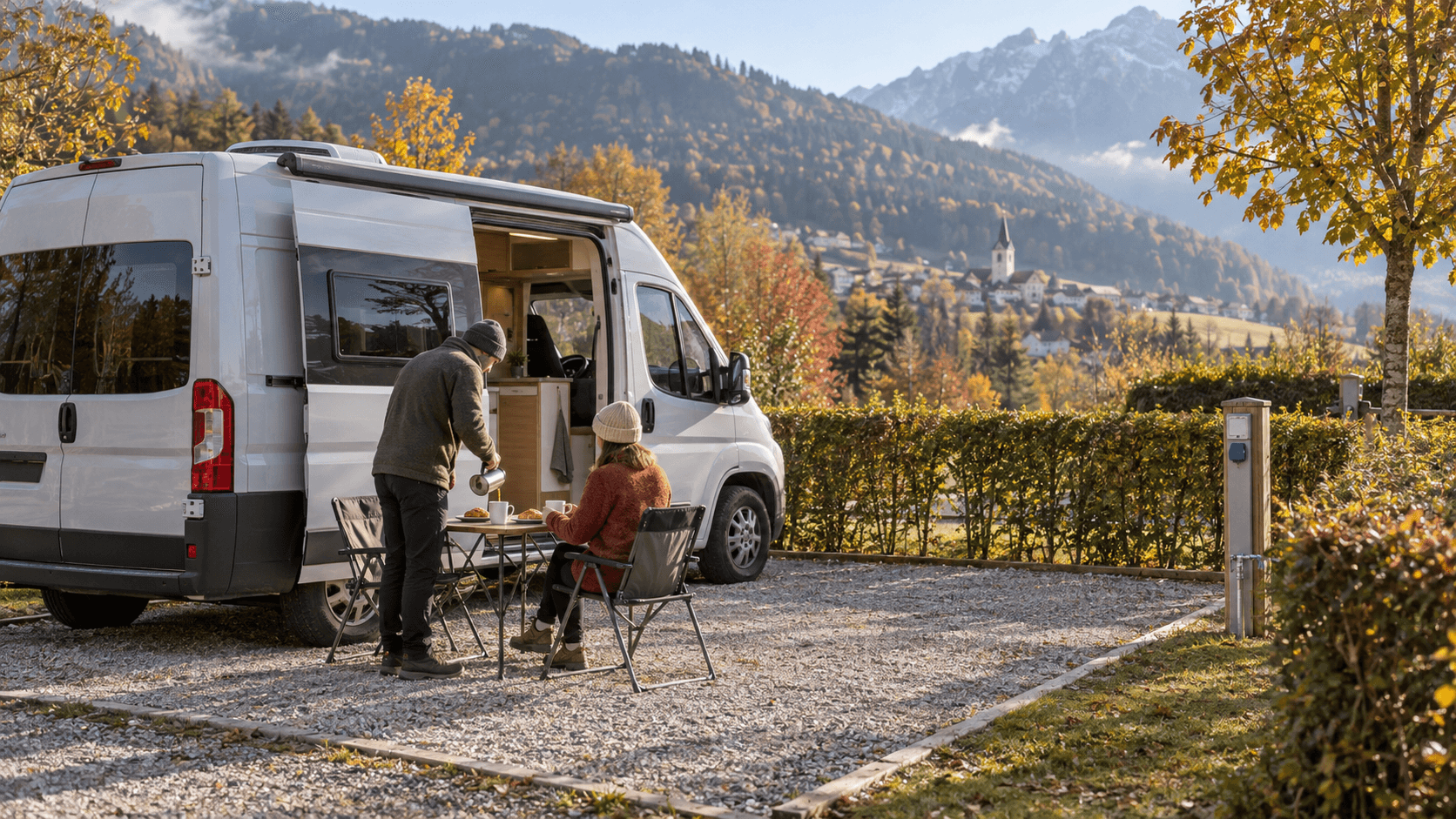
- Compact chairs and a small table where their use is allowed
- Reusable shopping bag
- Daypack
- Water bottles
- Sunglasses and sunscreen
- Insect repellent where needed
- Compact umbrella
- Clothesline used only where permitted
- Bicycle helmets and locks if carrying bikes
Putting out chairs, awnings or cooking equipment can be treated differently from simply parking. Use outdoor furniture only where the site and local rules allow camping behaviour, and never block access or extend into another pitch.
Personal care, health and children or pets
Build this part of the list around the actual travellers.
- Prescription medicines in sufficient quantity
- Copies of prescriptions or medical information when useful
- Personal toiletries in small, secure containers
- Sunscreen and insect-bite care
- Menstrual products
- Glasses, contact-lens supplies and spares
- Child seats approved and installed for the vehicle
- Familiar sleep item and compact activities for children
- Pet travel documents, medication, restraint, food, water bowl and waste bags
Pet-entry and health requirements vary by destination. Check official rules well in advance, especially for vaccinations, identification, parasite treatment and documentation.
What not to pack
Leaving things behind is part of packing well.
- Multiple bulky items that serve the same purpose
- Large sets of crockery or cookware
- Loose glass bottles
- High-power appliances without a confirmed power source
- Too many clothes for the laundry interval
- Large water reserves when frequent refill points are available
- Outdoor equipment you cannot use on the planned stops
- Valuables that will spend the trip hidden in the vehicle
Leave one cupboard or storage section partly empty. Food, wet gear and small purchases will take more space once the trip begins.
A final pre-departure check
Packing is not finished until the vehicle is ready to move.
- Close and latch cupboards, drawers, windows and rooflights.
- Turn off or secure appliances according to the vehicle instructions.
- Stow tables, steps, cables, hoses and levelling equipment.
- Confirm passengers and child seats are properly restrained.
- Check tyre pressures for the loaded vehicle.
- Verify lights, fuel or charge, water level and warning indicators.
- Walk around the vehicle and look underneath before pulling away.
- Confirm the first overnight stop and one realistic fallback.
Pack for the trip you are actually taking
A first-time van trip does not need every accessory sold for vanlife. It needs the right documents, comfortable sleep, simple food, enough water, suitable clothing and a clear plan for charging and waste disposal.
Before you leave, use Campernight to compare overnight places, save a first choice and a backup, and identify where you can refill water or use proper waste facilities. A shorter, vehicle-specific checklist will make the trip easier than a van packed to the roof with things you never use.