How to Plan a Rainy-Day Campervan Route in Europe
Rain does not have to ruin a campervan trip. It simply changes what makes a good route.
On a dry week, you can build a plan around viewpoints, beaches and long outdoor days. In wet weather, the better route is usually shorter, more flexible and anchored by places where you can dry gear, refill water, charge batteries and spend a few comfortable hours indoors.
The aim is not to chase a perfect forecast across Europe. It is to create a route that still works when the forecast changes.
Start with weather windows, not a fixed daily schedule
Forecasts are most useful when they help you choose the order of your stops. They are less useful as a promise that Tuesday afternoon will stay dry.
Before leaving each morning, check the official weather service for the country or region you are in. Look beyond the rain icon and pay attention to:
- weather warnings;
- rainfall intensity and timing;
- wind gusts, especially on exposed roads and bridges;
- thunderstorms;
- flood alerts and road closures;
- temperature at higher elevations.
Then divide the day into a likely driving window, an outdoor window and an indoor fallback. If the safest driving period is early morning, move then. If there is a two-hour dry spell after lunch, use it for a walk or outdoor stop instead of spending it on the road.
This approach also keeps the route flexible. A town planned for day four can become day three if its museum, market or thermal baths make more sense in bad weather.
Shorten each driving day
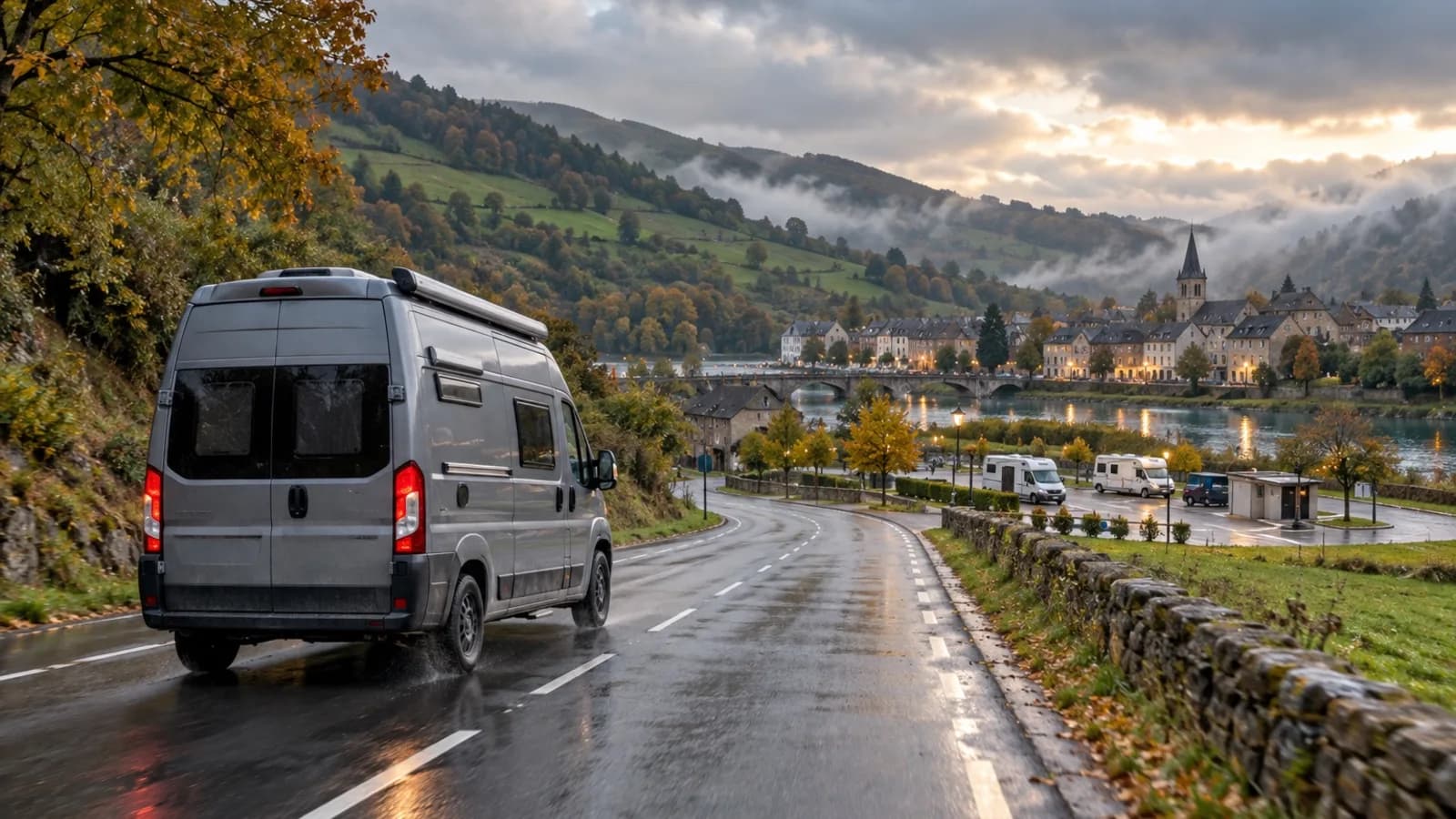
Heavy rain, spray and poor visibility make driving more tiring. A route that feels easy in sunshine can become stressful when every lane change needs extra concentration.
Plan fewer kilometres than usual and avoid stacking several demanding roads into one day. Mountain passes, narrow old-town streets, steep campsite approaches and exposed coastal roads are all easier when you have time to wait for better conditions.
A useful rainy-day rhythm is:
- one main destination;
- one optional stop;
- an overnight area that you can reach well before dark;
- a second overnight option within a reasonable distance.
If conditions become uncomfortable, stop. A campsite fee or an extra night in one place is usually a better outcome than forcing the route because the itinerary says you should move.
Build the route around all-weather anchors
An all-weather anchor is a place that makes a wet day useful rather than merely tolerable. Good anchors include:
- towns with museums, covered markets, cafés or public transport;
- thermal baths, swimming pools or indoor attractions;
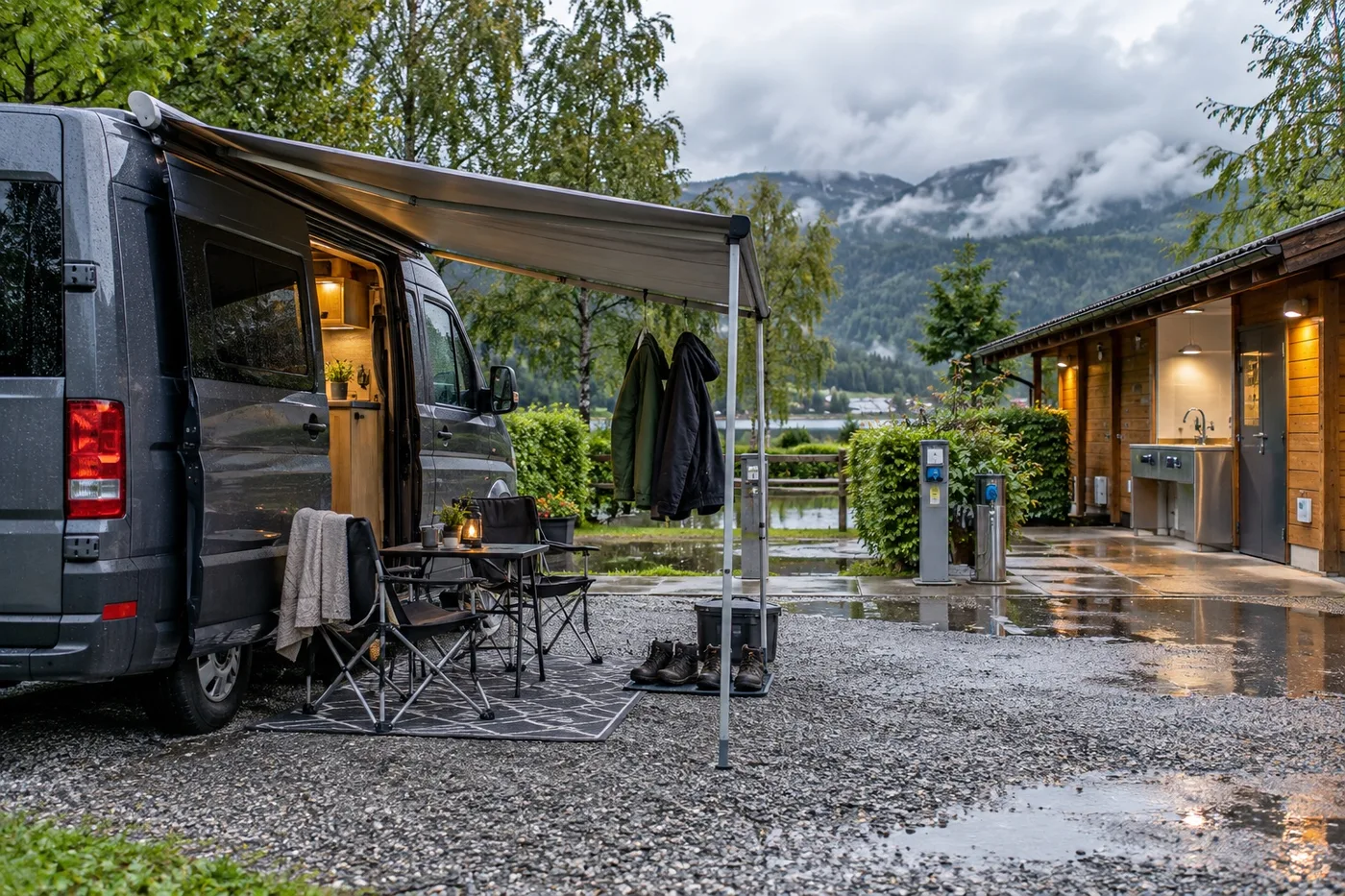
- campsites with laundry, showers, electricity and a common room;
- official motorhome areas close to shops and services;
- sheltered walking routes that remain safe in light rain;
- places where you can empty waste and refill water without improvising.
Use these anchors every two or three days. They give you a reset point for wet clothes, damp towels, muddy shoes and batteries that have received less solar charge than expected.
For example, Camping Hopfensee in Germany is the kind of service-heavy base worth comparing when the weather is unsettled. Its Campernight listing shows toilets, showers, water, electricity, waste disposal and Wi-Fi, while the description mentions indoor wellness facilities. Check current opening dates, prices and facilities directly before travelling.
Ohai Resort in Portugal is another useful example of the pattern: a full-service campsite listing with showers, toilets, water, electricity, waste facilities and Wi-Fi, plus covered leisure facilities in its description. It may suit a slower rainy-day stop better than an exposed parking area. Again, confirm current availability and rules before arrival.
You do not need a resort every night. The point is to mix simple stops with occasional places that help the van and its occupants recover.
Choose the right type of overnight stop
Wet weather changes what matters at an overnight place. A beautiful grass pitch can become soft or muddy. A remote lay-by may feel exposed in strong wind. A riverside spot can become a poor choice when flooding is possible.
When comparing places, look for:
- firm, well-drained ground;
- an access road suitable for your vehicle;
- shelter without parking beneath damaged or unstable trees;
- space away from riverbanks, low points and obvious runoff channels;
- toilets or showers if everyone is soaked;
- electricity if solar input is low;
- recent reviews mentioning mud, drainage, noise or difficult access;
- a legal, clearly managed place to stay.
In persistent rain, established campsites are often the easiest choice because they are more likely to provide facilities and staff support. For a shorter stay, reviewed motorhome areas can offer a practical balance between services and flexibility.
Do not assume that an empty parking area is suitable simply because other vans have used it. Overnight rules vary by country, municipality, protected area, season and site. Check signs and current local information, particularly near coasts, rivers, national parks and popular towns. Campernight's guide to wild-camping laws in Europe explains why a legal backup matters.
Build a three-layer overnight plan
For each area, save three options before you set off:
- Preferred stop: the place you would choose in normal conditions.
- All-weather backup: a campsite or official area with firm access and useful services.
- Early exit: a legal stop on the route before the difficult section, so you can end the day without pushing through worsening weather.
This is more useful than saving three nearly identical scenic pins. Your backups should solve different problems.
Read the newest reviews first. Comments about closed barriers, waterlogged pitches, steep access, roadworks, seasonal shutdowns or broken service points are especially valuable in bad weather. Photos can also reveal whether a site is paved, gravel, grass or sloping.
If this is your first trip, the complete beginner guide to a first campervan journey is a useful companion for the wider vehicle, document and route-planning checklist.
Treat floodwater and severe weather as stop signs
Never drive through a flooded road or around a closure barrier. Water can hide a damaged road and can move a vehicle at a depth that is difficult to judge from the driver's seat. Turn around and use another route.
The same conservative rule applies to severe wind, thunderstorms, landslide warnings, snow at altitude and official advice not to travel. A campervan has a larger side area than a car and may be more affected by crosswinds, particularly on bridges, open plains and exposed coastal roads.
When warnings are active:
- follow the local authority or national weather service;
- avoid riverbanks, dry riverbeds and low-lying parking areas;
- do not shelter beneath visibly damaged trees;
- postpone exposed roads and mountain passes;
- let someone know if your route changes significantly;
- move early rather than waiting until the safest option is full.
No itinerary is important enough to override an official closure or warning.
Prepare the van for a wet day
A small amount of organisation prevents the whole living space from becoming damp.
Create a wet zone
Keep one entrance area for shoes, jackets and umbrellas. Use a waterproof tub or tray for muddy items and avoid hanging dripping clothes over bedding. Ventilate whenever conditions allow; cooking, wet gear and people all add moisture inside a compact van.
Protect dry essentials
Keep one complete change of clothes, sleeping bags and important documents away from the wet zone. Pack electronics in dry bags or sealed pouches when carrying them outside.
Manage power and water early
Several cloudy days can reduce solar charging. Monitor the leisure battery rather than guessing, and use a serviced stop with electric hookup if your setup needs it. Refill fresh water and empty waste before a stormy stretch, because the most convenient service point may be closed or awkward to reach later.
Check the vehicle, not only the route
Tyres, wipers, lights, demisting and brakes matter more in rain. Follow the vehicle manufacturer's guidance and get faults checked professionally. Before leaving a pitch, make sure levelling blocks, cables, awnings and outdoor equipment are stored; nothing should be left loose for a gust to catch.
Plan indoor stops that are genuinely van-friendly
A museum can be perfect in the rain but frustrating if the approach has height restrictions or no suitable parking. Before adding an indoor attraction, check:
- vehicle height and weight restrictions;
- low-emission or access zones;
- parking dimensions and time limits;
- whether the last section is better by bus, train or on foot;
- whether dogs are allowed if you are travelling with one;
- opening hours and seasonal closures.
Often the simplest plan is to leave the van at a legal overnight area or edge-of-town car park and use public transport. That also avoids manoeuvring a larger vehicle through wet, congested streets.
A simple rainy-day route template
You can use this framework almost anywhere in Europe:
Day 1: Move during the clearest window. Drive to a town with a managed overnight option. Explore on foot if the weather improves.
Day 2: Stay local. Use an indoor attraction, café, market or short sheltered walk. Dry equipment and check the next forecast update.
Day 3: Make a short transfer. Choose an official motorhome area near shops or public transport. Keep a campsite as backup.
Day 4: Service night. Book a campsite with showers, laundry, water, waste disposal and electricity.
Day 5: Use the best weather window. Prioritise the scenic road, longer walk or outdoor destination you postponed earlier.
The sequence can move in either direction. That is the advantage: the route has useful stops even when the weather decides the order.
Use Campernight to keep the plan flexible
Before each leg, open Campernight and save a small group of overnight options rather than a single destination. Compare the place type, services, photos and newest reviews. Look at the access road and surrounding terrain, then re-check local signs when you arrive.
The Campernight overnight-parking guide gives a fuller step-by-step workflow. For a rainy route, add one extra rule: every overnight shortlist should include at least one managed, service-rich option.
Final rainy-route checklist
Before driving:
- Check official forecasts, warnings and road closures.
- Reduce the day's distance.
- Save a preferred stop, an all-weather backup and an early exit.
- Avoid low-lying, flood-prone and exposed overnight areas.
- Check recent reviews, access and surface type.
- Keep wet gear separate from bedding and dry clothes.
- Monitor battery use during cloudy weather.
- Confirm opening dates and facilities directly with the site when they matter.
- Stop if visibility, flooding, wind or fatigue makes driving unsafe.
Rainy-day campervan travel works best when flexibility is part of the route from the beginning. Use the Campernight app to save your main stop and backups before you drive, then choose the safest, most comfortable option for the conditions you actually find.