How to Stop Condensation in a Campervan: Ventilation, Heating and Overnight Setup
Condensation in a campervan often appears first as misted windows in the morning. Left unmanaged, the same moisture can settle behind cushions, under the mattress and inside cold cupboards, leaving bedding damp and encouraging musty smells or mould.
The basic cause is simple: warm, moisture-laden air meets a colder surface and water forms. A van makes that happen easily because several people may be breathing, cooking, drying wet clothes and sleeping inside a small space while the metal body and windows cool quickly overnight.
You do not need to make the van cold or keep every window wide open. The goal is to control how much moisture you create, give it a safe route out and keep air moving around the coldest hidden surfaces.
Start with a ten-minute evening routine
Most condensation is easier to prevent before bedtime than to clear the next morning. Use this quick routine after cooking and before everyone settles in:
- Remove obvious moisture. Put wet boots in a tray, shake out rain jackets outside and hang damp clothes where air can circulate. If a campsite has a drying room or laundry, use it rather than turning the living area into a drying cupboard.
- Ventilate after cooking. Keep lids on pans, use the extractor if your van has one and open a roof vent or window while steam is being produced. Leave the airflow going for a few minutes after the hob is off.
- Wipe wet windows. A small squeegee or absorbent cloth stops water running into window frames and cupboards. Wring the cloth outside rather than leaving it soaked inside the van.
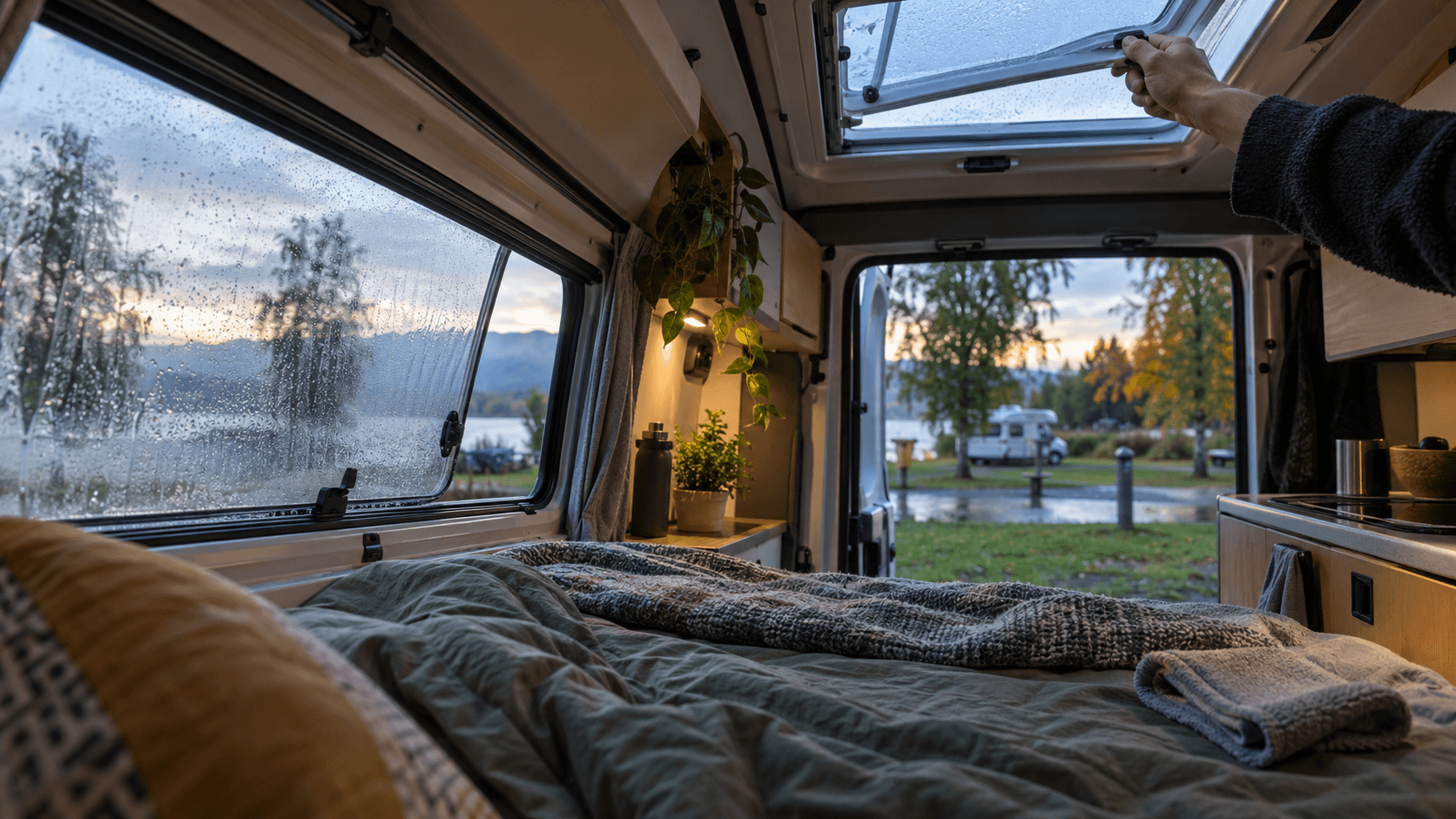
- Open an airflow path. Use the permanent ventilation designed into the vehicle and, when conditions and security allow, leave a roof vent or window slightly open.
- Check hidden areas. Move bags away from exterior walls, leave cupboard doors slightly open when practical and make sure bedding is not pressed tightly against a cold panel.
This routine will not remove every drop of moisture, especially on a cold or rainy night, but it prevents a large overnight build-up.
Ventilate without losing all the heat
Closing every vent may make the van feel warmer for a few minutes, but it also traps the moisture produced by breathing, cooking and damp equipment. Never block permanent ventilation grilles. They are part of the vehicle's safety design, particularly when fuel-burning appliances are installed.
Instead, aim for controlled airflow. A small opening high up, such as a roof vent, helps warm moist air escape. A second opening on the opposite side can create cross-ventilation when you need to clear steam quickly. Short, deliberate airing after cooking or first thing in the morning is usually more useful than letting saturated air remain trapped all day.
Heating and ventilation work together. A properly installed heater can make the interior more comfortable and warm cold surfaces, while ventilation carries moisture out. Heat alone does not make water disappear; without an escape route, the moisture stays inside and may condense somewhere less visible.
An inexpensive hygrometer can help you understand the pattern inside your own van. Use it to compare dry and damp days, not as a promise that one number guarantees a mould-free vehicle. What matters is whether moisture keeps returning and whether fabrics, corners or storage areas remain damp.
Control moisture from cooking, washing and wet gear
Everyday routines create more indoor moisture than many travellers expect. Boiling an uncovered pan, drying towels over a seat and bringing two rain-soaked jackets inside can overwhelm a compact interior.
Keep cooking steam under control with pan lids and ventilation. Never use the cooker or oven as a space heater. A cooking appliance is not designed to heat the living area, and any fuel-burning appliance can create carbon monoxide if it is faulty, poorly maintained or used incorrectly.
If your campervan has an internal shower, ventilate during and after use and dry the compartment rather than leaving water on the walls and tray. On longer wet trips, choosing a campsite or motorhome area with showers can keep a surprising amount of moisture out of the van.
The same applies to laundry and outdoor clothing. A sheltered drying room, tumble dryer or well-ventilated sanitary block is more effective than covering the interior with damp clothes. When you have no alternative, spread items out, keep them away from heaters and vents, and increase ventilation until they are dry.
Make the bed and storage areas breathe
Windows show condensation first, but the places you cannot see deserve more attention. Mattresses, cushions and bags can trap moist air against cold walls and floors.
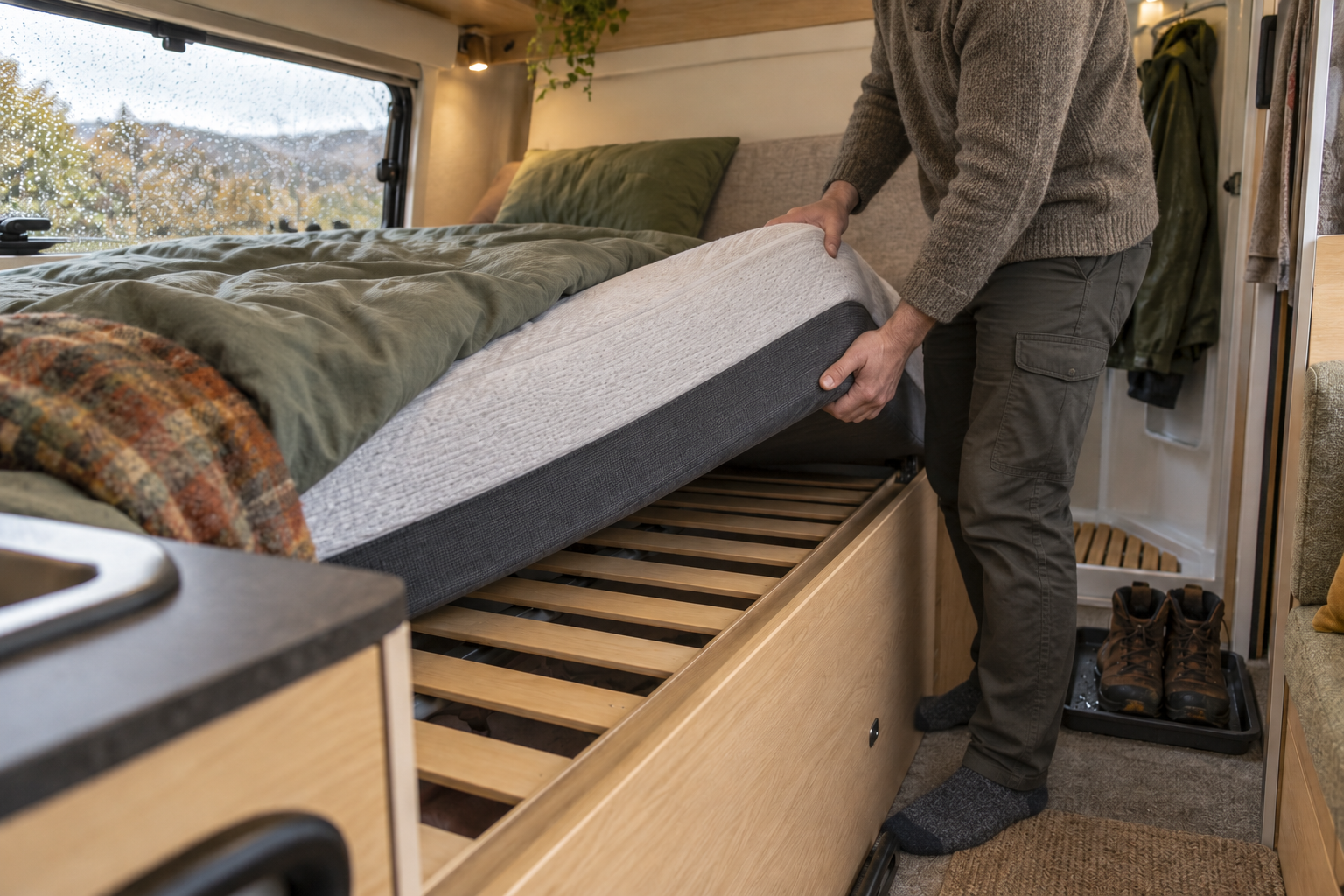
In the morning, fold the duvet back and let the sleeping area air before making the bed. If the underside of the mattress feels damp, lift it so both sides can dry. A slatted or ventilated base can improve airflow, but it still needs clear air paths; packing the space below tightly defeats the purpose.
Leave a small gap between soft furnishings and exterior walls where the layout allows. Rotate or lift cushions periodically on a long trip, and check the rear corners of lockers. Avoid storing wet equipment under the bed until it has dried.
Insulated window covers can reduce heat loss and make some surfaces less cold, but inspect behind them each morning. They do not remove moisture from the air, and water can still collect between a cover and the glass.
Choose an overnight stop that helps you dry out
The most scenic pin is not always the best place after several wet days. A serviced stop can give you the reset that prevents damp equipment from becoming a permanent part of the trip.
When comparing places in Campernight, look for the facilities that solve your actual problem:
- Electricity, if your approved heating or dehumidifying setup needs a hookup
- Showers and toilets, so washing does not add more moisture inside
- Laundry or drying facilities, where available
- Hardstanding and good drainage, to avoid carrying extra mud and water into the van
- Recent reviews, to confirm that facilities are open and working
Browse campsites or motorhome areas and save a practical backup before the weather changes.
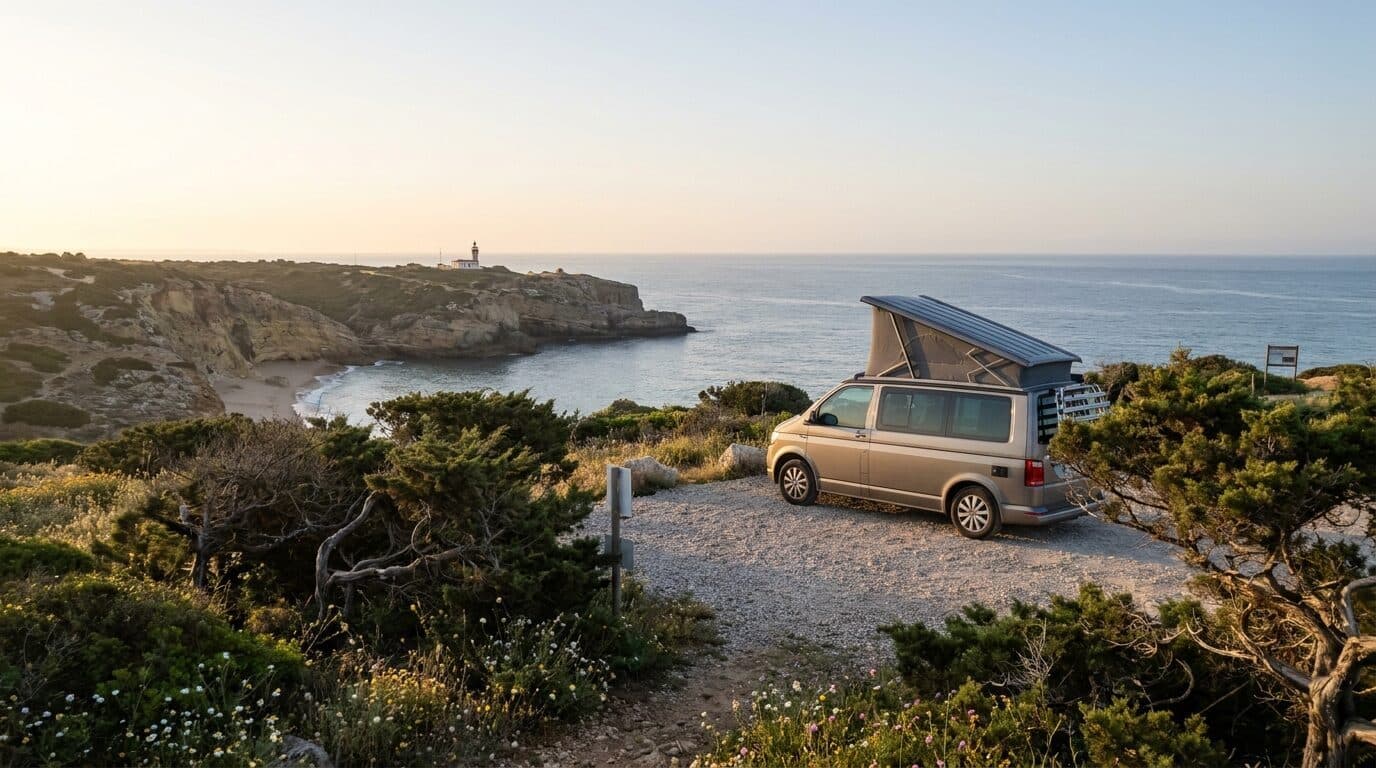
Figueira Caravan Park near Budens, Portugal, is one example of the kind of serviced base that can help during a damp stretch: its current Campernight listing includes electricity, showers, toilets, water and waste disposal. Cabo de Gata Camper Park in Spain currently lists a similar combination of services. Facilities and seasonal opening can change, so check recent information and confirm anything essential before arrival.
Neither place is a cure for condensation. The useful lesson is to include occasional service-rich stops in a route instead of expecting the van to dry itself while moving from one exposed overnight place to another.
Use heating safely
Only use heating equipment that is suitable for the vehicle and installed, operated and maintained according to the manufacturer's instructions. Have fuel-burning systems serviced by a qualified professional, keep their air inlets and exhausts clear, and never improvise with a camping stove, barbecue or unvented appliance.
Keep a working carbon-monoxide alarm in the living area, test it as instructed and replace it at the interval specified by the manufacturer. Carbon monoxide is colourless and odourless. Possible symptoms include headache, dizziness, nausea, weakness and confusion.
If a carbon-monoxide alarm sounds, or several occupants develop suspicious symptoms, stop using fuel-burning appliances if you can do so safely, get everyone into fresh air and contact the local emergency services. Do not go back inside until the source has been assessed.
Heating safety is not the place to copy a setup from social media. The correct arrangement depends on the appliance, the vehicle and its ventilation system.
A dehumidifier can help, but it is not the whole solution
A small electric dehumidifier may be useful when you have a reliable hookup and the unit is suitable for the temperature and space. It can help dry the interior after a wet day, but it should support good ventilation and moisture control, not replace them.
Passive moisture absorbers have limited capacity. They may help in a closed cupboard or while a vehicle is stored, but they will not keep up with several people cooking and sleeping in the van. Secure them carefully and follow the product instructions, especially around children and pets.
If water keeps returning to one place despite sensible ventilation, investigate the vehicle rather than buying a larger dehumidifier.
Condensation or a leak?
Condensation tends to appear on several cold surfaces, especially windows and metal-framed areas, and is often worst after sleeping or cooking. A leak is more likely to create a persistent local patch, staining, swelling, soft wall panels or dampness that becomes worse after rain.
The distinction is not always obvious. Water can travel behind panels before it becomes visible, and a badly ventilated corner can remain damp long after the windows have cleared. Record where and when the moisture appears, check seals and roof penetrations, and arrange a professional damp or leak inspection if the area does not dry or the source is uncertain.
Surface cleaning alone is not enough when mould keeps returning. The underlying moisture source, airflow problem or water ingress must be addressed.
Morning checklist
Before driving away:
- Air the van and wipe any remaining water from windows and frames.
- Fold bedding back until the sleeping area is dry.
- Check beneath the mattress and behind the coldest cushions.
- Empty wet cloths and drip trays outside in an appropriate place.
- Pack damp gear separately instead of sealing it beside bedding.
- Confirm that permanent vents, heater outlets and exhaust areas are unobstructed.
- Plan a serviced stop if the interior is getting wetter each day.
Keep the van comfortable, not sealed
Stopping condensation is less about one gadget and more about a repeatable routine: produce less steam, ventilate at the right moments, use safe heating, dry hidden surfaces and choose facilities that let the van recover after wet weather.
Open Campernight before the next overnight stop, compare recent reviews and filter for the services you need. A night with electricity, showers and somewhere to dry wet gear may be less photogenic than an exposed viewpoint, but it can make the rest of the trip warmer, drier and far more comfortable.