How to Stay Cool in a Campervan During a Heatwave
A campervan heatwave is not just uncomfortable. It changes how you should plan your route, where you stop, when you drive, what you cook, and how much backup you need if your first overnight spot turns out to be too exposed.
The good news is that you do not need a perfect setup to make summer van travel more bearable. You need a few habits that reduce heat before it builds up: shade, airflow, reflective covers, water, cooler timing, and a plan B for the night.
This guide is written for real summer travel in Europe, where one week can mean coastal heat, inland campsites with little shade, mountain escape routes, busy aire-style stops, and local rules that change from one place to the next.
Start With the Parking Spot, Not the Fan
Fans help, but they work much better when the van is not already baking.
When you arrive somewhere hot, choose your pitch or parking space like you are choosing a campsite for the next 12 hours, not just a place to stop. Look for:
- Natural shade from trees, cliffs, buildings, or campsite structures
- Afternoon shade, because that is usually when the van becomes hardest to cool
- A position that lets you open windows or vents safely
- Nearby water, showers, or swimming access if the location allows it
- A fallback option if the place is full sun, crowded, or windless
If you are using Campernight before the trip, save a few backup overnight spots around each hot-weather area instead of relying on one perfect location. The app is especially useful here because you can compare options before you are tired, overheated, and making decisions in the worst part of the day. For the full workflow, use this guide on how to find overnight parking with Campernight.
Block Heat Before It Gets Inside
The easiest heat to manage is the heat that never enters the van.
Use reflective covers on the windscreen and front windows whenever the van is parked in sun. Close curtains or blinds on the sunny side, but be careful with rooflight blinds: some manufacturers warn against closing them fully in extreme heat if the skylight cannot vent, because trapped heat can damage plastic parts. When in doubt, leave a small air gap and check your own equipment guidance.
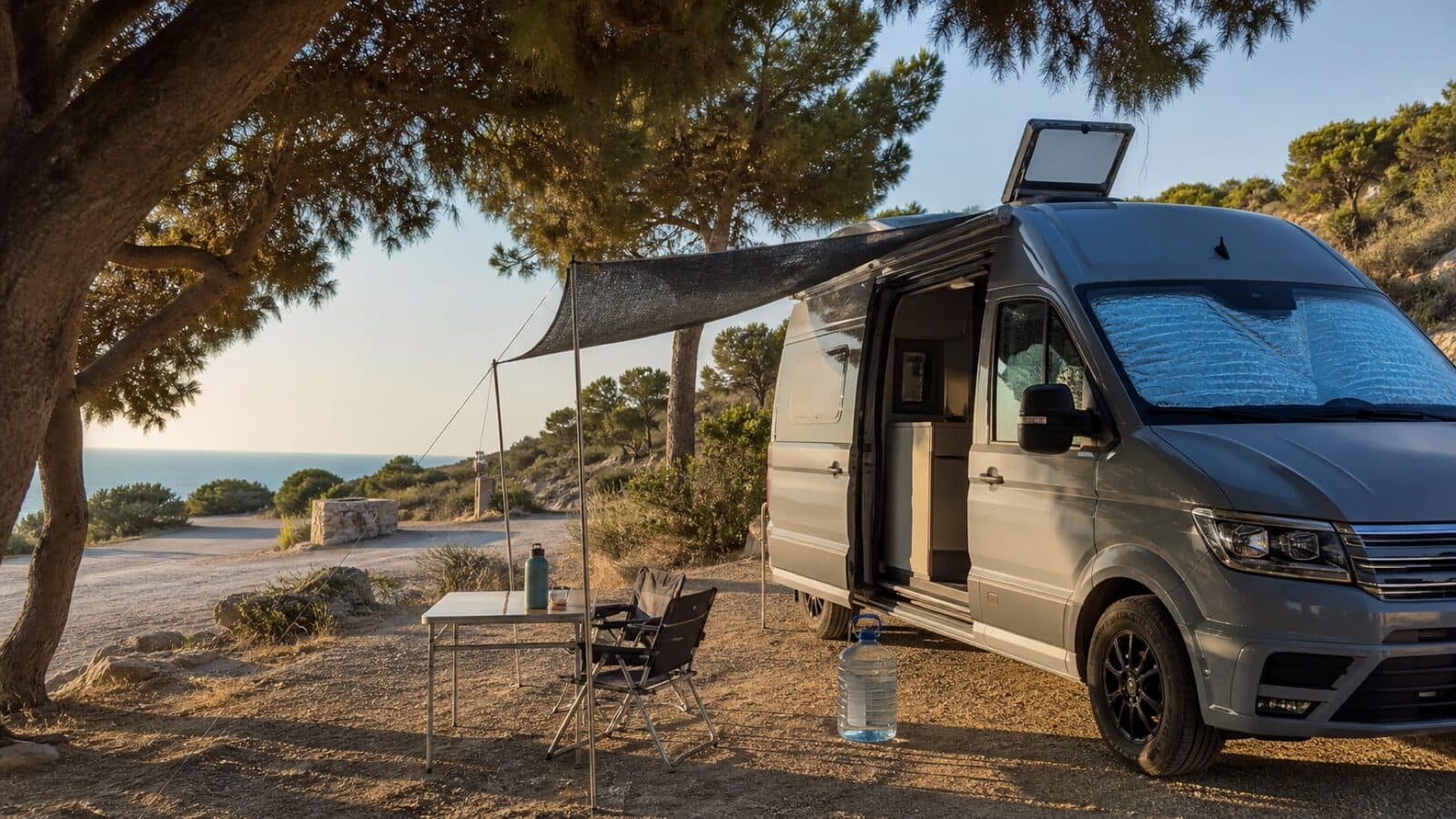
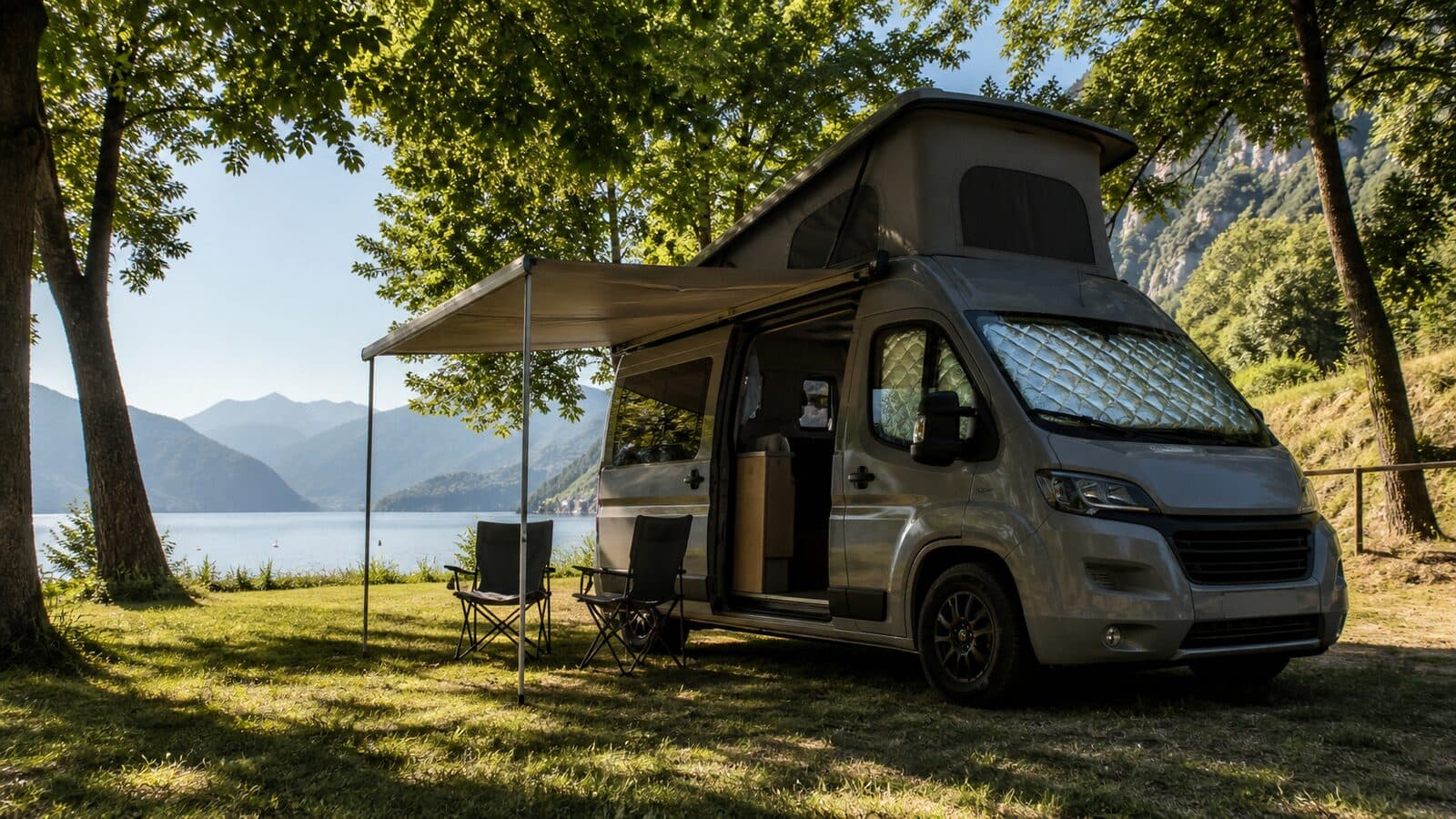
An awning, tarp, or external shade cloth can make a big difference because it stops direct sun from hitting the side of the vehicle. If you have a choice, set shade on the sunniest side of the van and keep the living area outside during the hottest hours.
Small habit, big payoff: close the van early. Do not wait until it already feels like an oven.
Create Cross-Flow, Then Move the Air
Opening one window is ventilation. Opening two points on different sides of the van is airflow.
For hot still days, try to create a path:
- Open a shaded-side window or side door
- Open a roof vent or high window so hot air can escape
- Use mosquito nets so you can keep airflow without inviting every insect inside
- Place a small fan near the cooler opening to move air through the living area
If the outside air is hotter than the inside air in the middle of the day, you may need to limit openings until the sun drops. In the evening, open up again and flush the van with cooler air before sleeping.
Build a Daily Heat Routine
Heatwave travel works best when you change the rhythm of the day.
Use mornings for driving, shopping, water refills, hikes, city visits, and anything that needs energy. Use the hottest part of the afternoon for shade, swimming, laundry, a long lunch, or simply doing less. If your van has cab air conditioning, driving for part of the hottest window can be more comfortable than sitting still in a fully exposed spot, but do not turn that into a reason to rush or overdrive.
Try this simple routine:
- Refill water before lunch, not after you are already low
- Chill bottles overnight or early in the morning if you have fridge space
- Cook outside where allowed, or choose cold meals on very hot days
- Keep wet cloths or a small towel ready for quick cooling
- Move the van if your shade disappears and it is allowed to do so
- Check the evening temperature, not just the daytime high, before committing to a sleep spot
This is also where backup planning matters. A beautiful viewpoint can be miserable at midnight if it holds heat, has no airflow, and offers no water or shade.
Eat and Cook Like the Van Is Already Warm
Indoor cooking can turn a hot van into an unbearable one. On heatwave days, avoid using the hob or oven inside unless you really need to.
Better options include:
- Cold meals: salads, wraps, fruit, yoghurt, bread, cheese, tinned fish, hummus
- Early cooking: prepare rice, pasta, eggs, or potatoes before the day heats up
- Outdoor cooking where it is legal and safe
- Campsite kitchens when available
- No-cook snacks for long driving days
Be especially careful with barbecues and gas cooking. Fire rules can be strict in summer, particularly during drought conditions, in forests, near beaches, and around protected areas. Follow local signs and campsite rules, even when other people are ignoring them.
Choose Cooler Routes When the Forecast Turns Ugly
Sometimes the best way to stay cool in a campervan heatwave is to stop trying to win against the heat.
If the forecast is brutal, consider changing the route:
- Head for mountains or higher-altitude areas
- Choose coastal zones with reliable breeze
- Avoid inland city stops during peak heat
- Book campsites with shade, pools, showers, or electricity if you need a fan or air conditioning
- Keep travel days shorter so you are not exhausted when decisions matter
Higher altitude is usually cooler than lowland areas, but do not treat it as a guarantee. Valleys, asphalt parking areas, still air, and exposed pitches can still get very hot. Check the actual forecast for the exact place where you plan to sleep.
Do Not Gamble With Children, Pets, or Poor Sleep
Heat risk escalates quickly in a vehicle. Never leave children or pets inside a parked campervan in hot weather, even for a short errand. Interior temperatures can rise fast, and shade can move.
For sleeping, pay attention to the overnight low. A 34 C daytime forecast with a cool mountain night is one thing. A 34 C daytime forecast followed by a sticky 27 C night in a windless urban stop is another.
If anyone is getting dizzy, confused, unusually weak, nauseous, or stops sweating despite feeling very hot, treat it seriously and seek local medical advice or emergency help. This article is travel planning guidance, not medical advice.
Pack the Small Things That Save the Day
You do not need a complicated summer setup, but a few small items earn their place:
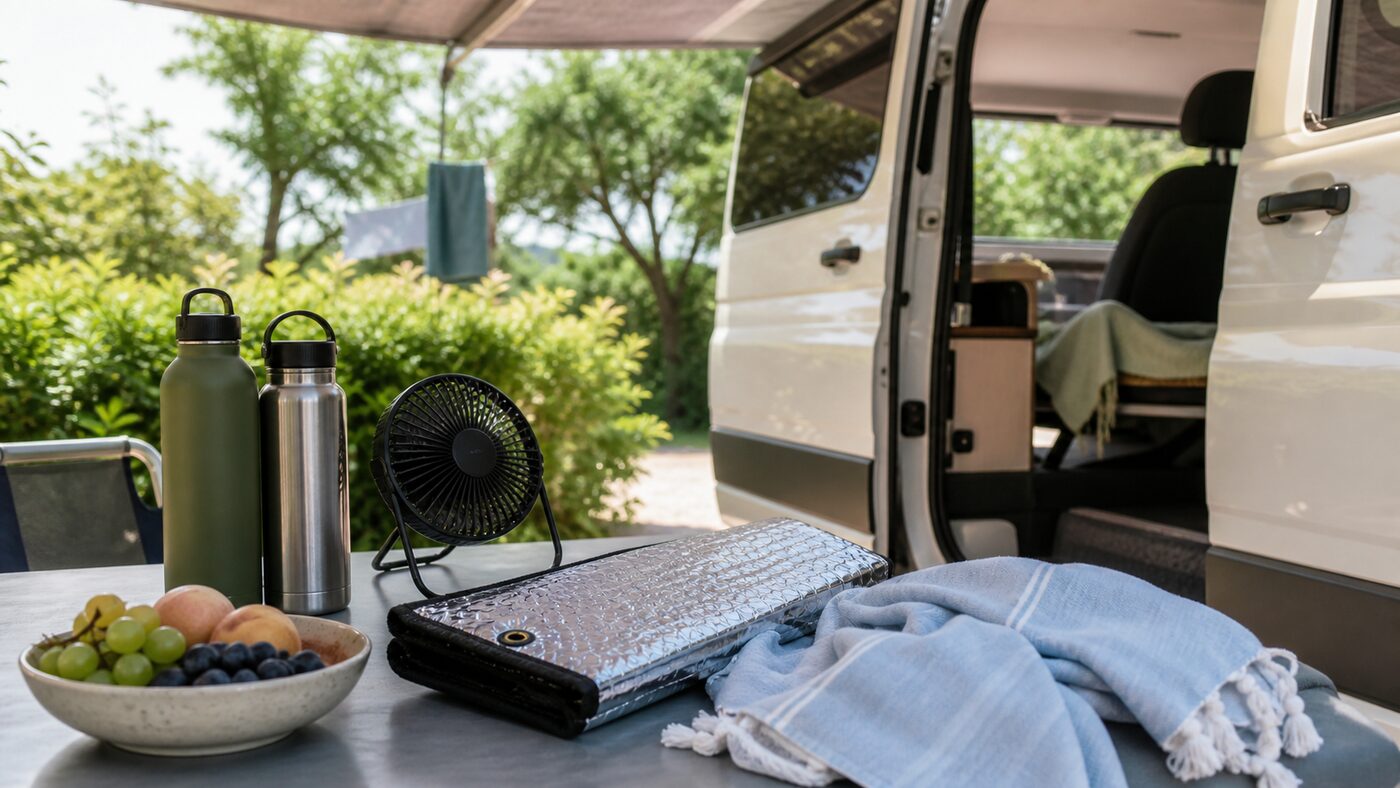
- Reflective windscreen and side-window covers
- USB or rechargeable fans
- Mosquito nets for doors and windows
- Insulated water bottles
- Extra drinking water capacity
- Light cotton or linen bedding
- A small spray bottle or cooling towel
- Shade cloth, awning, or tarp
- Electrolytes or salty snacks for heavy sweating days
The best gear is the gear that lets you adapt quickly when the plan changes.
The Real Trick: Keep Options Open
A heatwave punishes rigid travel plans. The prettiest stop is not always the best stop. The closest free spot is not always worth a sleepless night. The campsite with shade, showers, and a breeze may be the better choice than the romantic exposed viewpoint.
Before you enter a hot region, save several overnight options in Campernight: one scenic stop, one practical campsite, one cooler inland or mountain option, and one boring-but-reliable fallback with services. That way, when your first plan is too hot, too full, or too exposed, you are not starting from zero.
Staying cool in a campervan during a heatwave is mostly about timing and humility: avoid the worst heat, block the sun early, move air when it helps, drink more water than you think, and give yourself permission to change the route.
That is what makes summer van travel feel like freedom again instead of a sweaty endurance test.