How to Manage Water, Shade and Heat on the Road
Summer campervan travel is mostly about simple systems. When the weather is mild, you can improvise a lot. When the temperature climbs, the trip gets better fast if you already know where your next water refill is, where you can sit in shade, and where you will go if the place you planned is too exposed.
This guide is a practical way to manage water, shade and heat in a campervan without turning every day into a survival exercise. The goal is not to pack more gear for the sake of it. It is to make each hot day easier to run.
Start with water, not the route
Water is the first constraint on a summer road trip. If you have enough, everything feels flexible. If you are guessing, every decision gets annoying: showers, cooking, washing up, coffee, pets, kids, and whether you can stay one more night.
Before a hot travel day, check three things:
- How much drinking water you have separate from washing water.
- Where the next confirmed refill point is.
- Whether you have a backup refill point if the first one is closed, dry, private, or crowded.
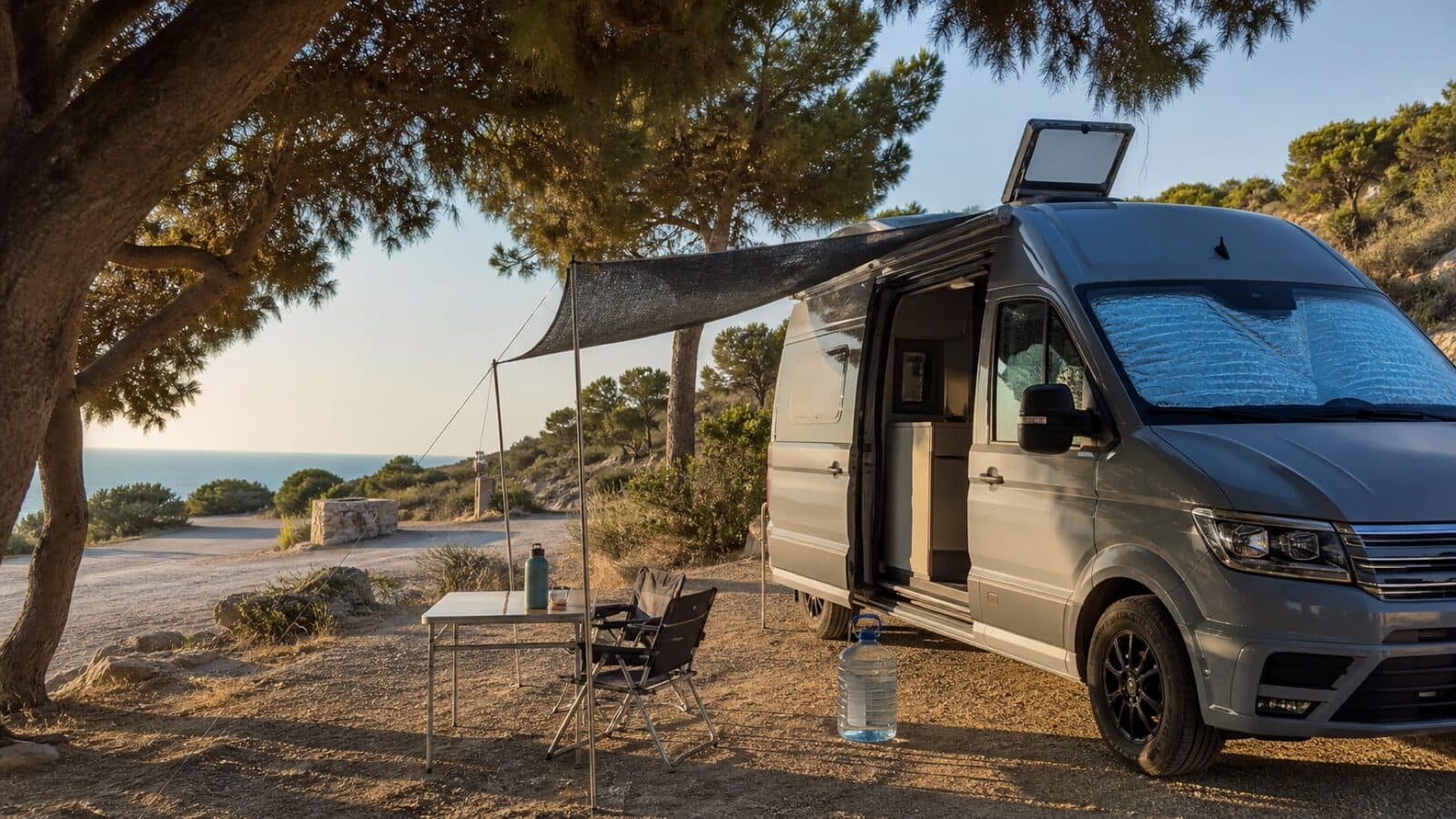
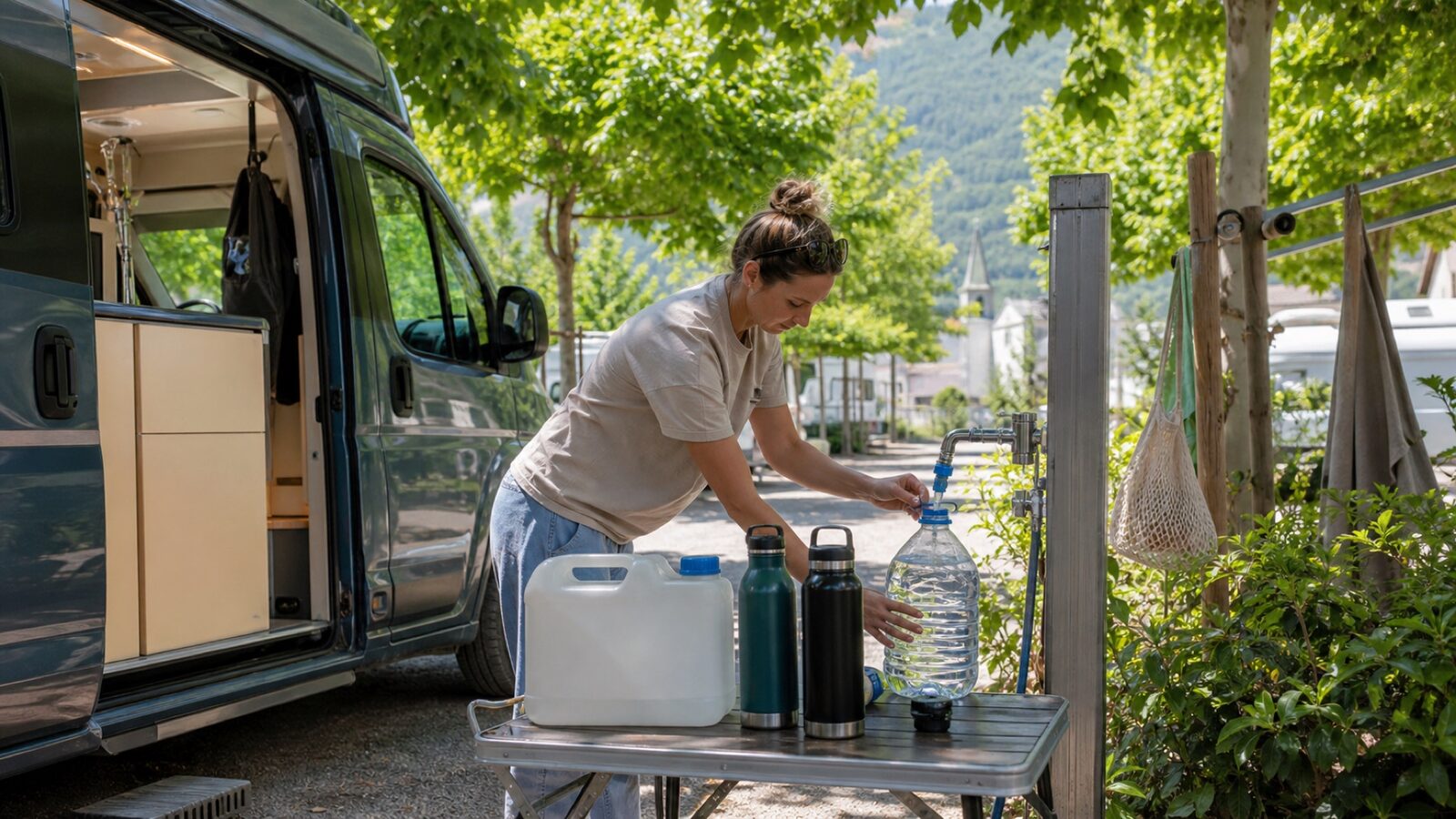
A useful rule is to split water into two categories: water you can drink without thinking, and water you can use for cleaning or rinsing. Keep drinking water in bottles or containers that are easy to move into shade. Keep refill containers accessible, not buried behind chairs and levelling blocks.
If you use a fixed tank, do not wait until it is almost empty. Refill while you still have enough to comfortably reach the next option. In summer, a half-full tank can feel like a warning light.
Build shade into the day
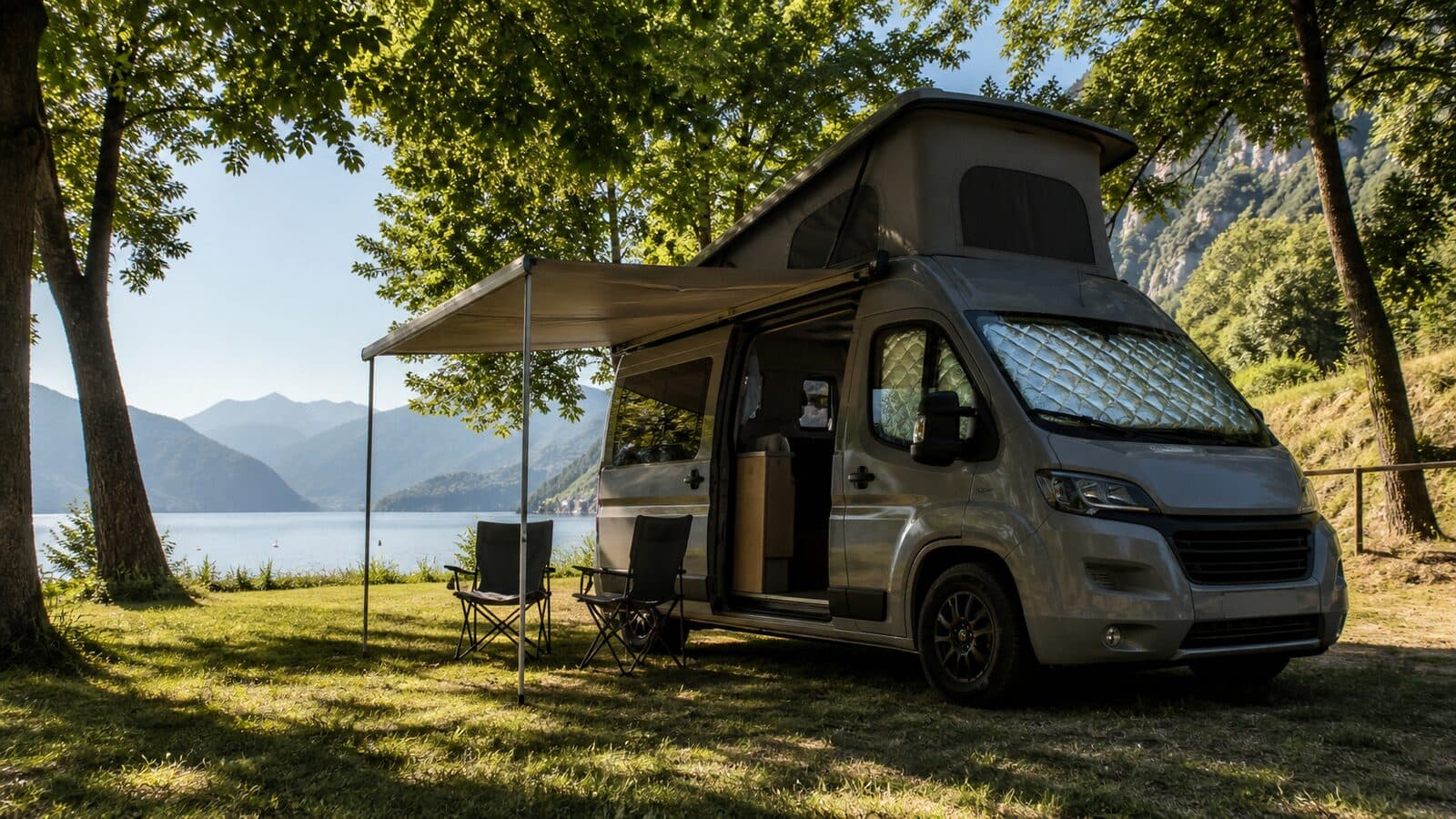
Shade is not just a comfort feature. It changes when you cook, where you can sit, how quickly the van heats up, and whether you can rest during the worst part of the afternoon.
The best shade plan starts before you arrive. Look at the direction of the sun, the likely tree cover, and whether the spot has enough room to orient the van. A place that looks perfect at 9:00 can be brutal at 16:00 if there is no shelter on the western side.
Natural shade is usually better than nothing, but do not rely on it blindly. Tree cover can disappear as the sun moves, and some shady-looking places are too tight, uneven, or restricted for overnight use. An awning, tarp, shade cloth, or reflective screen gives you more control, especially when the only legal place to stop is exposed.
Avoid arriving during the hottest hour
One of the easiest summer mistakes is arriving at a new stop in the middle of the afternoon. That is when the van is hot, everyone is tired, spots are harder to judge, and small problems feel bigger.
If you can, drive early, stop for water before lunch, and make your main parking decision before the worst heat. Then use the hottest part of the day for low-effort things: shade, swimming where legal and safe, groceries in an air-conditioned shop, laundry, a campsite service stop, or a longer break somewhere cooler.
If you need to move in the afternoon, keep the plan boring. Pick a reliable service area, campsite, aire, or known legal stop rather than gambling on a scenic place with no shade and no fallback.
Keep the van cooler before it gets hot
Once the inside of a van is overheated, it takes time to recover. The better move is to slow the heat before it builds.
Useful habits:
- Put reflective screens up before the sun hits the glass.
- Ventilate early in the morning and late in the evening.
- Cook outside when it is safe and allowed.
- Keep bedding and soft materials out of direct sun.
- Park so the largest windows are not taking the worst afternoon sun.
- Use roof vents and fans to move air, but do not treat airflow as a substitute for shade or hydration.
Be especially careful with children and pets. A van can become unsafe quickly in strong sun, even with windows cracked. If the plan depends on leaving anyone inside while you run errands, it is a bad plan.
Plan refill stops like overnight stops
Water stops deserve the same attention as overnight places. A refill point is only useful if you can actually access it with your vehicle, use it legally, and leave without stress.
When checking a refill option, look for practical details: opening hours, height restrictions, whether the tap is public, whether it is at a campsite or paid service point, and whether recent reviews mention access problems. If you are travelling across borders, do not assume the same systems exist everywhere. Some regions have many camper service areas; others require more planning.
This is where a backup plan matters. Before a hot stretch, save a small chain of options: water refill, shaded break, legal overnight stop, and paid campsite if the day goes sideways. You can use Campernight to find and save overnight parking options before the trip, then add fallback stops around the areas where heat or water could become limiting.
Choose cooler terrain when the forecast turns ugly
If the forecast jumps from warm to punishing, do not be stubborn about the route. Summer vanlife gets much easier when you move with the weather instead of fighting it.
Good escape options often include:
- Higher elevation, where nights may be cooler.
- Forested valleys with legal parking or campsites.
- Coastal areas with breeze, if they are not overcrowded.
- Lakes, rivers, or swimming areas where stopping is legal and safe.
- Campsites with shade, showers, and reliable water when free stops become uncomfortable.
Avoid absolute assumptions. Mountains can still be hot. Coasts can still be humid and crowded. Forested spots can have fire restrictions. The point is to keep a few different types of fallback, not to believe one landscape solves everything.
Make the evening reset automatic
Hot days are easier when every evening has a reset routine. Refill drinking bottles. Check the tank. Charge fans and power banks. Put screens where they will be needed in the morning. Move food out of hot corners. Review tomorrow's water and shade options before you are tired.
A simple evening checklist:
- Drinking water ready for the morning.
- Refill point chosen for the next day.
- Shade plan for breakfast or first stop.
- Wastewater and rubbish handled where allowed.
- Forecast checked.
- Backup overnight option saved.
This takes ten minutes and removes a lot of next-day friction.
Do not optimize only for the prettiest spot
In summer, the best campervan stop is not always the most scenic one. Sometimes it is the one with shade, water, toilets, legal overnight rules, and an easy exit if the area fills up.
That does not mean giving up beautiful places. It means ranking the practical stuff higher when the weather is harsh. A sea view with no shade and an empty water tank is not a good summer setup. A quieter shaded service stop can be the right call for one night, especially if it keeps the trip comfortable for the next three.
Final checklist
Before a hot campervan travel day, ask:
- Do we have enough drinking water if the first refill fails?
- Is there a confirmed refill point on today's route?
- Do we know where the afternoon shade will come from?
- Are we arriving before the hottest part of the day if possible?
- Is there a cooler fallback area nearby?
- Is there a legal overnight backup saved?
- Are kids, pets, food, and sleep setup protected from heat?
You do not need a perfect plan. You need enough options that heat does not corner you. Build the day around water first, shade second, and scenery third. The trip will feel calmer, and you will make better decisions when the road gets hot.