Common Campervan Mistakes to Avoid: 12 Lessons for a Smoother Trip
A campervan gives you freedom, but it also asks you to make dozens of small decisions: what to pack, where to stop, how much water to carry and when to change the plan. Most first-trip problems do not come from one dramatic failure. They come from a few ordinary choices that pile up.
The good news is that the most common campervan mistakes are easy to prevent. Use these lessons before departure and during the trip, then leave enough space in the schedule to adapt when weather, traffic or a busy overnight area change the day.
1. Planning every hour of the route
A route can look short on a screen and still take much longer in a campervan. Narrow roads, fuel stops, supermarket runs, service points and slower driving all add time. A schedule with no margin turns each delay into stress.
Choose one main objective for the day and treat the rest as optional. Save a preferred overnight stop plus at least one fallback. If you arrive late, tired or in poor weather, you should not have to start searching from zero.
Campernight can help you compare recent reviews, photos and listed services, then save several suitable options before you set off.
2. Assuming every overnight stop works the same way
A campsite, a motorhome area and a tolerated parking place serve different needs. A campsite may offer reception, showers and longer stays. A motorhome area may focus on short stays and vehicle services. A parking place may offer none of those things, and permission to park does not automatically mean every camping behaviour is allowed.
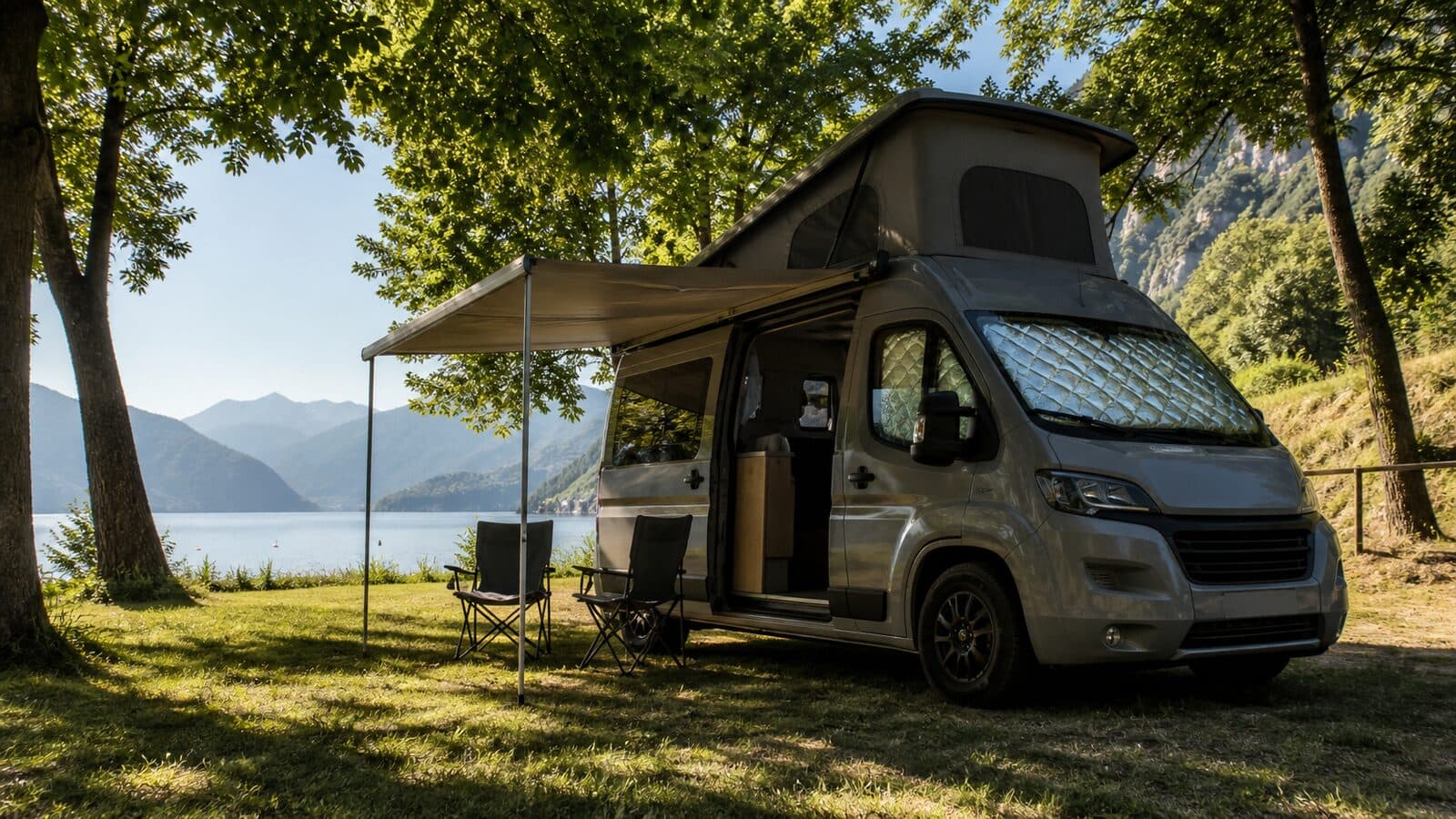
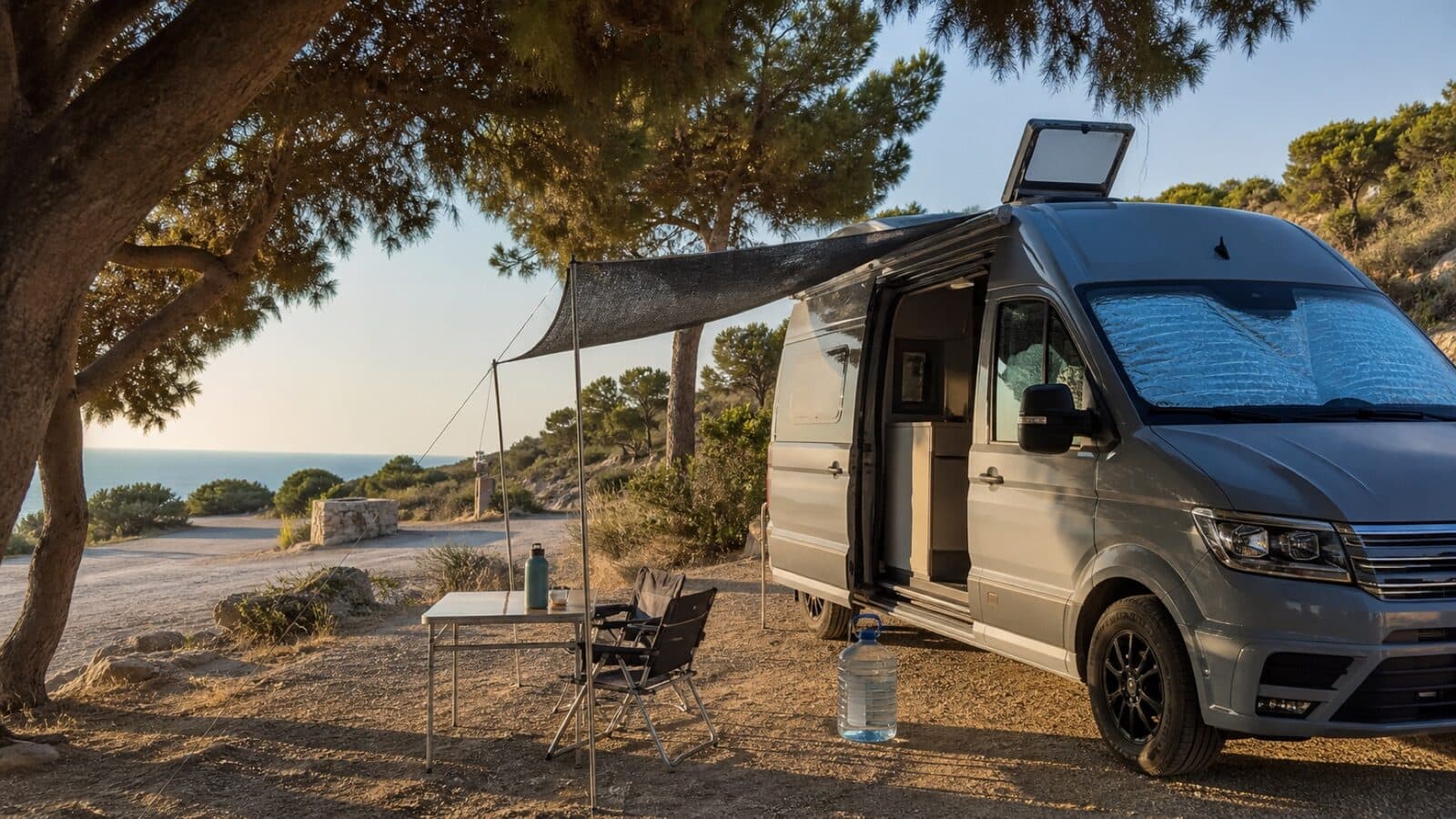
Before choosing, decide what you actually need that night. Browse campsites for more facilities, compare motorhome areas for convenient overnight services or explore wild-camping-style spots only after checking signs, local rules and current conditions. Do not put out chairs, an awning or levelling equipment unless the place and local rules allow it.
3. Arriving without a backup
Popular places can fill up, close temporarily or become unsuitable after heavy rain. Photos may also be old. Relying on one pin is one of the fastest ways to end a travel day badly.
Keep two alternatives within a distance you are willing to drive. Check the most recent reviews and look for comments about access, vehicle length, seasonal closures and overnight restrictions. If the final approach feels unsafe or a sign contradicts the listing, turn around and use the backup.
4. Packing too much
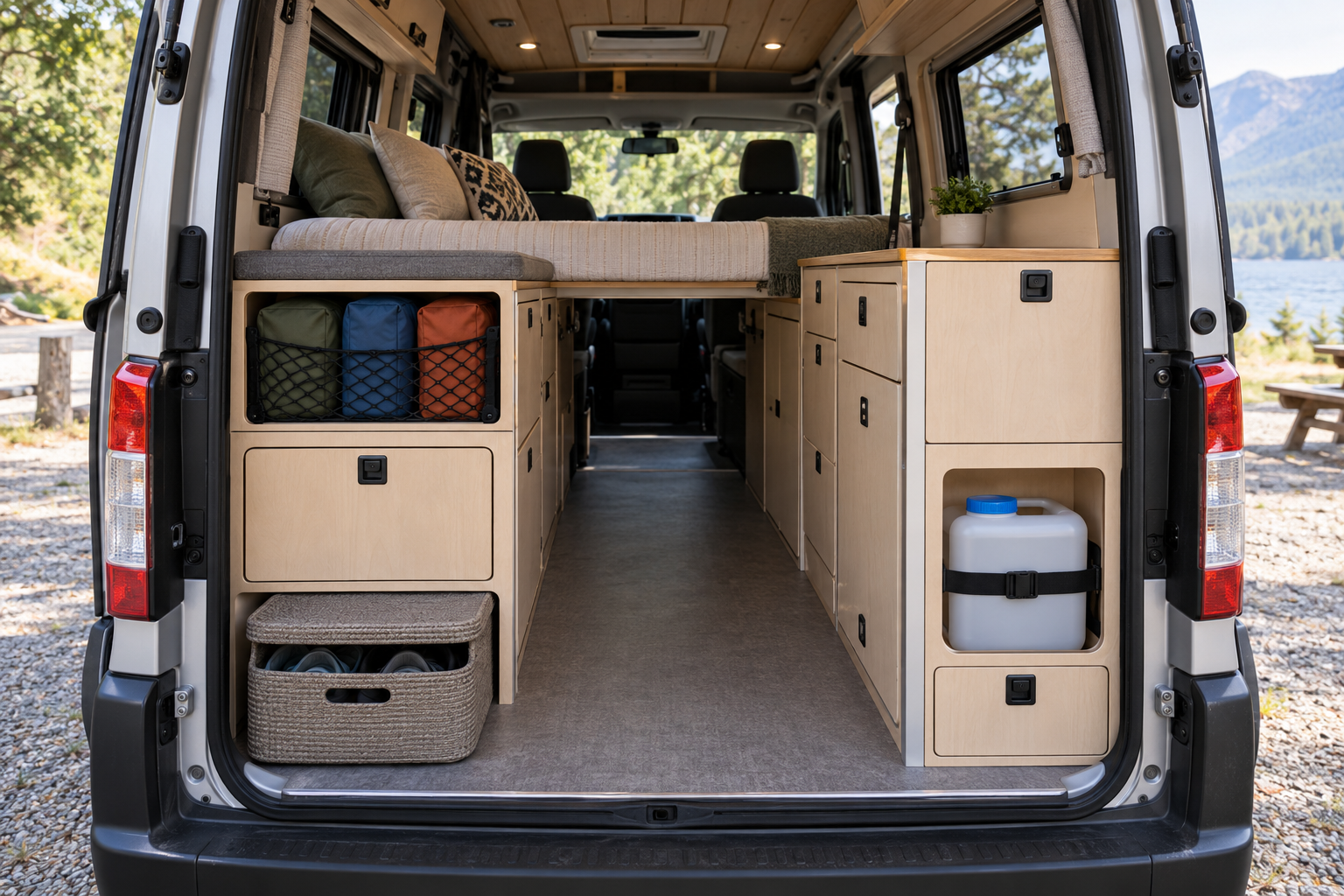
Extra chairs, duplicate cookware and “just in case” gear take up space and add weight. An overloaded or badly balanced vehicle can be harder to control, while unsecured objects can become dangerous during sudden braking.
Check the vehicle documentation for its permitted weights and payload. Remember that passengers, water, fuel, bicycles and accessories all count. Store heavy items low, close cabinets before driving and secure anything that could move. If you are unsure about the loaded weight, use an appropriate weighbridge rather than guessing.
5. Ignoring height, width and access limits
Campervans are not cars. Low barriers, tight village streets, weak bridges, steep ramps and overhanging branches can turn a shortcut into a trap.
Write down the vehicle's height, width, length and maximum permitted weight where the driver can find them. Check signs on the approach and do not follow a navigation instruction that conflicts with a restriction. When access information in an app is incomplete, stop somewhere safe and verify the route before continuing.
6. Skipping the departure check
Even an experienced traveller can leave a roof vent open or forget an electrical cable. A short routine prevents damage and arguments.
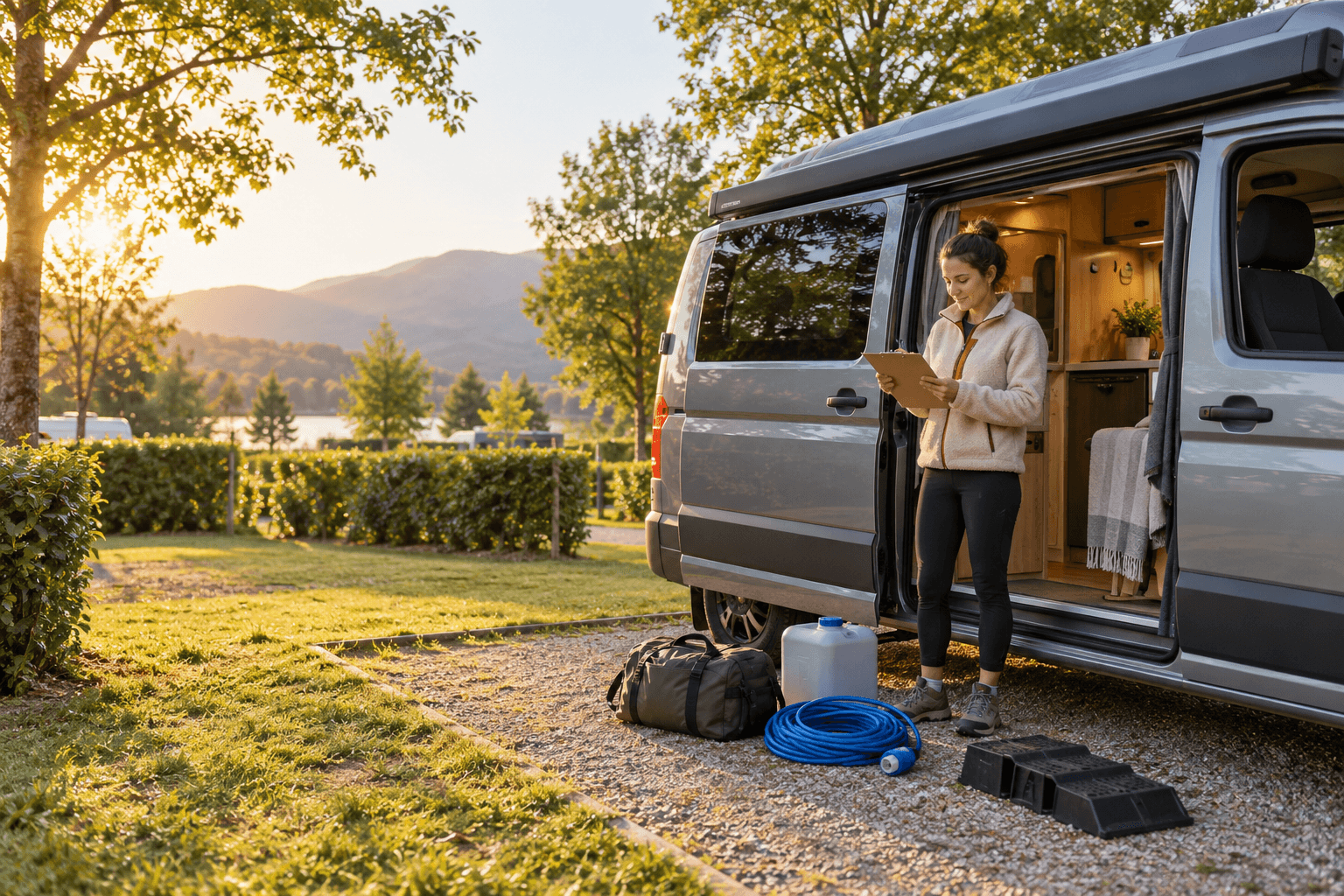
Before moving, walk around the vehicle and confirm that:
- doors, windows, roof vents and awnings are closed and secured;
- hookup cables, hoses, levelling ramps and outdoor items are packed away;
- cabinets, drawers and the fridge are latched;
- loose objects and passengers are secured;
- steps are retracted and the route is clear;
- mirrors, lights and tyres look ready for the road.
Use the tyre pressures specified for the vehicle and its load. Do not copy a figure from another van or rely only on how a tyre looks.
7. Carrying no water plan
Running out of fresh water is inconvenient; carrying far more than you need uses payload and fuel. Water weighs roughly one kilogram per litre before the container itself is counted.
Start with a sensible amount for the distance to the next reliable refill, then identify where you can replenish it. Keep drinking water in a clean food-safe container and never assume that an unlabelled tap is potable. If a listing mentions water, confirm recent comments or ask the site operator when you arrive.
8. Treating electricity as plug-and-play
Campervan electrical systems have limits. A high-power appliance can overload a hookup or drain a leisure battery much faster than expected.
Know which sockets work from the battery, which require an external hookup and how much power your equipment draws. Use cables and adapters intended for the installation, keep connectors out of standing water and do not improvise repairs. If there is heat, damage, a burning smell or repeated tripping, disconnect safely and ask a qualified professional to inspect the system.
9. Blocking ventilation or using the wrong heat source
A cold night can tempt people to seal every opening, but permanent ventilation is there for a reason. Cooking and breathing also add moisture, which can lead to condensation.
Do not block fixed vents. Use only installed or approved heating equipment according to its instructions, and never use a barbecue or cooking stove to heat the living space. Keep alarms maintained as specified by the vehicle or equipment manufacturer. Ventilate while cooking and air the van briefly before bed and again in the morning.
10. Waiting too long to empty waste
Full toilet cassettes and grey-water tanks are unpleasant, heavy and harder to manage. Dumping them outside authorised facilities can damage the place and may break local rules.
Empty waste at a designated disposal point before the tanks are close to full. Use the correct inlet for each type of waste, follow site instructions and leave the service point clean. A quick check of the tank levels each morning makes this much easier.
11. Treating parking permission as camping permission
Road, parking and overnight-stay rules vary between countries, municipalities and individual sites. A place where a vehicle may park is not necessarily a place where occupants may camp, set out equipment or stay overnight.
Check official local information and signs at the location. Follow time limits, payment rules and seasonal restrictions. Avoid absolute claims from old forum posts, especially when they do not identify the municipality or date. When the position is unclear, choose an authorised site instead of arguing with a sign or risking a fine.
12. Driving when tired to “make the booking”
Fatigue makes judgement and reaction worse. A reservation, sunset view or prepaid pitch is never worth pushing past the point where you can drive safely.
Build breaks into the day and stop in a safe place when you feel sleepy. Share driving when the licence, insurance and rental agreement allow it. Your fallback stop should be close enough to use before tiredness becomes an emergency.
A five-minute check before every travel day
Before starting the engine, ask five questions:
- Is the vehicle within its limits and fully secured?
- Do we know the vehicle dimensions and the day's access constraints?
- Do we have enough fuel or charge, water and battery for the next stage?
- Have we saved a suitable overnight choice and a realistic fallback?
- Is the driver rested, and is there enough time to stop before dark?
This small routine will not remove every surprise. It will prevent many of the ones that spoil a trip.
Make the next stop easier with Campernight
The best preparation is not a rigid schedule; it is having good options. Use Campernight to find camper-friendly places, compare recent community information and listed services, and save a main stop plus a fallback for each travel day.
Download Campernight before the trip, save the places that fit your vehicle and needs, and make the final decision using current signs and local rules when you arrive.