Where Can You Sleep in a Campervan in France?
France is one of the easiest countries in Europe to enjoy by campervan, but “easy” does not mean “sleep anywhere”. The short version is this: you can usually sleep inside a legally parked campervan where parking is allowed, but camping behaviour is a different matter. The moment you put out chairs, open an awning, use levelling blocks, cook outside, or stay somewhere with local restrictions, you may be treated as camping rather than parking.
That distinction matters on the Atlantic coast, near beaches, in mountain areas, around protected nature sites, and in busy tourist towns. France has thousands of proper campsites and motorhome areas, so the best trips are planned around legal overnight options, not around hoping nobody notices you.
If you are still building the basics of your overnight routine, start with our guide to finding overnight parking with Campernight. For wider context before crossing borders, also read our overview of wild camping laws in Europe.
The practical rule: parking is not always camping
For campervan travellers, the most useful way to think about France is to separate three situations:
- Parking: your van is inside a legal parking space, you are not spreading outside the vehicle, and you follow signs and time limits.
- Overnight parking: you remain parked overnight and sleep inside, but still behave like a parked vehicle.
- Camping: you occupy space outside the vehicle, set up equipment, make noise, create waste, or stay in a way that looks residential.
Sleeping inside a campervan is often tolerated when the vehicle is legally parked and there is no local ban. But tolerated is not the same as guaranteed. Local councils can restrict motorhome parking, overnight stays, or camping-style behaviour, especially in high-pressure areas.
So if a sign says no motorhomes, no overnight parking, no camping, or gives a height barrier or time restriction, treat it as the rule for that place. Do not try to argue that you are “only sleeping”. In practice, the person enforcing the rule will care about the local sign, the season, and the impact on residents.
Where campervans can usually sleep in France
The safest options are the ones built for overnighting.
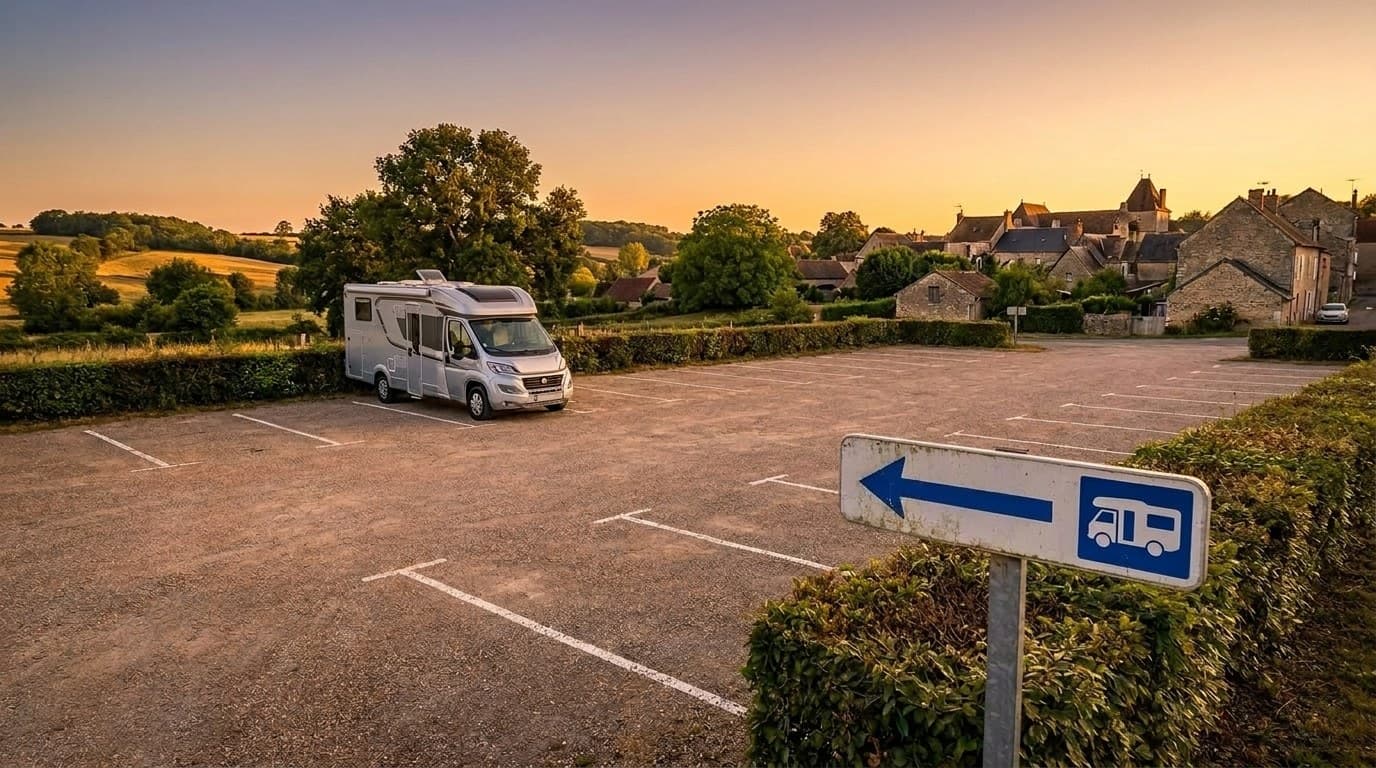
Aires de camping-car are dedicated motorhome areas. Some are free, some paid, and many include water, waste disposal, electricity, or a simple parking surface near a town. They range from basic overnight stops to very comfortable municipal facilities.
Campsites are the best choice when you want to properly camp: chairs outside, awning out, laundry, longer stays, showers, kids running around, or a rest day. France has a huge campsite network, including municipal sites that can be simple and affordable.
Farms, vineyards, and private stopovers can be great if they are clearly offered for campervans and you respect the host’s rules.
Legal public parking can work for a quiet night when signs allow it and you keep a low profile. This is usually more realistic in ordinary towns or transit stops than in famous beach car parks in July.
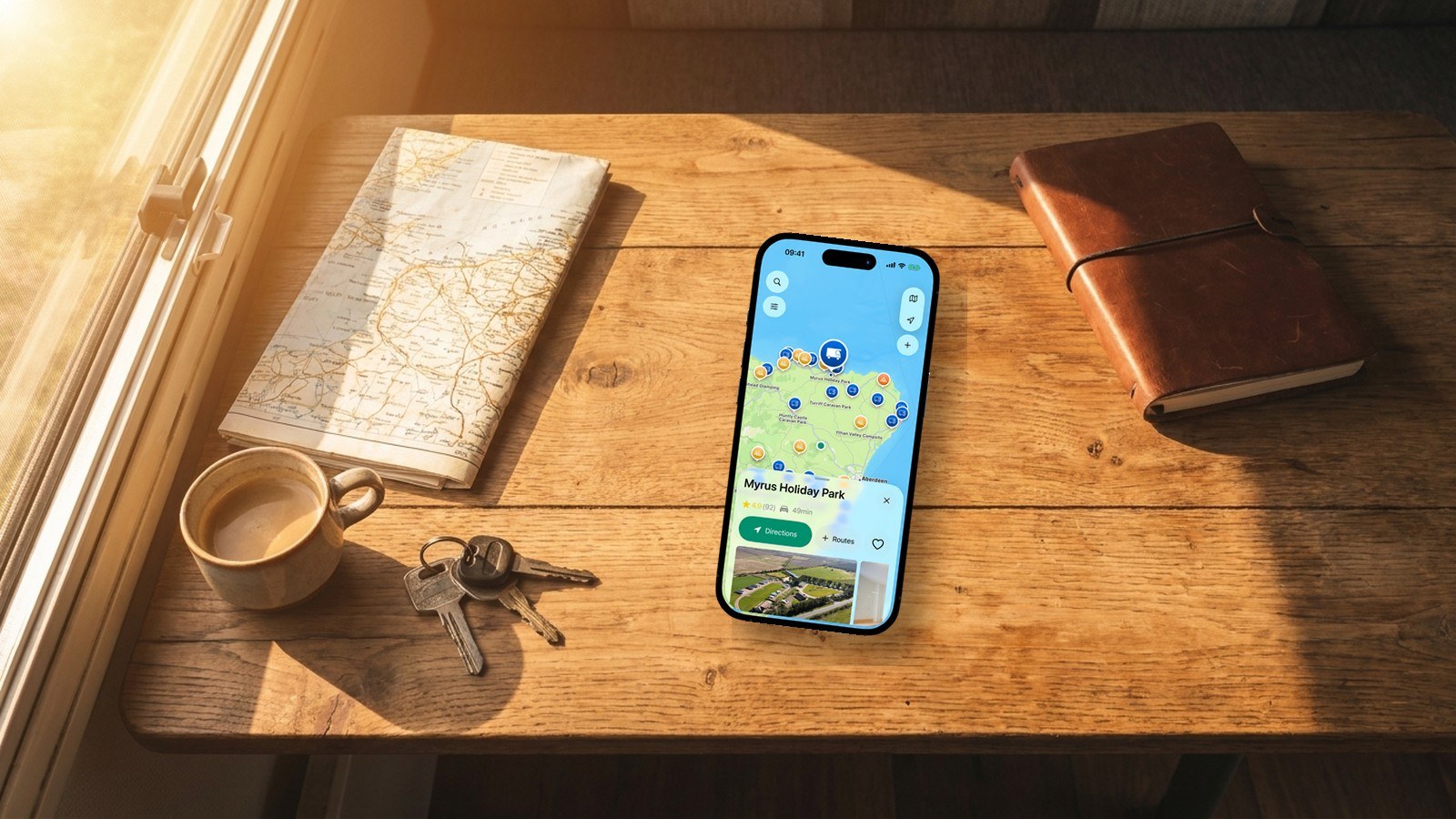
Campernight is useful here because you can compare reviewed overnight spots, read recent notes from other travellers, and keep backup options nearby before you arrive tired. For France especially, recent reviews matter because a place that worked in spring can be restricted in summer.
Places where you should be extra careful
Some locations are more likely to have restrictions, even if they look empty when you arrive.
Be careful near beaches, dunes, lakes, forests, national and regional parks, protected natural sites, historic monuments, and popular ski or hiking areas. These are exactly the places where overnight parking pressure becomes visible, and where municipalities often add seasonal controls.
Coastal France deserves special attention. A beach car park may be fine for a daytime swim and completely forbidden overnight. Height barriers, “interdit aux camping-cars” signs, or no-overnight signs are common in busy seaside towns.
Also watch for private land. A quiet field entrance, vineyard track, forest road, or harbour corner is not automatically fair game. If it is private, ask permission or move on.
The responsible test is simple: if every campervan did what you are about to do, would the place still work tomorrow? If the answer is no, choose an aire or campsite instead.
How to avoid fines, stress, and awkward knocks
A good France overnight routine takes five minutes:
- Check the signs before you settle in, not after dinner.
- Keep everything inside the van unless the place clearly allows camping behaviour.
- Avoid blocking views, homes, farm access, emergency routes, or service bays.
- Do not dump grey water, black water, or rubbish anywhere except proper facilities.
- Read recent reviews, because restrictions can change quickly in tourist areas.
- Arrive with a backup stop saved nearby.
The backup stop is underrated. Most bad overnight decisions happen late, when someone is tired, hungry, and trying to make a questionable car park work. Before you drive into a coastal town or mountain valley, save two or three alternatives in Campernight: one ideal stop, one practical aire, and one campsite or paid fallback. If you need something specific, Kai can speed this up: ask for spots near your route with the services you need, such as water refill, waste disposal, electricity, toilets, showers, pet-friendly stops, or a quiet place away from busy roads.
If you are unsure about a public car park, look for the simplest answer: stay for the day, then move to a dedicated overnight place before evening.
What about wild camping in France?
Wild camping spots cause some of the most confusion. In everyday vanlife language, people use wild camping to mean anything from sleeping discreetly in a vehicle to setting up a full camp in nature. French rules and local enforcement do not always use the phrase the same way.
For a campervan trip, avoid thinking in terms of “wild camping is legal” or “wild camping is illegal”. That is too broad. The safer answer is: parking and sleeping may be allowed in some places, but camping outside designated areas is restricted in many places and can be banned locally.
You should be especially cautious in protected areas, coastal zones, forests, near classified sites, and anywhere with local signs. If you want the outdoor-camping experience, use a campsite, farm stay, or authorised natural camping area instead of trying to improvise in a sensitive place.
This is not just about avoiding a fine. It is about keeping campervan travel welcome. The more travellers treat France like a free campsite, the more towns respond with barriers and bans.
A simple decision rule for tonight
Use this checklist before choosing a spot:
| Question | If the answer is no |
|---|---|
| Is parking for campervans allowed here? | Move on. |
| Are overnight stays allowed or clearly tolerated? | Choose an aire or campsite. |
| Can you stay fully inside the vehicle? | Do not use this as a stealth campsite. |
| Is the place outside protected or sensitive zones? | Check local rules or move on. |
| Do recent reviews say it still works? | Save a backup before arriving. |
| Would locals be fine if ten vans did this? | Pick a less intrusive option. |
Bottom line
You can have a brilliant campervan trip through France without gambling on illegal spots. The winning formula is flexible: use aires and campsites when you need facilities, use legal parking carefully when it genuinely fits, and avoid camping behaviour anywhere that is not designed for it.
The rule of thumb is easy to remember: if you look like a parked vehicle, you are in a much safer position than if you look like a campsite.
Before each driving day, use Campernight to shortlist campervan spots in France, check recent comments, and save a legal fallback. France rewards travellers who plan lightly, stay respectful, and leave every place easier for the next van.