First Campervan Trip, the Complete Beginner Guide
Your first campervan trip does not need to be epic. It needs to be easy.
A lot of beginners make the same mistake. They plan a huge route, pack half the house, drive too far on day one, then spend the trip feeling behind. The best first campervan trip is shorter, simpler, and designed to teach you how van travel actually feels.
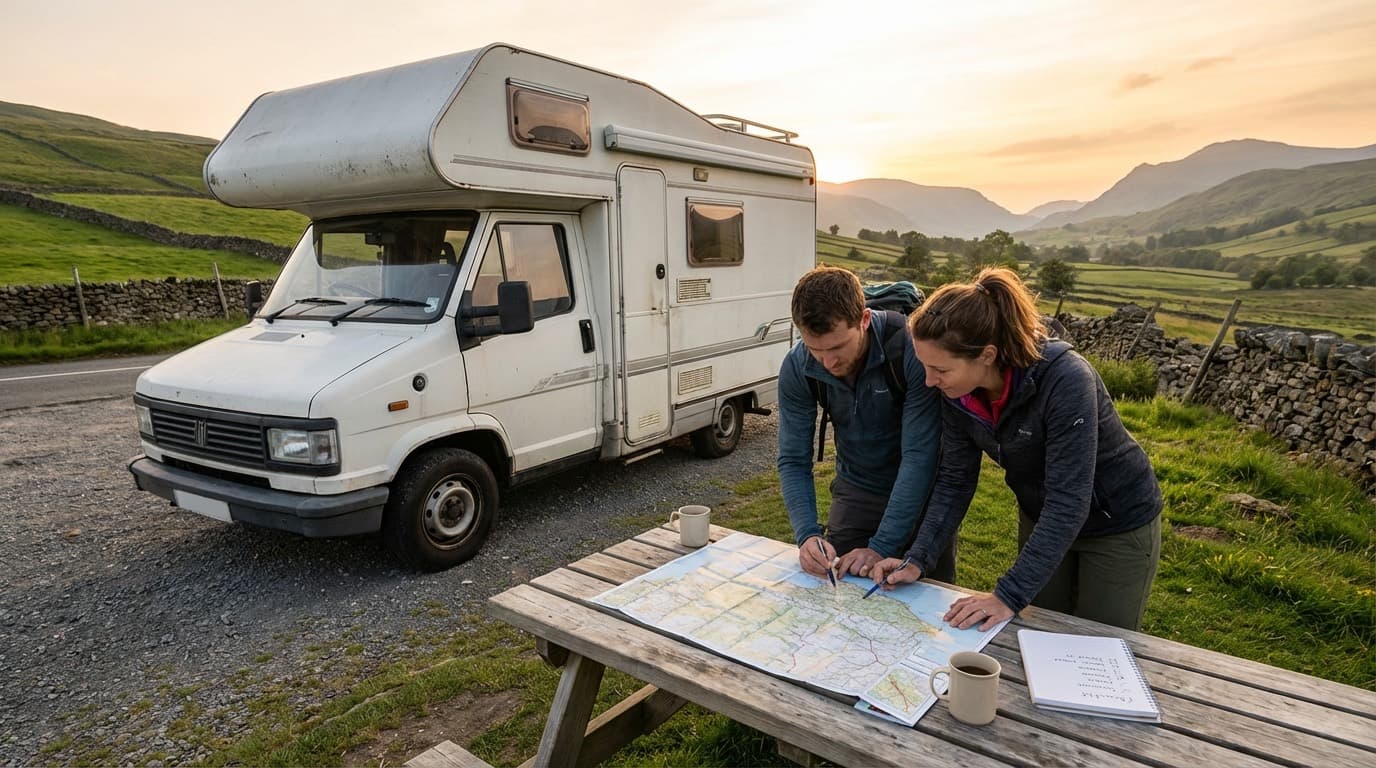
If you want your first trip to leave you excited for the next one, not exhausted, start with a route that is forgiving, a setup you understand, and overnight stops you can trust. That is also where Campernight helps most. Before you set off, you can use the travel planning feature to sketch a simple route, compare overnight options, check photos and reviews, and avoid arriving somewhere sketchy after dark. If you want an extra hand, Kai, Campernight’s AI co-pilot, can also help you plan the trip with a more realistic pace and suggest activities to do during the day.
Start with a short route, not a dream route
Your first trip is a test run, not a lifetime achievement award. Three to five days is usually enough. That gives you time to learn the basics without turning every small mistake into a major problem.
For a first route, keep these rules:
- Limit long driving days. Two to three hours of driving is plenty when you are still learning the rhythm.
- Choose one region, not three countries.
- Prefer places with several backup overnight options within a short distance.
- Avoid city-center driving, ferry timings, and mountain roads unless you already feel confident in the vehicle.
A good beginner route feels slightly boring on paper. That is fine. Smooth beats heroic.
Learn the van before the trip starts
Even a beautiful campervan becomes stressful if you only figure out the basics when you are tired and parked badly.
Before departure, make sure you know how to:
- fill and empty water tanks
- connect electricity if your setup uses hook-ups
- switch the fridge or gas on and off safely
- convert the seating area into a bed
- check the vehicle height before low bridges or car parks
- secure loose items before driving
Do one full practice run at home or near home. Make the bed. Boil water. Open every locker. Try blackout blinds. Test charging your phones. Five awkward minutes on your driveway can save you an hour of swearing on the road.
Pack for normal life, not survival TV
Beginner packing usually fails in one of two ways. Either people bring far too much, or they forget the dull things that actually matter.
The smartest packing list is built around routines. What do you need to cook one easy meal, sleep comfortably, stay warm, stay dry, and leave the van tidy every morning?
First trip essentials
- Bedding you already like, because better sleep fixes a lot of beginner stress.
- Headlamps or small lights, because campsites and parking areas are annoying in the dark.
- Water hose or filling adapter, because water points are rarely set up exactly how you expect.
- Levelling wedges if your van needs them, because sleeping on a slope gets old fast.
- Simple cookware only. You are not opening a restaurant.
- Layers and waterproofs, because European weather changes quickly.
- Power bank and charging cables, especially if you are off-grid.
- Cleaning cloth, bin bags, and toilet paper. Boring, crucial, always forgotten.
If you are using Campernight to plan the trip, save a few backup stops with toilets, water, or showers before you leave. The travel planning feature makes that much easier, because you can map out the route around the facilities you care about instead of improvising everything later. If you are unsure how much to fit into each day, ask Kai for a realistic first-trip plan and a few simple activity ideas along the way.
Pick overnight stops before you need them
Nothing makes a first trip feel chaotic faster than hunting for a place to sleep when it is already late.
You do not need every night locked down in military detail, but you do want a shortlist. For an easy first night, compare campsites with official motorhome areas. Aim to have one main overnight option, one backup nearby, and a rough arrival target before sunset.
This matters even more in spring and summer, when popular areas fill up earlier than beginners expect.
Rules for first-timers:
- Arrive with daylight when possible.
- Read recent reviews, not just old ones.
- Check whether the spot is quiet, flat, and suitable for your vehicle size.
- Be careful with assumptions around wild camping or overnight parking rules, because they vary by country, region, and sometimes even by municipality.
If your trip crosses borders, do not assume the overnight rules stay the same. Use current local guidance, campsite rules, and up-to-date spot information before settling in.
Keep your daily rhythm embarrassingly simple
A first campervan trip gets better when you remove decisions.
- Wake up and decide the next stop over coffee.
- Drive one short leg in the morning.
- Stop somewhere scenic or practical for lunch.
- Reach your overnight area with time to pivot if plan A looks bad.
- Keep dinner simple.
- Reset the van before bed so the morning is easy.
That is not glamorous, but it works. The more stable your routine feels, the more you notice the good parts of the trip: the view from breakfast, the easy detours, the freedom to stop when something catches your eye.
The mistakes most beginners make
You can avoid a lot of stress just by refusing a few bad habits.
- planning too many stops
- driving too far every day
- arriving late and hoping for the best
- ignoring weather changes
- overpacking bulky clothes and kitchen gear
- underestimating water, waste, and battery management
- choosing overnight spots without checking recent reviews
The fix is almost always the same: simplify, slow down, and leave margin.
How Campernight helps on a first campervan trip
A beginner does not need more information. A beginner needs better decisions.
Campernight is most useful when it helps you reduce uncertainty before it becomes stress. The travel planning feature helps you turn a rough idea into a route that is actually manageable for a first trip, while still keeping backup options nearby. You can compare overnight spots, check what services are available, read recent comments, and plan around the kind of days you actually want to have.
Kai adds another useful layer for beginners. If you are not sure how far to drive, where to pause, or what to do between overnight stops, Kai can help you shape a more realistic trip and suggest activities for the daytime too.
For a first trip, that confidence matters more than squeezing in one extra destination.
Final thought
Your first campervan trip is not about doing van life perfectly. It is about learning what kind of traveler you are once the road replaces the hotel booking.
Keep the route short. Keep the plan flexible. Choose easier overnight stops than your ego wants. If something goes slightly wrong, good. That is part of the education.
And before you leave, set up a few likely overnight spots in Campernight so you are not improvising everything from the driver’s seat. The best first trip is the one that feels calm enough to make you want a second one.