Family Campervan Trip Planning Checklist
Planning a campervan trip with kids sounds romantic until everyone is hungry, the next stop is full, and the “quick detour” has turned into a two-hour negotiation with tired children in the back. The good news: family van travel gets much easier when you plan for the boring moments before they happen.
This checklist is built for real family trips across Europe, not perfect Instagram loops. It covers route planning, overnight stops, safety, packing, food, pets, entertainment, and the little backup plans that save the day. Use it before your next spring or summer trip, then adapt it to your own family rhythm.
Campernight fits naturally into this planning stage because it helps you compare overnight options, read reviews, and save backup places before the end-of-day scramble starts.
For the overnight-stop part of the checklist, use the step-by-step guide to finding overnight parking with Campernight. If you are still choosing where to go, our guide to the best summer road trips in Europe by campervan is a good next planning tab.
Start with a family-friendly route, not a fantasy itinerary
The first family planning mistake is building the route around what looks exciting on a map instead of what your children can realistically handle. A beautiful 350 km day can become miserable if it includes late arrivals, no playground breaks, and nowhere easy to park for lunch.
For most family campervan trips, shorter driving days win. Aim for one main move per day, with a proper stop in the middle and a clear overnight option before late afternoon. If you are travelling with younger kids, build the route around predictable anchors: breakfast, outdoor play, lunch, quiet time, arrival, dinner, and sleep.
A practical family route should include:
- Driving days that leave room for delays
- Lunch stops where children can move, not just sit in the van
- Overnight places with enough space, safety, and reviews
- Backup stops within a realistic distance
- At least one low-pressure day with no major driving
The best family trips usually feel slightly under-planned on paper. That is the point. Space in the schedule is what lets the trip stay fun when naps fail, weather changes, or a beach stop becomes the highlight of the day.
Choose overnight stops before you need them
Finding somewhere to sleep is one of the biggest stress points for family van travel. It is even worse when you start looking after dinner, with tired children, low phone battery, and no clear idea whether the area is suitable.
Before leaving, use Campernight to shortlist your main stop plus two backups for each area. Look for practical signals rather than just pretty photos: recent reviews, access notes, noise comments, whether the place feels suitable for families, and whether there are nearby services if you need water, toilets, food, or a quick exit in the morning.
Overnight rules vary across Europe and can change by country, municipality, protected area, and season. Treat app listings and reviews as planning support, not as a legal guarantee. Always check local signs and avoid places where overnight stays are clearly restricted.
A simple overnight decision rule helps:
| Question | Why it matters for families |
|---|---|
| Can we arrive before dark? | Easier parking, safer setup, calmer children |
| Are there recent reviews? | Conditions change, especially in summer |
| Is there a backup nearby? | Full spots are common in busy areas |
| Is the setting calm enough for sleep? | Noise can wreck the next day |
| Are services reachable if needed? | Water, toilets, food, and waste points reduce stress |
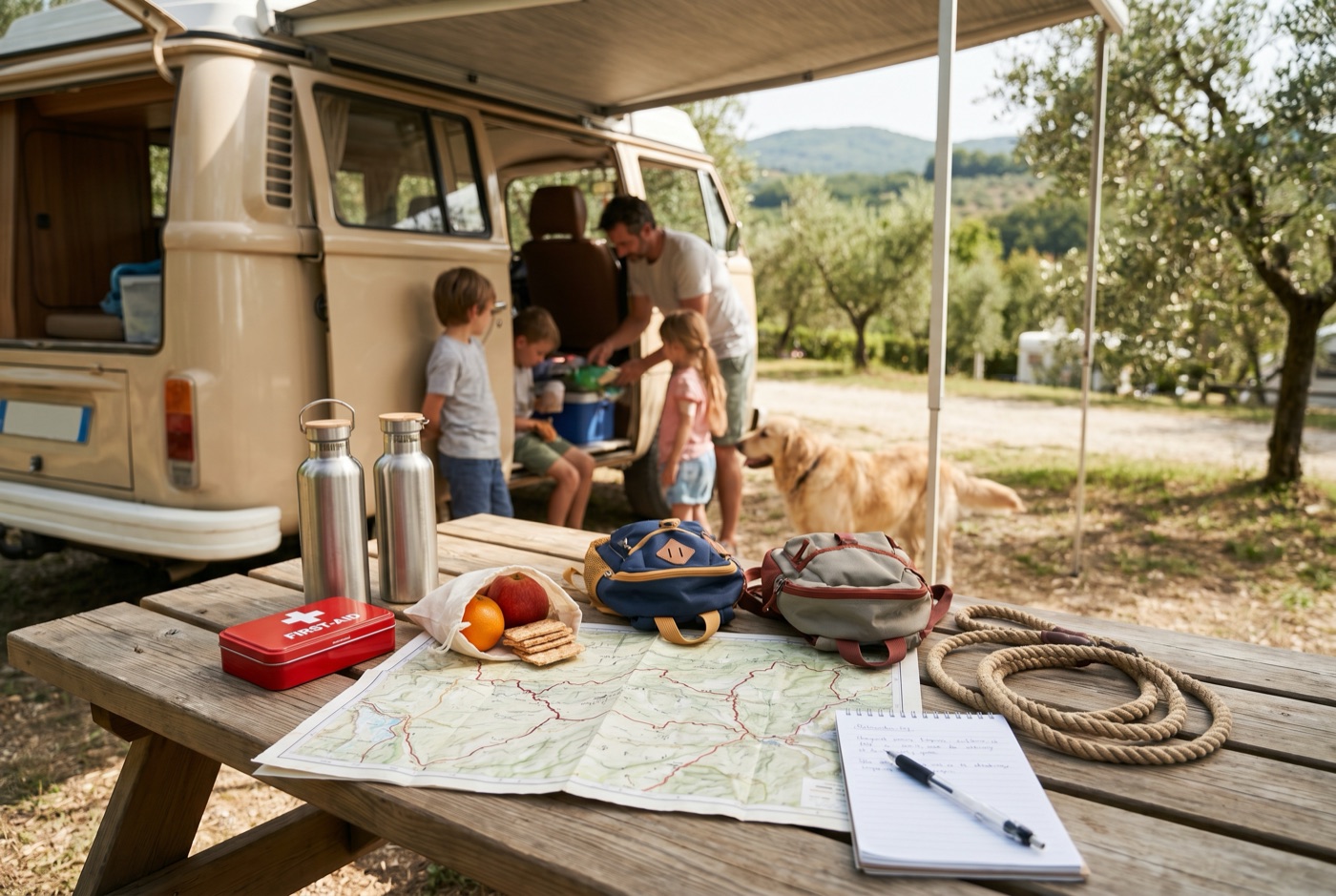
Pack for routines, not every possible emergency
Family campervan packing gets out of control fast. The goal is not to bring the whole house. The goal is to preserve the routines that keep everyone functional: sleeping, eating, washing, playing, and calming down.
Start with the items that protect those routines:
- Sleep setup: bedding, favourite soft toy, blackout solution, pyjamas, night light
- Food rhythm: easy breakfasts, snacks, refillable bottles, quick dinners, child-safe cutlery
- Outdoor time: layers, sun hats, rain jackets, sandals, walking shoes, towels
- Health and safety: first aid kit, prescriptions, child medicine, sunscreen, insect repellent
- Van life basics: wet wipes, rubbish bags, laundry bag, chargers, spare batteries
- Entertainment: books, small games, headphones, downloaded films or music for bad weather
- Pet extras if relevant: leash, food, bowl, towel, vaccination documents, waste bags
Put the things you need daily in predictable places. If every snack, charger, and jacket has to be hunted down, the van becomes chaos by day two. Packing cubes, labelled bags, or simple storage zones make a bigger difference than fancy gear.
For summer trips, pack for heat management too: shade, extra water, breathable clothing, and a plan for where to spend the hottest part of the day. Children and pets can struggle quickly in a hot vehicle, so never treat the van as a safe waiting room in warm weather.
Plan food like you will be tired
Food is where family campervan trips either become easy or stupidly stressful. The trick is to plan meals for the version of you who has been driving, parking, unpacking, and answering questions for six hours.
Bring a few meals that require almost no thinking: pasta and sauce, wraps, omelettes, soup, couscous, rice bowls, or picnic dinners. Add snacks that do not melt instantly or create a disaster in the back seat. If your children are picky, do not use the trip as the moment to reinvent their diet.
A simple food plan works better than a complicated menu:
- Two emergency dinners for late arrivals
- One breakfast that can happen anywhere
- One picnic lunch for travel days
- Snacks divided into daily portions
- Refillable water bottles for every person
- A small treat reserved for difficult moments
If you are crossing borders, check any food restrictions that apply to your route, especially when entering or leaving the EU or moving with animal products. Rules can change, so avoid building the trip around carrying large amounts of restricted food.
Keep safety boring and visible
Family safety planning should be boring, visible, and easy to repeat. Everyone should know the basic rules before the trip starts: where shoes go, when children can get out, what to do at parking areas, and which parts of the van are off-limits while cooking or setting up.
Before departure, check:
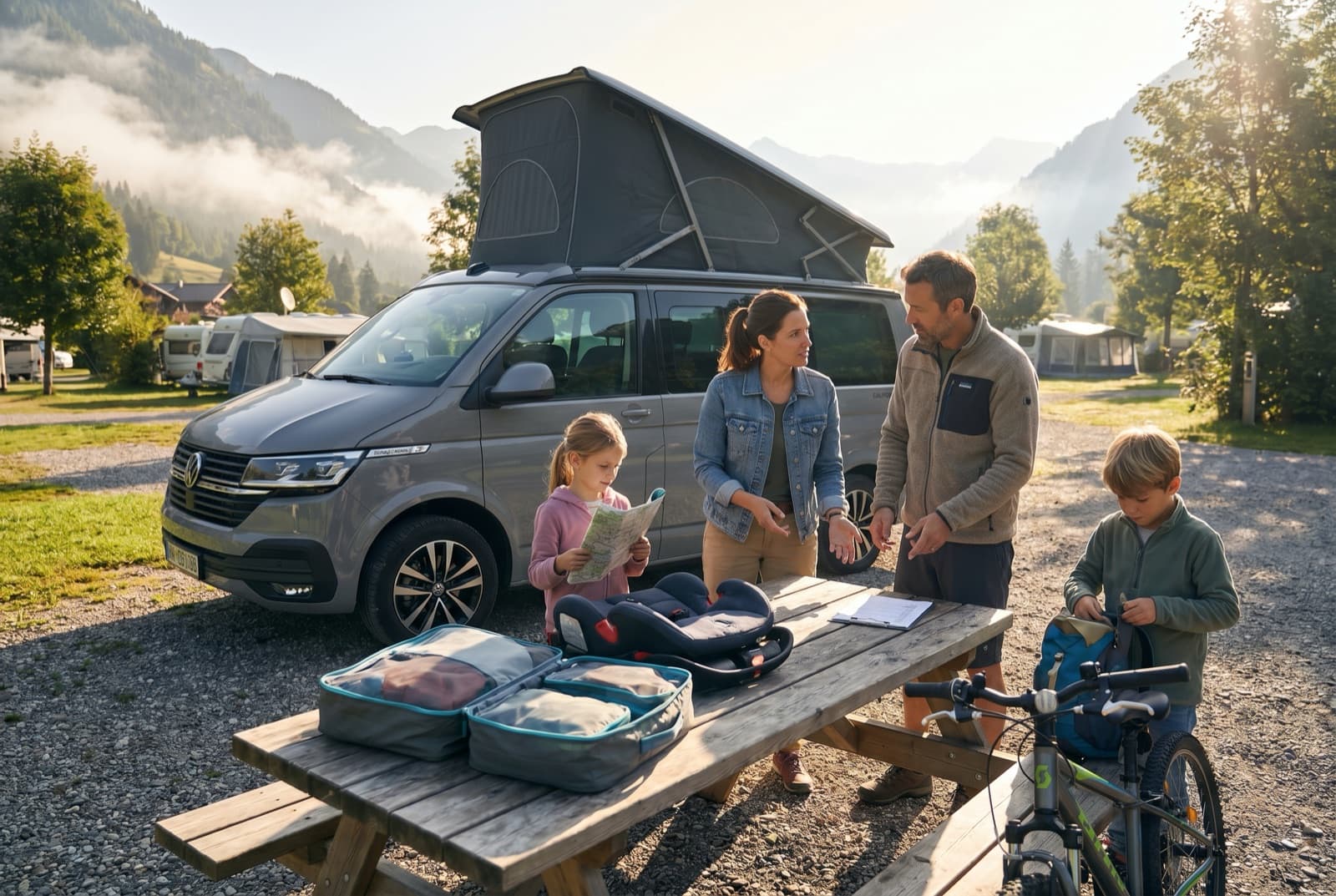
- Child seats are correctly fitted and suitable for each child
- Insurance, breakdown cover, and required documents are valid for every country on the route
- Passports or ID cards are valid and accessible
- The first aid kit is complete and easy to find
- Gas, electricity, and cooking equipment are working safely
- Tyres, fluids, lights, and wipers are checked
- Emergency numbers and roadside assistance details are saved offline
If you are renting, ask the rental company how beds, heating, gas, electricity, and waste systems work before you leave. Do not try to learn every van system for the first time in the dark with tired kids waiting outside.
Build in backup plans for weather, boredom, and full stops
Every family campervan trip needs a Plan B that does not feel like failure. Rain happens. Beaches get windy. Aires and campsites fill up. Children get bored of beautiful viewpoints much faster than adults do.
Before the trip, save a few options for each area:
- Rainy-day activity: aquarium, museum, indoor pool, local café, short town walk
- Energy reset: playground, beach, forest walk, safe cycling path
- Practical reset: laundrette, supermarket, service area, campsite with facilities
- Overnight backup: at least two alternatives within sensible driving distance
This is where Campernight becomes especially useful. Instead of relying on one dream stop, build a small cluster of possible stops around the area you actually want to enjoy. If the first one does not work, the trip keeps moving without a family crisis.
Final checklist before you leave
Use this as the quick final pass the day before departure:
- Route is realistic for the youngest traveller
- Main overnight stops and backups are saved
- Local overnight rules will be checked on arrival
- Documents, insurance, and breakdown cover are ready
- Child seats are secure
- First aid kit and medicine are packed
- Food plan includes emergency meals
- Water bottles, sunscreen, hats, and rain layers are accessible
- Entertainment is downloaded for offline use
- Chargers and power banks are packed
- Waste bags, wipes, towels, and laundry bag are easy to reach
- Everyone knows the basic van safety rules
A family campervan trip does not need to be perfectly planned. It needs to be forgiving. If you keep driving days sensible, choose overnight stops early, pack around routines, and save backups before you need them, the whole trip feels calmer.
Before you go, open Campernight, shortlist family- or pet-friendly places, read recent reviews, and save backup overnight stops for each part of the route. That small planning habit gives you more freedom on the road, not less.